
Studying communications is more than “common sense.” The field is supported by research, including psychological studies that seek to explain how people think, feel, and act.
Communications and psychology overlap more often than many people expect or recognize, and that overlap can be beneficial. Studying psychology helps students understand how the human mind makes decisions, what captures attention, and what sticks in memory – all of which apply to communications.
The National Library of Medicine highlights how “interdisciplinary research offers the opportunity to become aware of the underlying narratives and basic scientific concepts that are commonly used in a discipline by comparing them with those of other disciplines.”
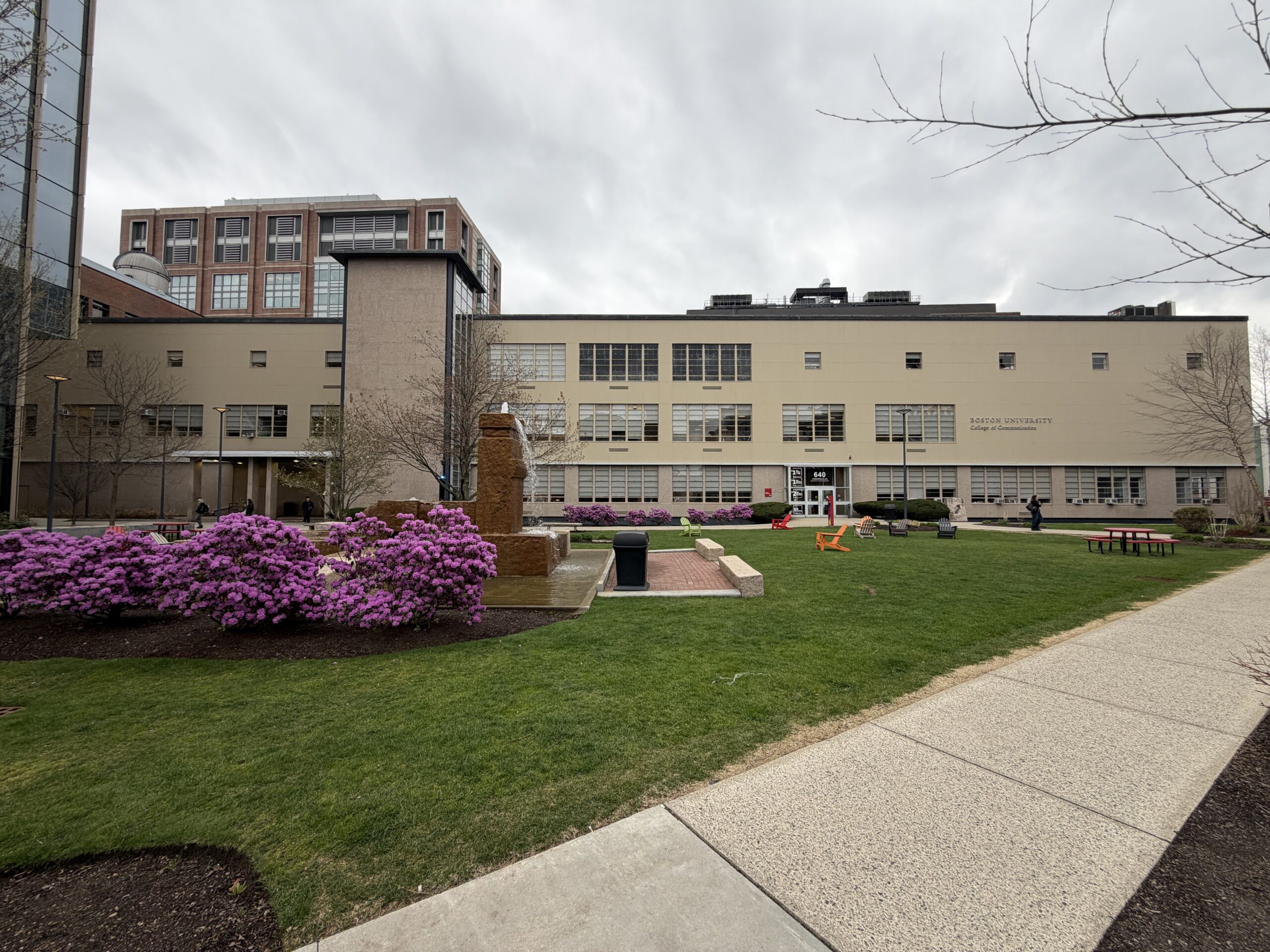
Boston University junior Molly Kiley studies advertising while pursuing a minor in psychology. She says her cross-functional work in both fields expands her education. “I got a diverse education because when I was just studying psych, it all felt very similar. It’s the same people, same professors, and same type of classes. Having two avenues makes my education broader and helps me apply it to more in the future,” said Kiley.
Psychology also helps communicators better understand human behavior. A University of Memphis study found that active listening, empathy, and critical thinking improve while studying psychology and communication.
Communication relationships can be strengthened with a deeper understanding of nonverbal communication. Many psychological theories can be implemented in professional communications work.

Kiley believes the psychology theories she learns are useful in many of her advertising projects and campaigns.
“I think certain elements of advertising are helpful to have a psychological background in terms of the marketing side of it, like you can see what grabs people’s attention,” says Kiley.
Ava Ferriero, a sophomore studying psychology and communications at Boston University, draws on her background in psychology to connect more deeply with people and enhance her journalism skills.
“I fell in love with writing about human connection, and I thought studying psychology could take this to another level,” said Ferriero.
The connection between the two fields is even being explored at the neurological level. Emily Falk, a professor at the University of Pennsylvania and director of the Communication Neuroscience Lab, studies the intersection between psychology and communications. She uses functional magnetic resonance imaging (fMRI), which detects brain activity based on blood-oxygen levels in different brain regions, to show how brain activity responds to news headlines or public health messaging.
“Often, what people don’t know about their own mind can impact the way they respond to information and how they behave later,” said Falk in an article from the Annenberg School of Communication.
Her research also tracks how behavior travels through social networks, showing how ideas and opinions move from one brain to another, eventually across communities.

Ferriero recommends that other communication students pursue a psychology minor to deepen their understanding of clients’ and buyers’ emotions and psychology.
“It makes you better at your profession because you can understand the psychology behind what people are saying and doing, which makes you better at writing and talking about it,” said Ferriero.
Communications extends far beyond just “talking” and “writing.” The field applies psychological theories about the human brain and how behavior can be impacted in campaigns, messaging, and other communications projects.
Caroline Collins is a driven student pursuing a Bachelor of Science in public relations. She is eager to continue developing her experience and knowledge within the industry while applying her open-minded creativity and leadership skills.




Leave a Reply