
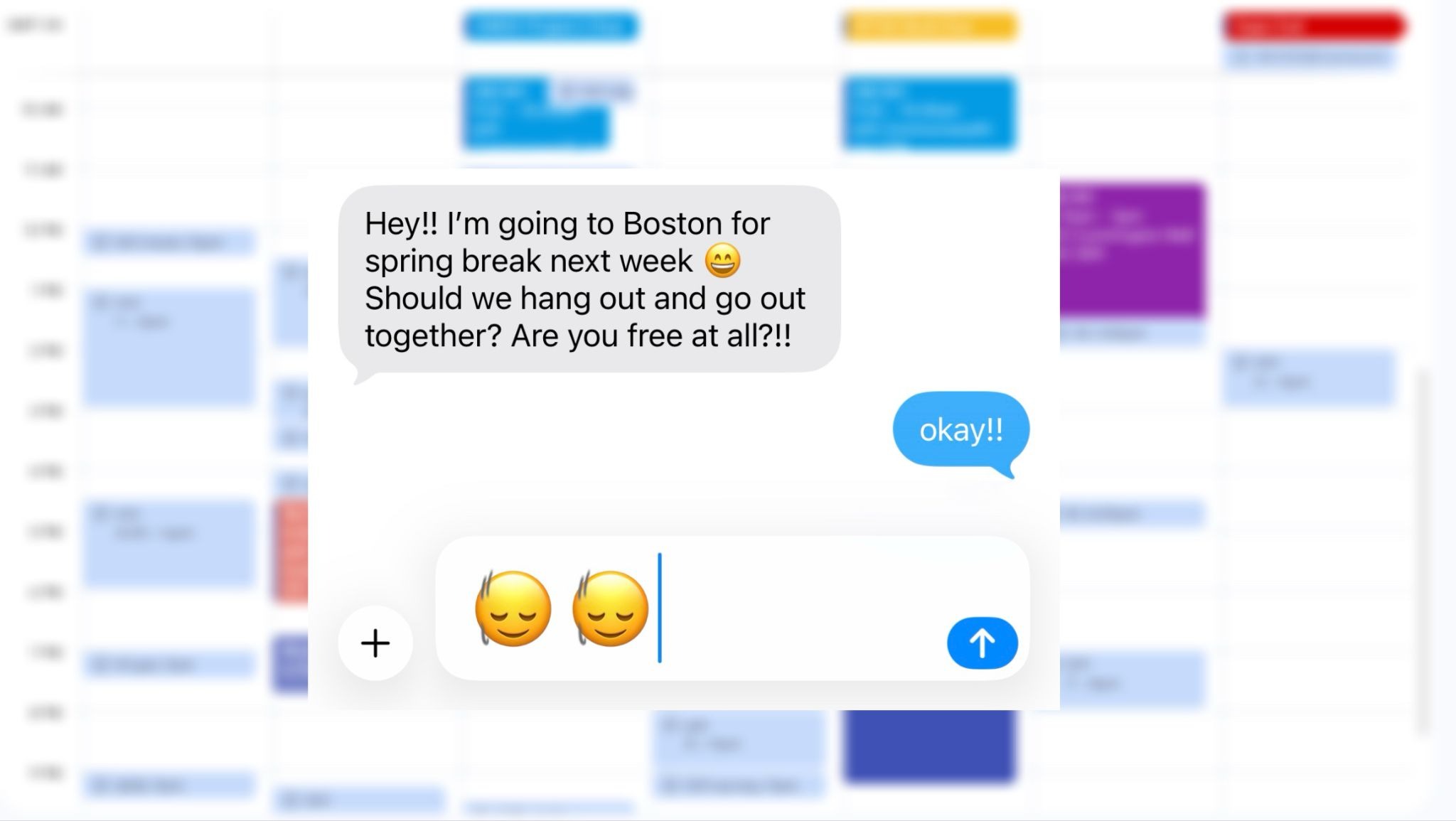
A month ago, one of my friends texted to say she would be visiting Boston during her spring break and that she really wanted to see me. At that moment, I was really overwhelmed and not in the mood to hang out: I had a CM 501 ad draft due, a CM 551 proposal to finish, and multiple group meetings throughout the weekend. I knew if I didn’t use that time to work, I would fall behind. Still, I said yes. I didn’t want to disappoint her, but I couldn’t think of ways to say no. So I went along, even though I kept thinking about everything I left undone.
Looking back, I realize this wasn’t an isolated incident. Situations like this have happened to me many times before: small moments where I could say no, but still ended up agreeing. From helping others with little things to attending social events I wasn’t really interested in, I always said yes, always compromised, and alsways chose to accommodate others instead of myself.
I’ve started to wonder why it is so difficult for me to say no.
These situations reflect a common struggle among college students: the difficulty of saying no. One major reason is social expectations and peer pressure. In college, relationships matter deeply, and most of us want to be seen as dependable, friendly, and easy to get along with. Saying no can feel like you’re risking those relationships. As a result, we may often agree to things not because we want to, but because we feel we ought to.

Another factor is the fear of missing out (FOMO). College is often framed as a once-in-a-lifetime experience filled with socializing, networking, and creating memories. Saying no or turning something down can feel like losing a valuable moment or wasting an opportunity. Social media intensifies this feeling, constantly showing us what others are doing and making our absences more visible. Even when we are exhausted or busy, we may still say yes, worried we will regret it if we don’t.
At the same time, internal or personal pressures play a significant role. As young students situated in a period of identity formation, we are always exploring who we are and who we want to become. Saying yes can feel like keeping doors open, leading us to accept all occasions socially, academically, and professionally. Saying no may bring feelings of guilt or anxiety, as if we’re letting others down, and the fear of losing the opportunity to make things up.

Not saying no can be positive. In some cases, saying yes can strengthen relationships and create meaningful experiences. Looking back, although I was stressed, I was also glad I got to see my friend. Moments like these can be rare and valuable, especially when people are far away. On the other hand, it is also important to remember that it is OK to say no. Saying no isn’t selfish or letting others down. It simply means recognizing our own limits and prioritizing our well-being when necessary.
Learning when and how to say no is an important skill not only in college but also in life. It’s not about rejecting people and ending relationships. It’s about being more honest with what we can handle. For now, I am gradually learning more about taking care of my own, as it helps me better understand my own thoughts and make more intentional choices about how I spend my time and energy.
Emma Zhao is studying media science at Boston University. Her passion sticks with the path of content creation, including filming and video editing, and she looks forward to using these skills to pursue related careers in the future.




Leave a Reply