
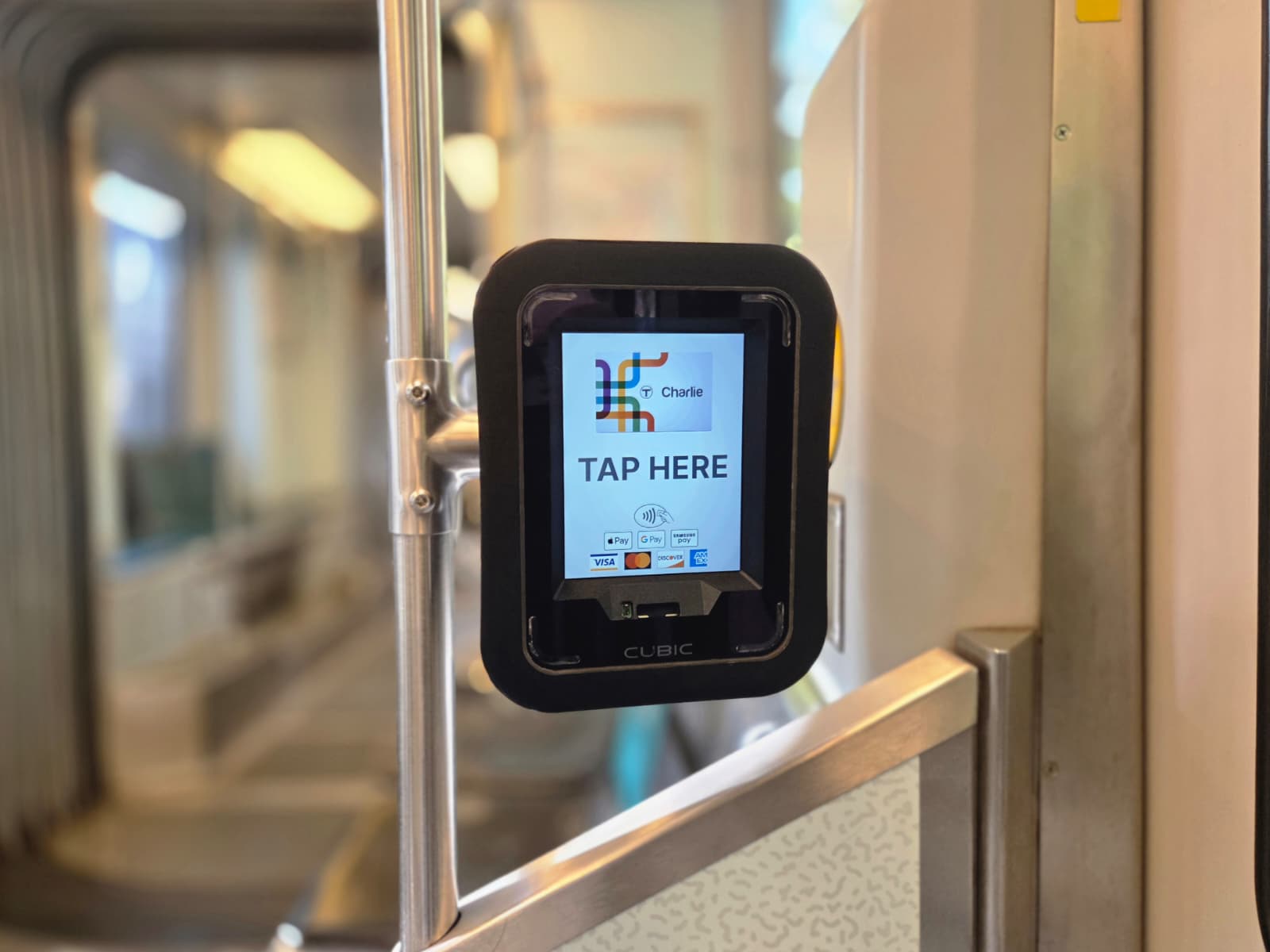
Over the past few months, MBTA riders have been encountering transit workers in electric blue uniforms asking them to pay their fare. Many riders aren’t necessarily happy about this development. “I think it’s kind of stupid, respectfully,” said one fare dodger. “I just think it’s a college town. They’re college students.”
It’s obvious fare dodgers would be unhappy, but so are some diligent payers. They believe that since the Green Line is already incredibly slow and crowded, onboard fare engagement only slows the trains down further. “It’s literally crammed in like sardines,” the diligent payer said. “I simply don’t see how fare engagement officers could do anything in that context.”
Not everyone is completely opposed to fare engagement officers. Zachary Kehoe, a Green Line operator, takes a more optimistic approach. “I think it’s a good idea,” he says. “I think you always wish there were more of them, but it becomes a budgetary thing about what’s worth doing… It’s just still very difficult to enforce, even if they’re there.”
Deploying fare engagement officers has proven fruitful for the MBTA, and increased compliance has led to an increase in revenue, according to the MBTA supervisor of fare engagement.
The general idea among Bostonians is to pay at train stations but dodge the farebox at overground stops – a revenue loss that amounts to between $5-6 million annually. “I think people just know they can get away with it, so they don’t do it,” Kehoe says. “Personally—fares, fees, fines—I’m not a huge fan of… They are kind of a regressive tax on lower-income people because it’s the same price, no matter how much your income is. I’m always more for a broader income-based funding method.”
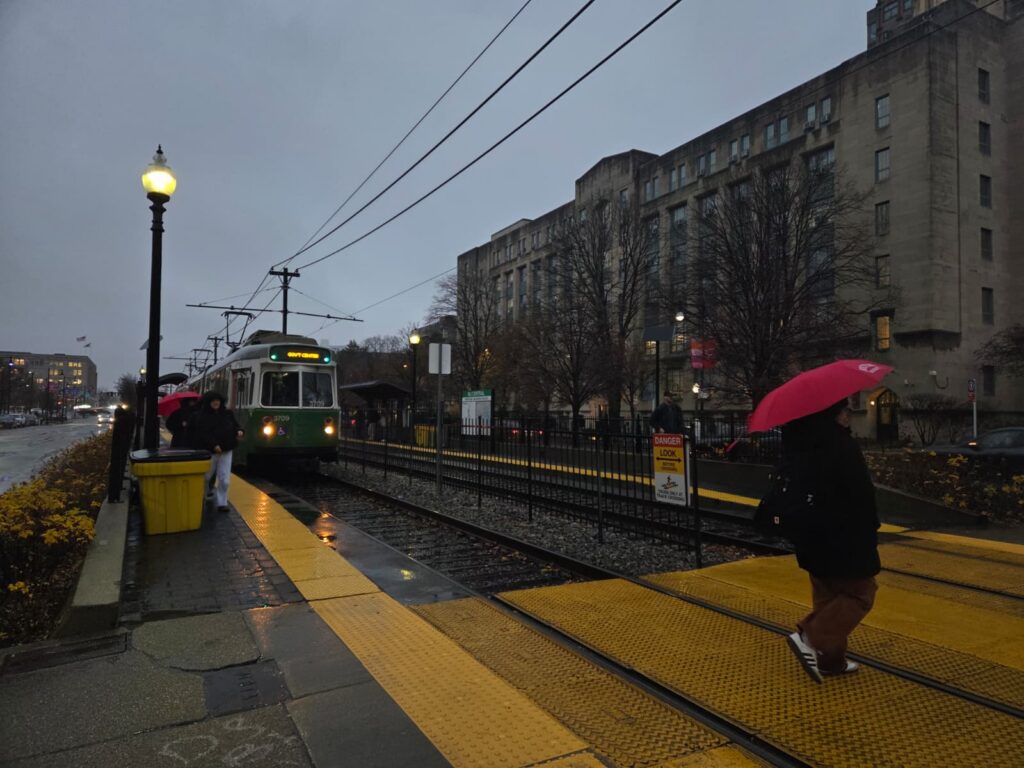
However, G.U., the diligent payer, approaches the issue differently. “I’m not in favor of free transit because the problem with free transit is it makes transit systems politically vulnerable,” they said. “When all of your funding comes from the state government, then what happens when the state elects somebody who doesn’t like transit?”
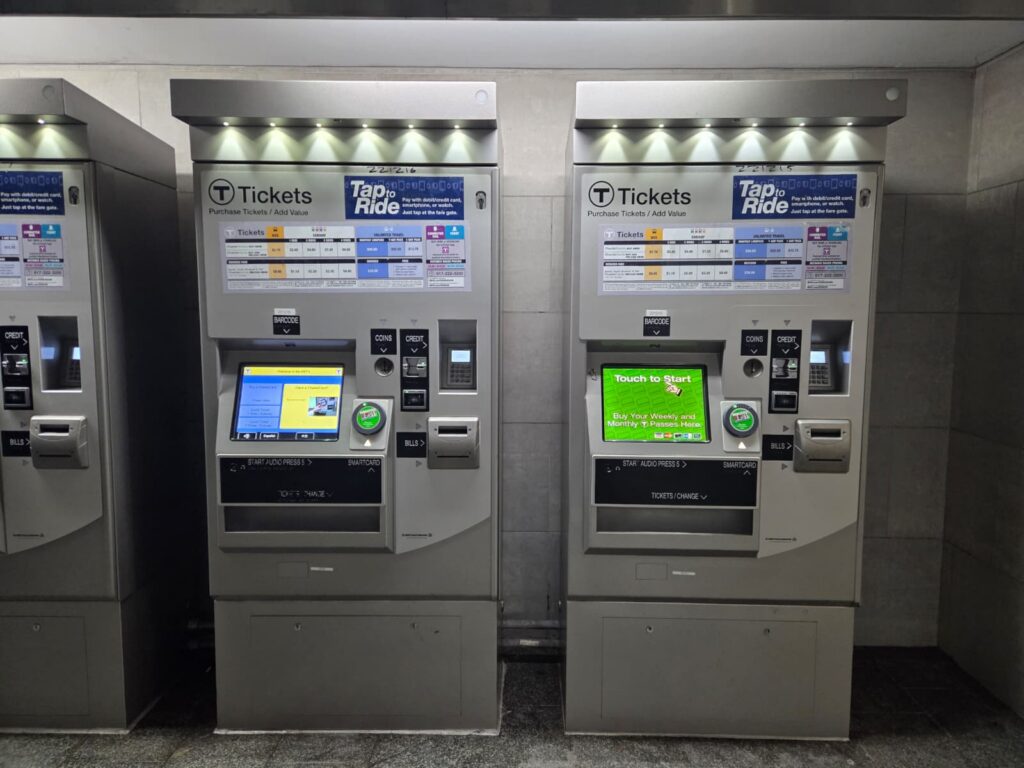
The MBTA has been in debt for years, so consistent sources of income are extremely important. “I just wish people would understand that, you know, it’s not free,” said the MBTA supervisor of fare engagement. “I think there’s a lot of people, including social media, where people kind of push out the message that transportation is free…I get the frustration that there might be service delays, they may not be up to people’s expectations. But on the other flip side of it, we have a job to do.”
G.U., in particular, has many funding ideas in mind. He attended university in a college town where the student population outnumbers residents. The town negotiated with the university’s student association and instituted a mandatory bus pass. These were cheaper than the town’s regular bus passes and were automatically added to every student’s tuition bill. This revenue model could work for the MBTA, especially since most riders on the Green B Line are students.
It might also become a reality in the near future: The MBTA is collaborating with some universities on pilot projects focusing on student prices, according to the supervisor of fare engagement.
Another proposition from G.U. was congestion pricing. “Every driver who enters the Boston area would have to pay (a toll tax). And it’s higher if they come in during peak times. All of that money gets used to fund the MBTA’s capital expansion.”
Massachusetts lawmakers have already discussed implementing congestion pricing as a part of Mayor Wu’s five-year climate action plan. This would reduce traffic and greenhouse gas emissions, while also funding the MBTA and encouraging more people to use public transit.
Nonetheless riders’ encounters with fare engagement appear to be few and far between. Regular riders report they have run into an officer just once or only saw advertising about the officers.
Like them, I found it hard to find any of these officers. I rode on the Green Line for five straight hours conducting interviews, but not once did I bump into a fare engagement officer. Two weeks later, I met one by chance – a rarity because there are only 16 fare engagement officers working from 6 a.m. to 6 p.m.
“I don’t have a timeline of when they may hire more people,” said the supervisor of fare engagement. “We’re all waiting for that information to come, and we could definitely use more support.” Moreover, MBTA’s fare engagement, which is inspired by Seattle’s fare engagement program, is relatively new, so developments are likely to be slow.
There are only 16 fare engagement officers currently working under the MBTA.
Despite these issues with fare engagement, stakeholders still appreciate its mission. “I think it’s a necessary public service and I mean, so many people depend on it,” said one fare dodger.
“Being able to exist in the city without a car and be able to get around opens up so many opportunities for all sorts of different types of people,” Kehoe adds.
“I’m overall, very positive of the MBTA, I would say,” said the diligent payer. “Not in the sense that I think it’s the best system ever, but in the sense that I feel very optimistic about taking the MBTA.”
Manisha is a graphic designer who loves art and watching documentaries. She is pursuing a Master of Science in media science, and hopes to work in the creative field after graduating.



Leave a Reply