
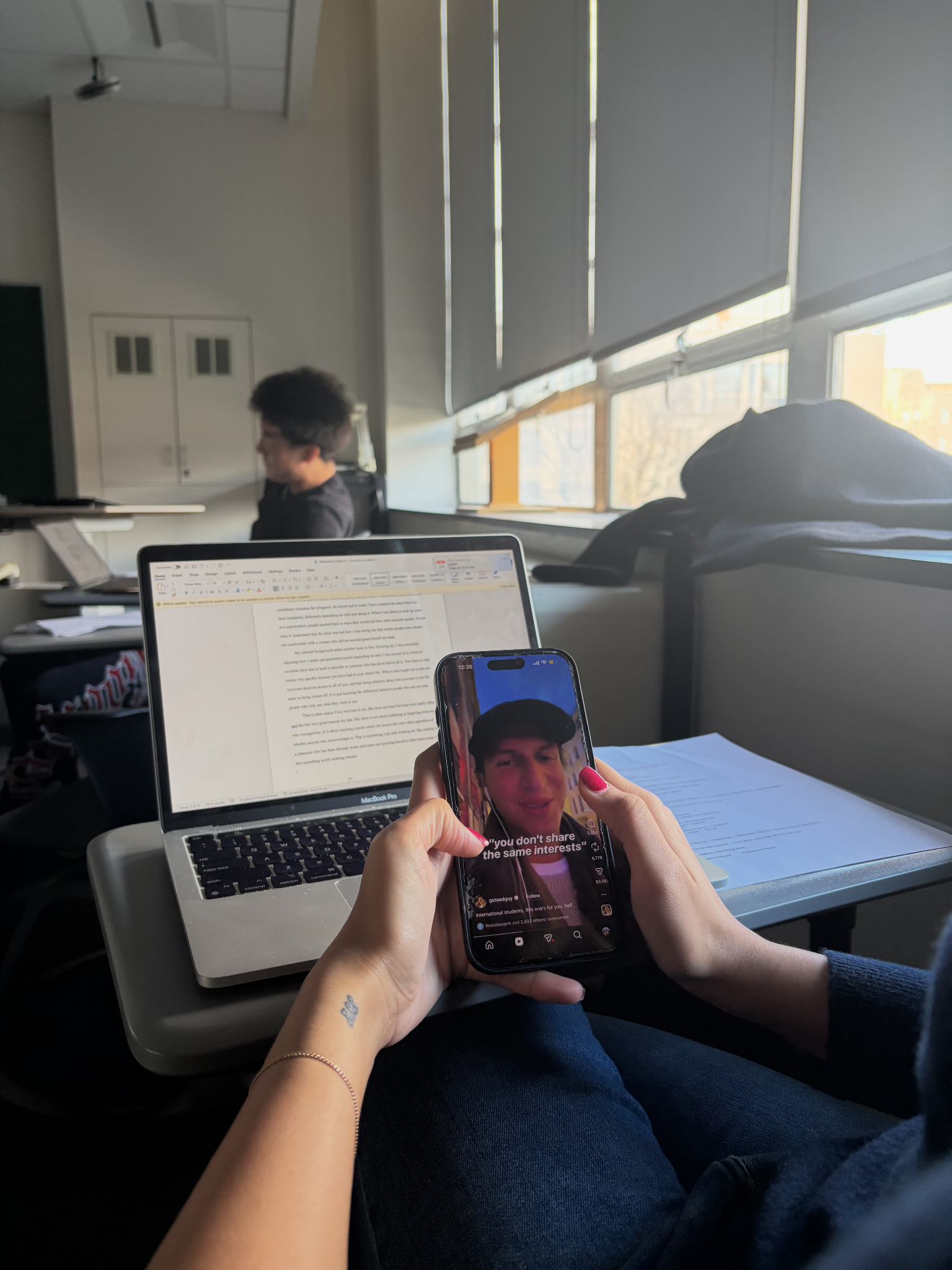
Paying attention often feels like more effort than it’s worth, but reframing it as a reward rather than a chore completely shifts how you spend your time. When you’re fully present, everything — from lectures to conversations — becomes more efficient, more meaningful, and ultimately more fulfilling.
As an international relations major at BU, one thing I take pride in is being well-read. Previously, I spent hours diving into any given topic or reading and rereading material that helped me reach a flow state — until it didn’t. Suddenly, the hours I spent energized and laser focused on one specific thing were punctuated by hits of dopamine, where every scroll was frustratingly addictive. Soon, my classroom lectures were increasingly interrupted by The New York Times games and subtle peeks at my phone. I would catch myself and put it away only to return within several minutes.
The “TikTok attention span” shook me most when I realized it doesn’t just impact learning or focusing on tasks. It infiltrates human connections, too. I noticed my friends’ minds wandering off during conversations, and I noticed myself being unable to be present in meaningful interaction.
Rashi Muthukumar, a student at Boston University, said, “I feel so bad because I keep zoning out — in my lectures, in my conversations with people, in anything related to attention or mental capacities. Physical activities are still OK, as I’m actively occupied. I also hate when I’m talking to my friends and they pull out their phone, but I do the same sometimes.”
I tried deleting the apps and going cold turkey, but that just made me crave my distractions in different forms. I realized I needed a stronger cure than a digital detox. I needed to rewire my brain and redirect my energy and attention.
Here’s what helped:
Make focus your new default, not your exception
Focus feels like effort, while scrolling feels rewarding and automatic. Flip this around. Think about focus as a reward and start small.
Try a 10-minute meditation, or focus on just your work for 20 minutes. Your brain relearns that sustained attention is normal. Activities are a great way to shake up your attention span. For example, if you’re painting, you must physically be involved in the activity. If you’re doing a deadlift, your mind has to be in the exercise.
Viv Mac, a trainer at Equinox said, “Nothing improves my focus the way my workouts do. While I work out, my mind is getting trained to stay present, be involved with the task at hand, and improve my attention.”

Start Reading Again
If you’re not much of a reader, this one may seem daunting or boring. Read anything. It could be an article about sports or fashion or a simple news article. But read the entire piece and not just the headline. Don’t skim — read every word.
The best way to use reading to increase your attention span is to read aloud. When you read out loud, you cannot skip a word and your mind is involved in the act of reading completely.
Try it for just five minutes a day, or if a shorter article comes your way, then even just one or two minutes will do.
Be Bored Again
Boredom is where your attention span rebuilds itself.
Think about the great ideas or reflective thoughts you have in the shower when there’s nothing else to do. TikTok trains you to consume content while simply existing like eating, walking, and even studying. A study by Brown University found that multitasking makes one more prone to error and reduces attention during cognitive tasks.
Start doing things one at a time again. Just walk without earphones in. Sit in class without looking at your phone. It could even be something as simple as waiting in a line without scrolling. I practiced boredom by staring at a wall for two minutes — it was a long two minutes.
It feels uncomfortable at first. That’s the point. Building resistance to discomfort goes a long way. Being OK with being bored is essential to detaching yourself from this dopamine addiction that decreases your attention. It allows you to give more attention to conversations, lectures, or readings. Even if you’re bored, it feels OK.
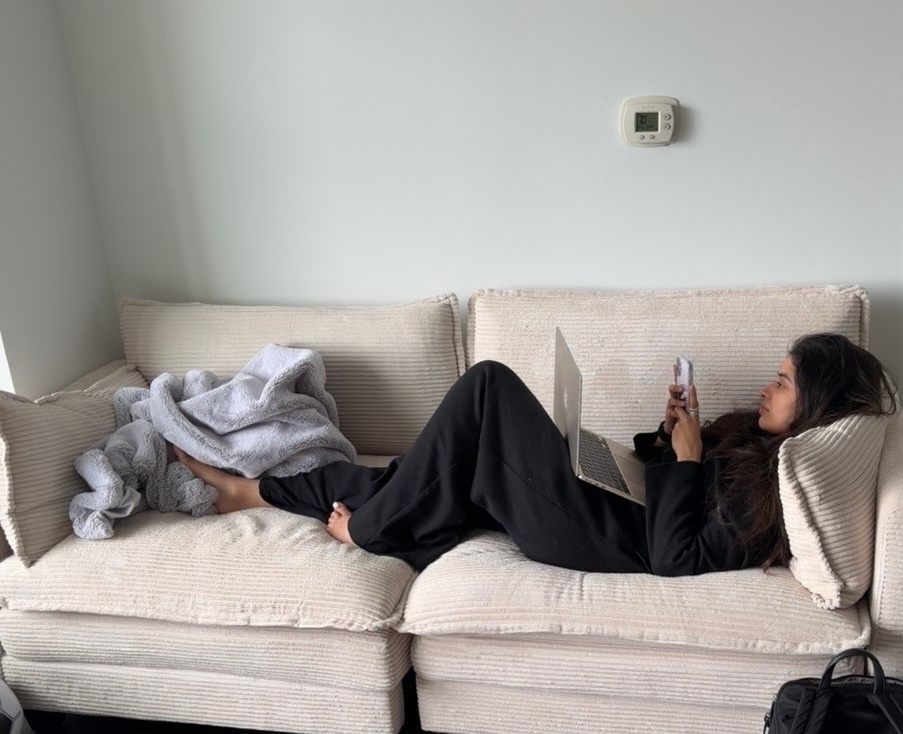
Changing your mindset
Most often, we continue to scroll or distract ourselves because it’s too much effort to pay attention. The process of paying attention makes our laziness kick in or else the outcome feels less fun.
Change this mindset by thinking about the payoff of paying attention. It’s more efficient. You understand tasks faster and better. Studying becomes easier. Conversations become more meaningful. Real rewards feel better.
Rewiring your brain is a journey. It took me about seven months to intentionally do so. However, now that I can go through a lecture without using my phone or eat a meal without television or conversation, I feel more energized and the quality of my time has improved.
If you feel stuck, fear not. Shorter attention spans are internally frustrating but also reversible. It truly is possible gain back your ability to be present and share your energy in a way that feels human and energizing. After all, everything feels more engaging when you’re OK with being bored, giving your attention and your energy where it feels valuable, light, and right.
Richa is an international relations student who loves to write. She is completing her bachelor’s in international relations and looks forward to pursuing higher studies in business. She has a strong passion for writing, media, and design.



Leave a Reply