
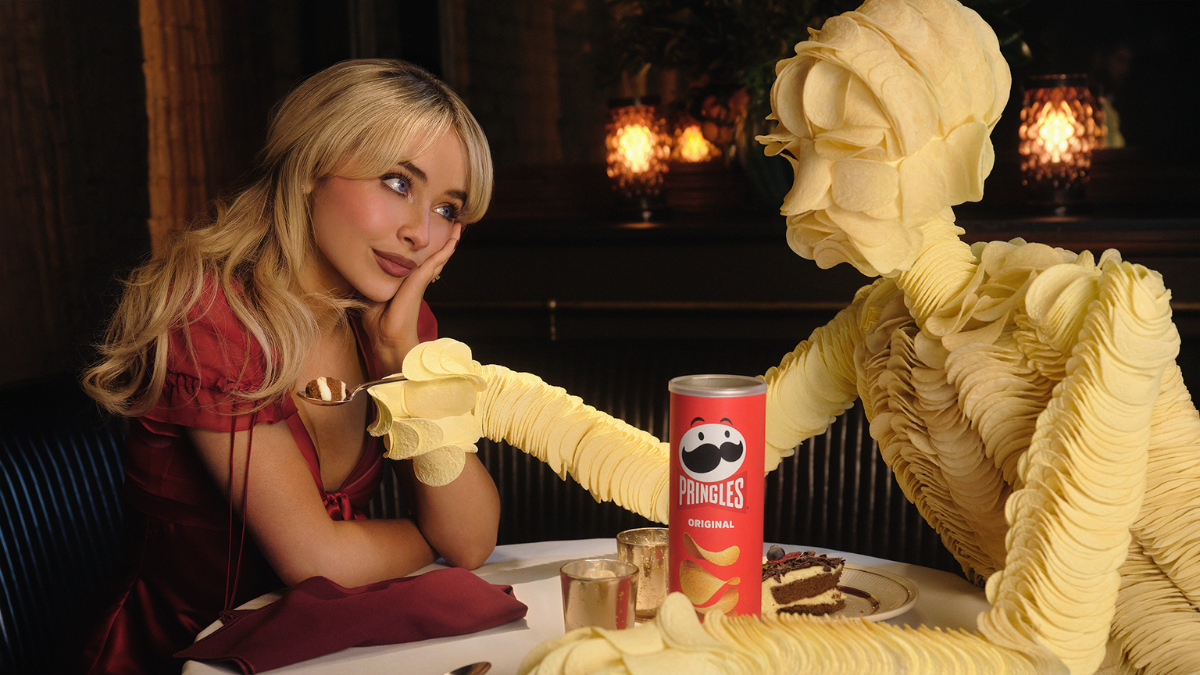
The biggest rivalry on Super Bowl Sunday is not always on the field. In the advertising world, the competition often plays out in the commercial breaks. That’s where months of work culminate in a 30-to-60-second TV spot that brands hope lingers in conversation the next morning.
Among the commercials that managed to break through this year, several of the most memorable leaned on star power. From Squarespace’s cinematic spot directed by Yorgos Lanthimos, featuring Emma Stone going ballistic, to Sabrina Carpenter creating her dream man out of Pringles, celebrity-driven spots set the tone for commercials defined by big names and even bigger expectations. Here’s the lowdown on the 2026 Super Bowl commercials and what they revealed about the difference between star power and staying power.
With tens of millions of viewers tuning in to an event saturated with media, a familiar face can cut through in seconds. But recognition alone does not guarantee impact, said Liz Gumbinner, associate professor of the practice of advertising at Boston University’s College of Communication.
“Celebrity-driven ads nearly always work best when the specific talent is integral to the concept,” she said. “Random spokesperson executions tend to be forgettable, especially during the Super Bowl when we’re bombarded with famous faces and one seems to run into the next.”
BU students seemed to echo the same sentiment. Ria Sinha, a senior studying human physiology at Sargent College, remembered Chris Hemsworth’s feature in a spot but couldn’t recall which brand it was attached to. “I remember the action and the celebrities, but not always the brand,” Sinha said. “It was fun, but the product didn’t really stay with me.”
So what actually makes a celebrity-driven ad memorable?
It comes down to on-the-spot storytelling that can evoke emotion within 30 to 60 seconds. Especially when Super Bowl ads are saturated with famous faces, random spokespeople tend to be forgettable. The celebrity ads that resonate are those that use celebrities with purpose, where their personas align naturally with the story.
“A celebrity wants to be sure that nothing feels off-brand for them, so in essence, you are now juggling the needs of two brands,” Gumbinner said. We saw this with the Pringles spot featuring Sabrina Carpenter, which retained a positive sentiment because Carpenter’s brand, centered around being “tired of boys,” aligned perfectly with the story. The ad was also directed by Vania Heymann and Gal Muggia, who previously directed Carpenter’s “Manchild” music video, further strengthening that authenticity.
Carpenter’s Pringles spot shows that when a celebrity is integral to a concept, the ad resonates beyond the screen. When a celebrity’s persona naturally fits the story, both the talent and the product stick in viewers’ minds. In a Super Bowl saturated with famous faces, that kind of authenticity can turn a fleeting moment into lasting conversation.
In my view, the brands that win the Super Bowl ad game are not the ones that hire the biggest celebrity. They are the ones that treat the celebrity as a storytelling device rather than a distraction. When the persona fits the brand, the audience remembers both. When it doesn’t, viewers remember the face… and forget the brand that paid for it.
In an era where audiences are media-savvy and skeptical, authenticity isn’t optional. It’s strategic.
The real takeaway?
Celebrity ads don’t fail because celebrities don’t work. They fail because brands confuse visibility with meaning. And on the biggest advertising stage of the year, meaning is what lasts.
Leave a Reply