I’ll never forget the Fundamentals of Creative Development course I took in the fall of my sophomore year. I remember sitting in COM 319, near the back of two long rows of tables. I was tired after a long first week of classes, barely paying attention to syllabus slides that all sounded the same. Then the professor reached the section on artificial intelligence. To my utter surprise, he encouraged us to think of it as a collaborator, rather than discouraging any use of it entirely.
This was the first time any of my professors addressed AI as a beneficial tool, and it seemed absurd. Just a few months earlier, AI wasn’t allowed in any course project. Now, I had classes supporting it, as long as it didn’t replace original thinking. My professors would say that AI could never create an original insight or campaign idea, because AI derives their answers from what’s already been done before. However, we were still encouraged to use AI to generate mockups. And it always felt like cheating.
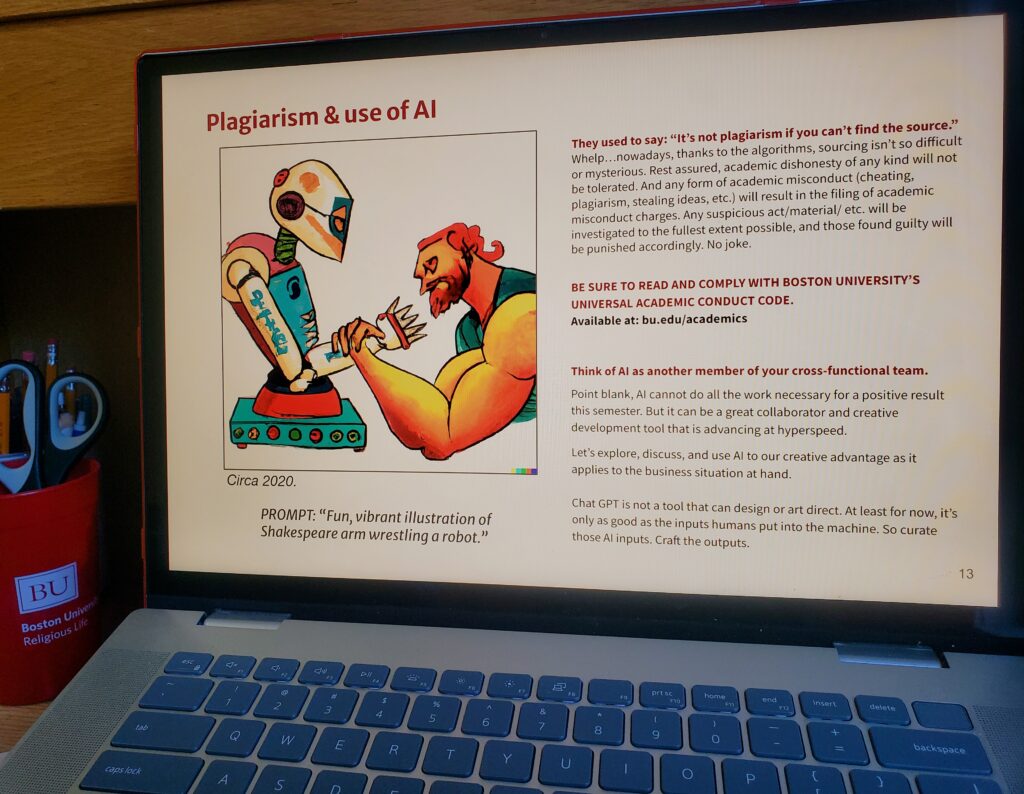
I’m not alone in having complicated feelings toward the technology. Doug Gould has been a professor of the practice in the advertising department for nine years and has worked in the industry for 40 years. He believes generative AI can be a “great democratizer” for students to execute ideas beyond what was once possible. However, despite how beneficial AI has been for his students’ portfolios, he ultimately wishes the technology never existed.
“Maybe that’s me being an old man yelling at the clouds, but I often wonder ‘Do we need this?’ The way I see it, there are two creations of human kind that have no business on the planet: the atomic bomb and AI. But we can’t put the toothpaste back in the tube.” Gould says professionals and students alike need to learn how to use AI appropriately, because major problems arise the minute it becomes more than a creative tool.
The general public is even less willing to embrace the technology. Coca-Cola’s infamous 2024 Christmas ad was entirely AI-generated, and many on social media called out Coca-Cola for the soulless, generic, uncanny feel of the ad, spitting in the face of willing artists. And this isn’t exclusive to advertising. AI usage in concept art has brought controversy to the film industry, (with movies like “Spider-Man: A Brand New Day” using AI-generated images of New York City for concept art).
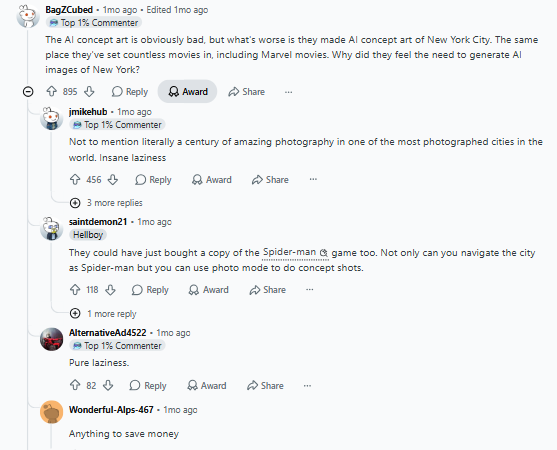
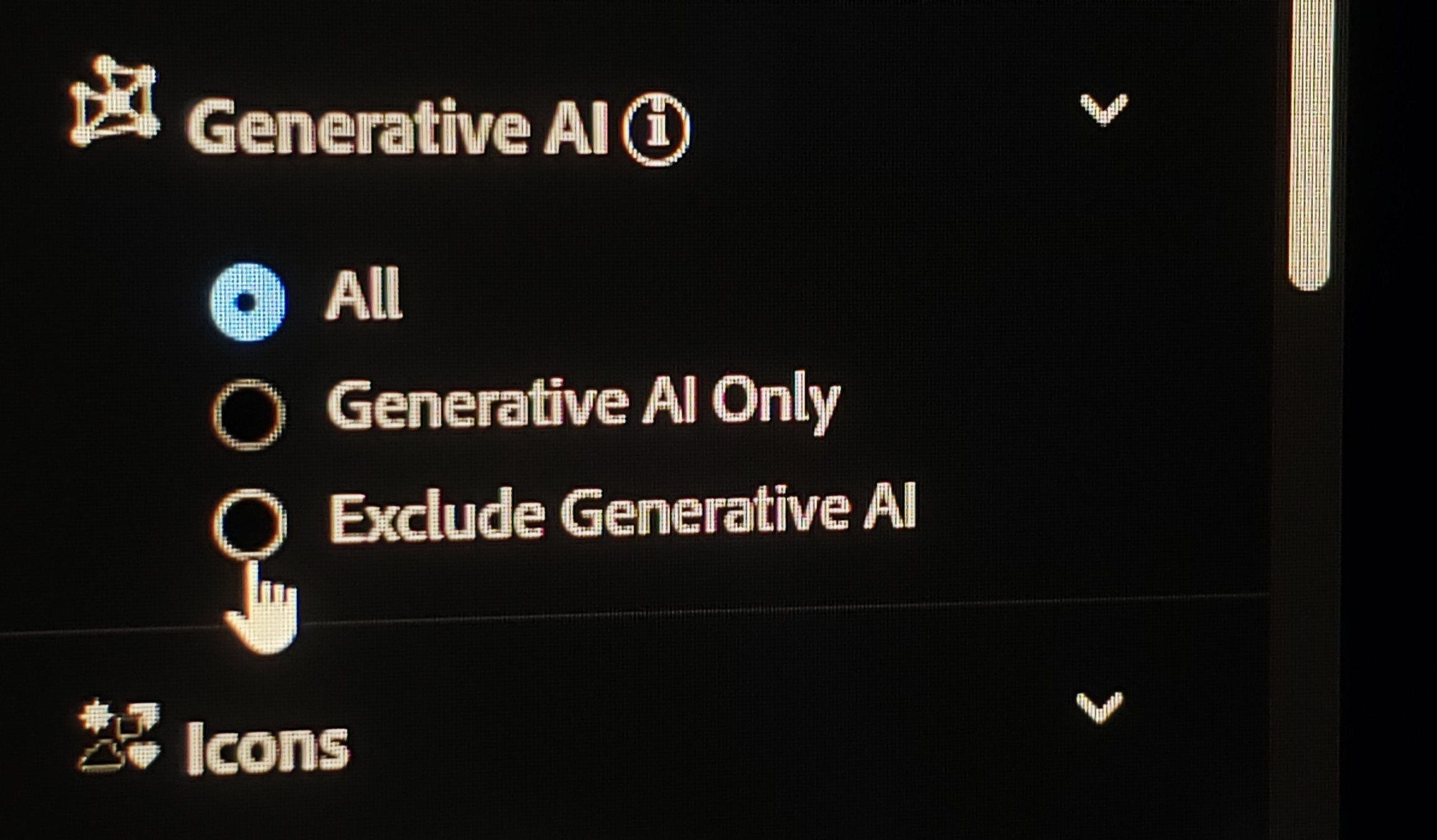
If viewers can detect AI usage, it’s heavily frowned upon. But that’s a big if. Few industry outsiders realize just how deep the AI rabbit hole goes — from research to mockups to late-stage video production. AI usage is impossible to track down unless you’re in the room where it happens.
Anika Ramanathan, a grad student in advertising, went on Boston University’s COM New York City advertising tour last year. She said the trip gave her a lot of insight into the state of the advertising industry . AI use was a consideration in every agency she visited. During the tour, she found that the degree to which AI was used varied widely from agency to agency. Some large shops have entire proprietary AI platforms making full creative assets. Some smaller boutique agencies are focused on using AI to enhance human collaboration, but make efforts to learn the technology to keep up with competitors.
“I think those two mentalities are going to be interesting to see what shakes out in the advertising industry,” Ramanathan said. “At the end of the day, nobody had the perspective of, ‘No, we’re never using AI.’ So I don’t think it’s going to go away.”
Ruifan Wang, an advertising undergraduate student, said that even smaller companies can encourage their staff to use AI as much as possible to save time and costs. She said that, as a marketing intern, AI use wasn’t for getting all of the work done. It was for handling the small pieces to ease her workload. “AI wasn’t banned, and I was encouraged to use it if I wanted to. But it’s not something I’ll always use.”
As I’ve completed more advertising courses, it’s become clear that AI is here to stay, unfortunately. Many people try to limit their use of the technology to propel forward their own work. They recognize the importance of not completely replacing human creativity. Nonetheless, the conversation could soon be less about if a company used AI and more about how a company used it.
Despite this, Wang remains optimistic about continuing to work in the industry. “If you think AI will replace everything in the advertising industry, then it will,” Wang said. “But you can’t let it get to your head like that, and you have to stay positive. Don’t let AI be what stops you from doing good work.”
Gianna is a senior at Boston University pursuing her Bachelor of Science degree in advertising. She hopes to use her graphic design and writing skills to support not-for-profits and small businesses after graduation.