
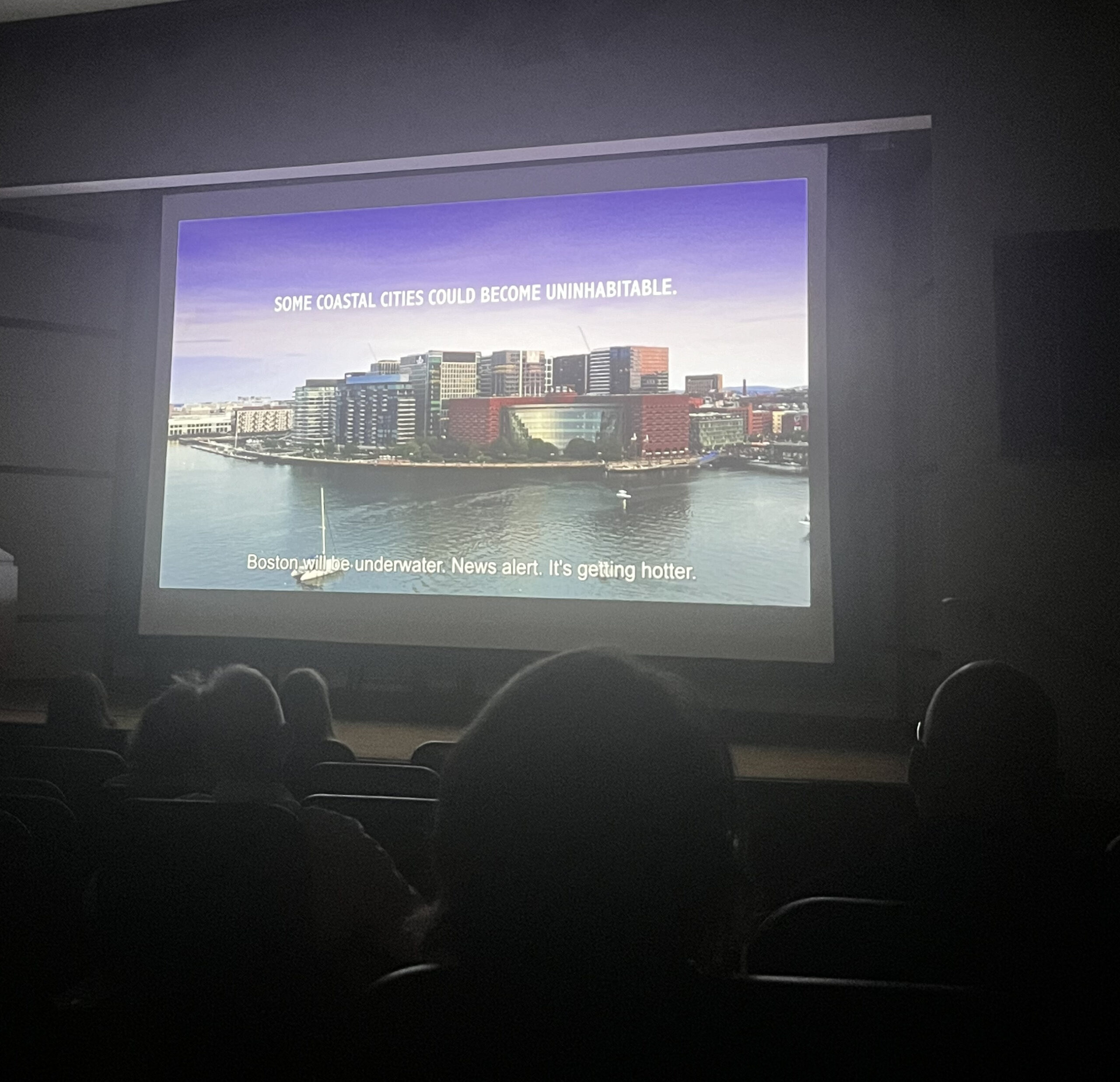
On April 17, 2024, the College of Communication (COM) partnered with the BU Institute for Global Sustainability to host a screening of “Inundation District,” a feature-length film directed by Pulitzer Prize-winning director and COM professor David Abel. The film explored the consequences of Boston’s choice to disregard the risks of climate change and invest billions in constructing a new waterfront area (Seaport) – built on landfill, at sea level, and directly exposed to the increasing threat of rising seas.
According to the National Oceanic and Atmospheric Administration (NOAA), the tides in Boston could surge by 4 to 7 feet by the year 2100. Without substantial reductions in carbon emissions, this escalation could escalate dramatically, with projections suggesting a staggering increase of up to 55 feet by the year 2200. These forecasts underscore the urgency of addressing climate change and implementing effective measures to mitigate its impact on coastal cities like Boston.
Viewing this screening was insightful and intriguing, prompting a thorough analysis of this impactful documentary:
“Inundation District” stands out as a beautifully crafted film that weaves together Boston’s rich history, detailed data enhanced by captivating graphics, and a heartfelt exploration of various viewpoints in the face of imminent climate change. Through its engaging storytelling, the movie not only educates but also immerses viewers in the experiences of those grappling with environmental challenges, offering a poignant reflection on our collective future.
The film’s most poignant scenes are those featuring Nathan Wyatt, a homeless man who resided beneath bridges, directly affected by the relentless rise of sea levels. In a particularly moving moment, he recounts a sudden surge of water drenching him and his belongings in mere minutes. Wyatt’s narrative is a crucial thread throughout the film, shedding light on the plight of marginalized communities unable to shield themselves from environmental threats. His story serves as a poignant reminder of the human cost of climate change.
One of the highlights of the film was its exploration of Boston’s history. It was surprising to discover that Boston used to be mostly hills and just a small peninsula. Learning that a big chunk of Boston’s land is actually man-made, built on top of water, was quite eye-opening. This glimpse into Boston’s past not only added depth to the story but also made me reflect on the city’s unique connection with its surroundings. Having lived in Boston for four years, this aspect of the film was particularly meaningful to me. It added a personal touch and deepened my connection to the city by providing insights into its history. Learning more about Boston’s past helped me feel more rooted and connected to the place I’ve called home for the past few years, adding a relatability factor to the film.
“Inundation District” shines a spotlight on Boston’s Seaport area while also giving due recognition to the numerous researchers and professors in Boston and beyond who are actively seeking solutions to its challenges. One of the film’s strengths lies in its ability to demystify the concept of rising sea levels, making it accessible to a wider audience. By simplifying this complex issue, viewers can better grasp the proposed solutions put forward by researchers.
Moreover, while the film highlights the ongoing efforts of researchers to safeguard Boston, it doesn’t shy away from holding accountable the individuals and corporations who own land in the Seaport and continue to develop it. It offers a candid portrayal of these stakeholders, revealing their attempts to contribute, albeit insufficiently, by building on higher ground. Given the substantial profits they accrue from businesses and residents in the area, there’s a clear call for them to take greater responsibility by actively supporting initiatives aimed at protecting Boston and its vulnerable seaport.
In conclusion, “Inundation District” is a compelling and thought-provoking documentary that not only educates but also inspires action. By shedding light on Boston’s history, amplifying the voices of those affected by climate change, and calling for accountability from stakeholders, the film serves as a poignant reminder of the urgent need to address the challenges posed by rising sea levels. Through its powerful storytelling and meticulous research, “Inundation District” ignites a sense of responsibility and hope for a more sustainable future.




Leave a Reply