Greater Boston’s mix of universities, large student population, and leading healthcare and biotech companies have long made it one of the world’s top innovation hubs. A report by the Center for American Entrepreneurship ranks Boston No. 5 for best global startup city, making it a great place for anyone — including students — to start a company. Today, Boston’s entrepreneurship ecosystem continues to evolve in new ways, from how students find customers and resources to how AI is changing what they build.
As a student minoring in Entrepreneurship and Innovation, I’ve taken classes on the subject and learned more about how it coexists within the city. I’ve seen a variety of student entrepreneurs as I’ve made my way down Commonwealth Avenue for three years. They’re launching everything from study software apps to mobile spray tanning services. This entrepreneurial “hustle culture” that continues to grow on campuses across the city is both inspiring and intriguing. What makes Boston the ideal incubator for student entrepreneurs, and why does it seem like there are more student entrepreneurs now than ever?
Namrata Narain, assistant professor of strategy and innovation at Questrom School of Business, has spent years researching economics and entrepreneurship and seeing it in action in Harvard and MIT innovation labs. “We know from a lot of economics research that businesses and startups tend to co-locate with universities with areas of high learning,” she said. From her research and observations of innovation in greater Boston, Narain points to two “key ingredients” for entrepreneurship that Boston’s surplus of higher education institutions provide.
“First is having a new idea, and it turns out universities are a hotbed of new ideas,” she said. “Second is thick labor markets… That network of other students, both as a source of co-founders and people working at your company, but also as a source of consumers of what you’re producing. There’s such a market of college students.”
This student network that Narain points to is exactly where BU student Chloe Lee saw an opportunity to launch her own business as a nail technician. Lee, a junior studying advertising at BU’s College of Communication, learned to do nails in high school. In the years leading up to college, she went “all in” with her nail Instagram account, @yummie.nailz, both improving her skills and building a following of more than 11,000. Even before attending BU, Lee said she knew, that the demand for nails would be high. Though she started the business for extra income and to improve her skills, she has been most surprised by the other perks of the business: connections throughout Boston.
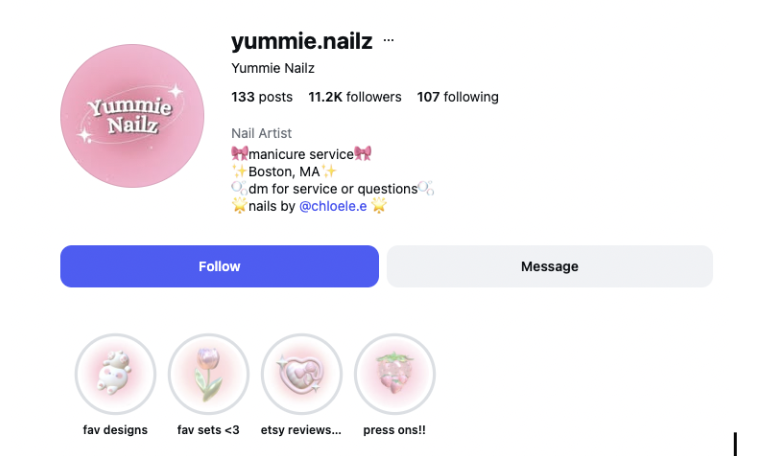
“Nails have been, like, my No. 1 source of networking,” she said. “I run into people that I know at other schools because I’ve done their nails, or their friends’ nails.” Lee credits a lot of this network success to location, saying that being located in Boston has given her even more opportunity.
“It’s not a city like New York… but [it’s] a lot more tight-knit, at least with the college students,” said Lee. “Targeting college students through social media in Boston has made it a prime location for the business.”
While some student businesses, like Lee’s, are hands-on, other Boston entrepreneurs are integrating AI into the core of what they create. Tim Buntel, a serial entrepreneur and program director for Innovate@BU, spoke about the changes he’s seen in the student innovation space, both related to AI and an evolving job market.
“With increased uncertainty about the job market, the attractiveness of entrepreneurship goes up,” he said. “If you can’t get a job, be the job, right?” At BU, this trend has been manifesting itself as rising student interest in starting companies.
“The number of teams who are applying for innovation pathway, which is our self-based accelerator for people who are actually building ventures, is up 20% to 30% over the same period last year,” Buntel said.
The other broader factor impacting student entrepreneurship? AI. Buntel said AI is cutting the initial costs that are often a hurdle to entrepreneurs. He described an entrepreneurship cost model developed at MIT that primarily emphasizes that AI has greatly cut initial costs associated with starting many businesses.
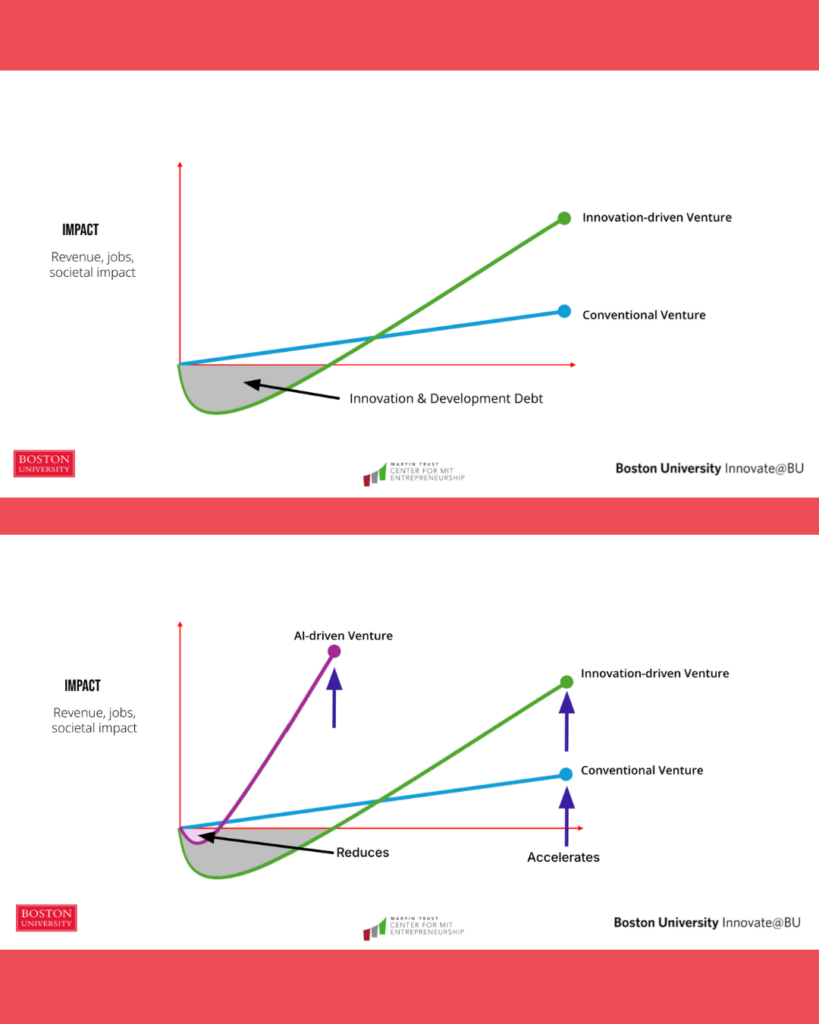
“AI also has dramatically changed what the experience is like to be an entrepreneur,” Buntel said. “For basically any product…it seems like it has, for some, at least, opened a lot of different doorways in their venture.”
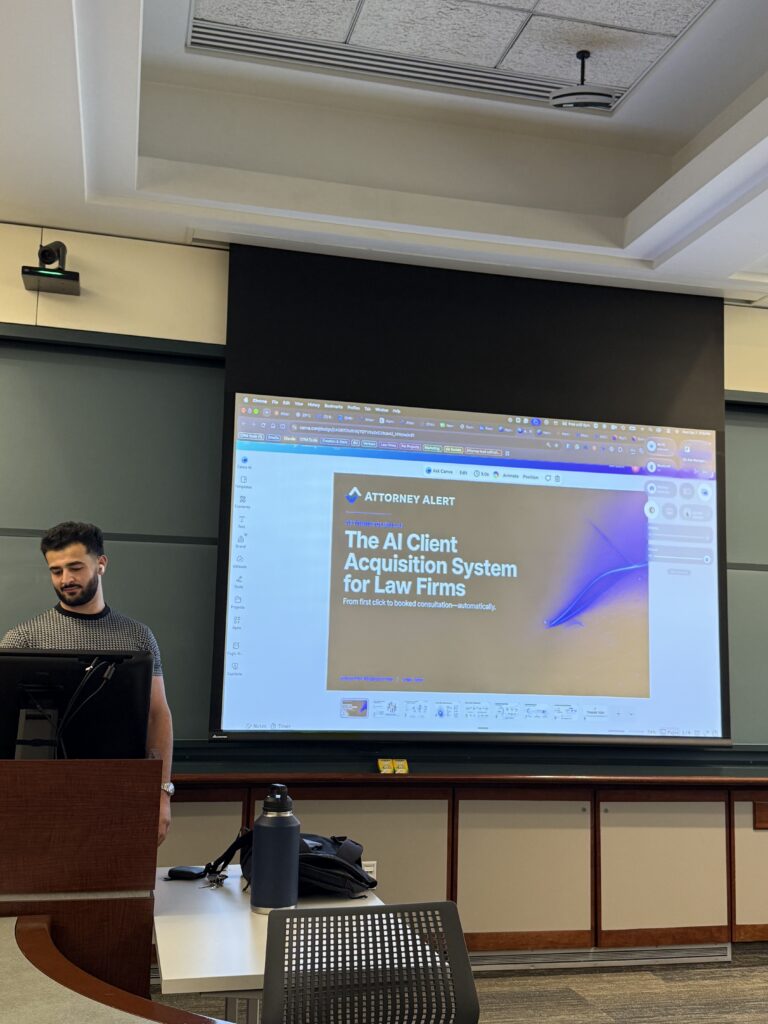
Brian Namnoum, a Questrom graduate student pursuing a master’s in finance, is one of those founders. Rather than enter a tough job market after earning his bachelor’s degree last spring, he continued to work on his startup, AttorneyAlert, a legal-tech platform that matches defendants with qualified attorneys.
The company has grown significantly in the past year, with operations across nearly 12 states. Namnoum credits a portion of that early success to AI automation, which he has integrated into AttorneyAlert’s software. “AI is absolutely spectacular for automation,” he said. “With AI tools, we’re really able to enhance that consumer experience.”
Walking down Commonwealth Avenue now, the growing hustle culture makes more sense to me. Boston gives students the ideas, people, and market to start something. AI and an uncertain job market give students more reasons to pursue their own ventures. Namnoum’s advice for anyone thinking about starting? “Just take action.”
Kathryn Rekas is a senior at Boston University studying public relations and entrepreneurship. Passionate about brand strategy and storytelling, she loves writing and interviewing people to get to the heart of what drives them. After graduating, she plans to pursue a career in agency PR.