
In 2024, TikTok account ‘QUIZARD’ shared a series of street interviews filmed in front of our beloved George Sherman Union. For COM students, the results were disheartening. Random passersby labeled our major as both misguided and academically suspect.
Feeling frustrated? Welcome to the club.
In an era of degree prejudice, communication students—even at BU COM, the world’s first accredited public relations school—may be studying one of the most frowned‑upon fields. (OK, maybe art students catch strays, too, but let us have our moment.) While non-COM majors study the Dow Jones Industrial Average, rewrite code, analyze proteins in the human body, and somehow find time to accuse COM students of majoring in “talking,” “scheming,” or “manipulating,” COM students are also busy. We study human interaction, observe cultural patterns, and address how media reveal societal standards.
So while I appreciate all of the unnecessary attention, I doubt half of our critics know what we really do, or what we are trying to accomplish.
Take Elon Musk, for example.
“Communications as manipulation” is a proclamation famously issued by Elon Musk in a tweet in 2021: “Other companies spend money on advertising & manipulating public opinion, Tesla focuses on the product. … I trust the people.” A year earlier, Musk eliminated Tesla’s communications department and later reduced the same department at X (formerly Twitter).

A COM major would have warned Musk that airing aggressive grievances about President Donald Trump, after befriending him, and only to apologize later, would reveal more about himself than the president. They would also have warned that such a statement would dampen his long-term credibility with the press and the public, never mind leaving a permanent gash in his reputation.
But hey—that’s just me, a COM major.
Everyone is a communicator, so everyone participates in communications, COM and non-COM students alike. BU sits in the heart of a city driven by what public relations Professor of the Practice Kelley Chunn calls “eds, meds, and innovations,” and communication is present everywhere.
In Boston, specifically, communication through film and TV is among the most popular forms of visual commentary, especially in connecting audiences with history. A Bostonian herself, Professor Chunn noted that Martin Scorsese’s 2006 crime thriller, The Departed, is set in South Boston. She states that the movie highlights the city’s past through key themes.
As a Massachusetts native, I could not envision any other version of the town I had always known as affluent, to which Chunn responds: “There is another side, as there usually is to most places.”
Meanwhile, Film and Television Associate Professor of the Practice Deepak Rauniyar asserts that when Boston (or any city) is used as a backdrop for a movie, audiences must keep in mind that the film is an expression of the filmmaker’s perspective rather than reality. He implies that it is not only a best practice but also an ethical imperative to ensure accurate and respectful representation. Because the repercussions are severe: ruined reputations, disgruntled audiences, and lost money.
“If your goal in making the story is to get a pretty accurate depiction of the city—depending on what ‘accurate’ means, of course—it would probably need to be from somebody who has already been [immersed] in that culture,” says Professor Rauniyar.
In this way, filmmakers can remind audiences of history and inspire people to offer their own perspectives. This is the beauty of communication.

More examples of successful communicators in pop culture include actress, Bostonian, and BU alum Uzo Aduba (CFA’05), as well as “Call her Daddy” host and creator, Alex Cooper (COM’16). Both women have built brands recognized worldwide, and they continue to simultaneously engage mass audiences and influence culture. And those communication skills? That’s right—acquired right here at BU.
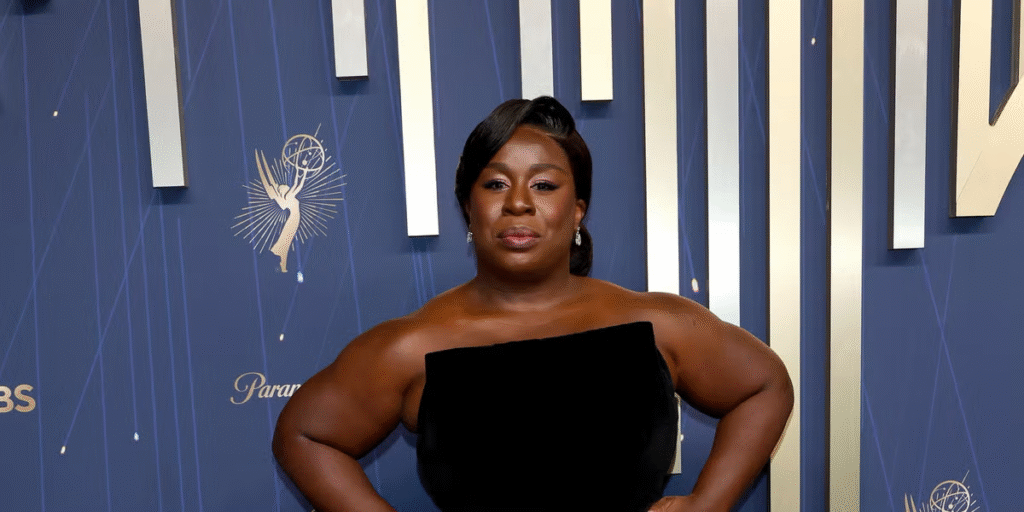
Why does it matter that these pop culture legends are from Boston or went to BU? They each contribute a unique story and further evidence that COM majors—specifically those at BU—create impact in the world. So no matter where you are, or what you do, wear that BU sweatshirt proudly.
After all, while others demean us for “just studying communication,” aren’t they equally vulnerable to relying on it and enjoying the products, like film, that we create? Communication is one of the few fields where virtually everyone—academically trained or not—participates.
So, when critics go on to build their own start-ups, enter elected office, or even become the CEO of an electric vehicle company, remember: They still need someone to ensure their messages are clearly stated, efficiently delivered, and well received by audiences. That someone will most likely be a COM major.
In the end, we’re all students trying to figure out how to speak over all of the trolls and rage bait. COM students are just the ones who decided to go to a school (like BU) for it.

Leave a Reply