
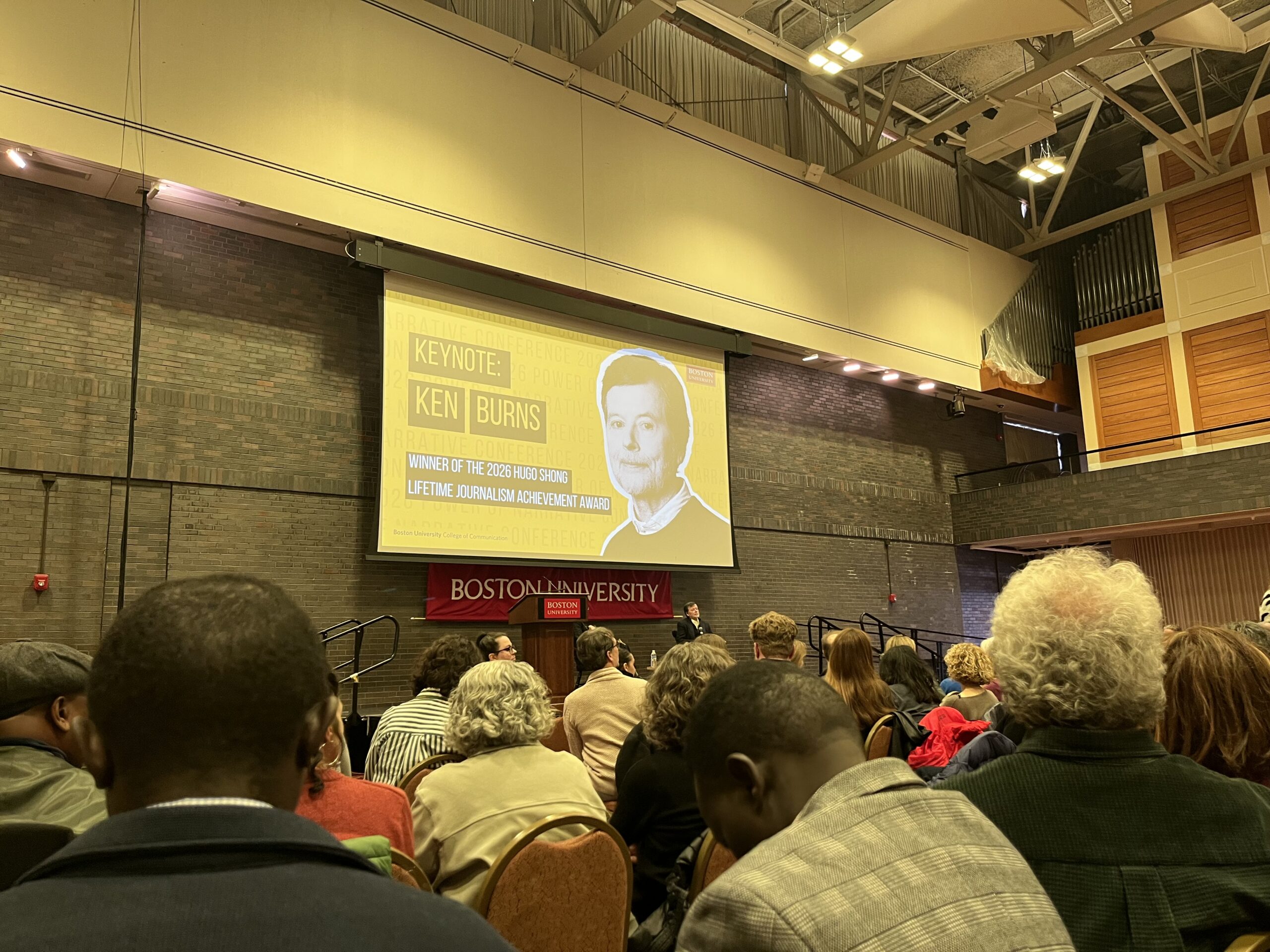
A full audience sat in front of Ken Burns on March 27 at The College of Communication Department of Journalism’s Power of Narrative Conference. The room pulsed with vigor and hope as writers, editors, and lovers of narrative nonfiction waited to hear the award-winning documentarian speak about his process.
In the presence of fellow writers and students, I am consistently hearing phrases like “in our current climate” or “in our unprecedented times.” The heaviness weighs on me a bit more each time the phrase is uttered.
However, Burns did not share those expressions or sentiments. Instead, he turned to the audience and said, “There’s a narcissism in the present. There’s an arrogance.”
“There’s a narcissism in the present. There’s an arrogance.”
At first, I was taken aback. Narcissism? Arrogance? Are the troubles we face mere blips on the radar to Mr. Burns? And truthfully, who am I to disagree with such a force of knowledge?
I sat with that statement, allowing the implications to wash over me and provide a pair of fresh eyes. He shared that during the Great Depression, cities reconsidered the presence of zoos, asking if animals should be fed while citizens were suffering. He said our nation was more divided during the Civil War than we are in this current moment. He conceded that we are seeing features of the past that are terrifying to witness in real time.
Burns wasn’t calling the audience arrogant. However, the national mood is a byproduct of focusing only on the current moment. Burns’s remarks suggest we are not unique. For some of us, this may be more painful to come to terms with than arrogance. He argues that we should take solace in the fact that, 100 years ago, people faced similar struggles, because we are still here to persevere.
“Optimism is a gift of studying history,” he said, but it also feels like outrage is a perfectly reasonable feeling. Burns has spent years looking over texts and images, and he has labored over interviews and research. He reveals uncomfortable truths about our history. Yet, despite looking at the most painful parts of our history, he can see the future through an optimistic lens and does not find it naive to do so.
The idea of changing perspective to move forward was echoed again on day two of the conference. “Reclaiming Story (And Joy!) in the Age of Data, Noise and Fear,” a lecture from Jessica DuLong, reminded attendees that joy is not an independent act. It is interpersonal, and sometimes, suffering is involved. Burns also brought up the joy and humility in his own life. He purposefully wove stories about each of his daughters into his discussion and laughed about how the day he was nominated for an Oscar, his heat went out and he slipped on the ice.
Writing is complicated, as is the examination of our own understanding of the present. However, Burns demonstrates that we must approach both with purposeful nuance and embrace the complicated. He emphasized that we must accept we are all deeply flawed, as were people in the past, and our flaws are what make us human.
“People want complicated stories,” Burns said. And he’s right. On a lighter level, that’s why people are so drawn to reality TV and the stars who dominate. They are vastly complicated people who draw our attention and keep us talking about their perhaps flawed mindsets.
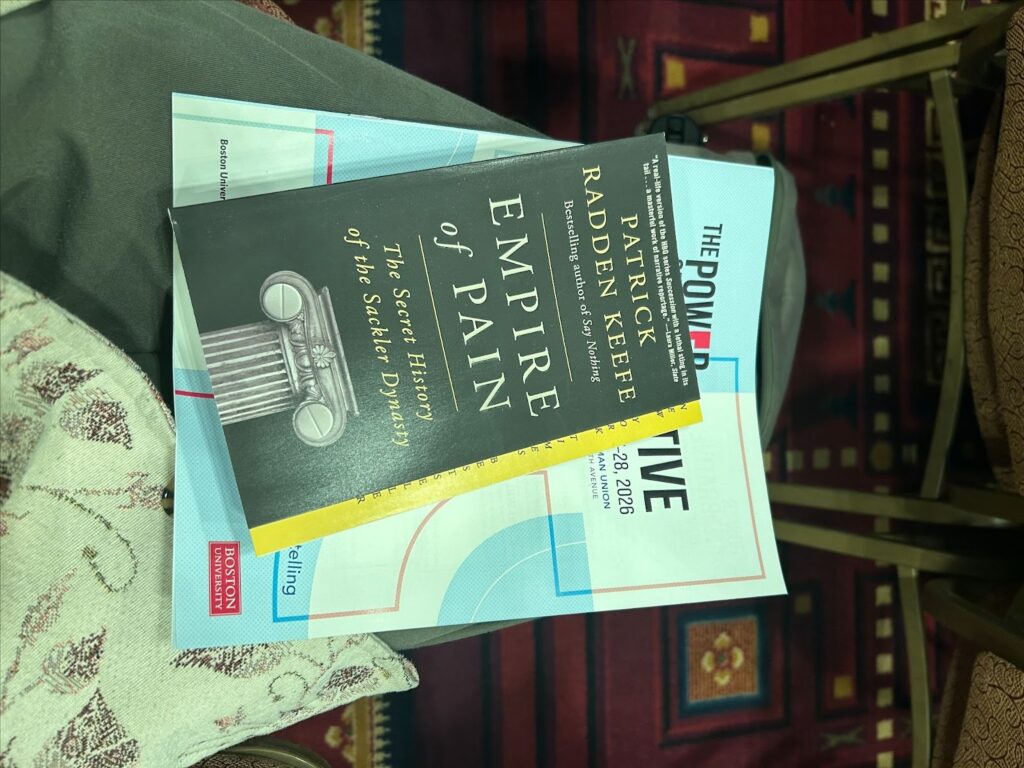
Saturday’s keynote speaker, author Patrick Radden Keefe, highlighted the need for complicating stories. The New Yorker writer discussed his range of books that provide unseen perspectives on imperfect and compelling figures. His description of his book “SAY NOTHING: A True Story of Murder and Memory in Northern Ireland” compelled me to go home and binge the Netflix series. (Don’t worry, I’ll get to the book, too.) I left with a different understanding of revolutionaries, asking myself where moral lines lie in order to achieve a goal for the greater good. It was uncomfortable, but it was necessary.
Both Burns and DuLong acknowledge that the pressures of today’s world are frightening to tackle. However, communicating with purposeful optimism can not only help us find a path for joy, it can help our community.
Hannah is a media researcher with a passion for diverse stories. She is pursuing her Master of Science in Media Science and aims to use her background in research and writing to create actionable recommendations for the entertainment industry in the future.

Leave a Reply