
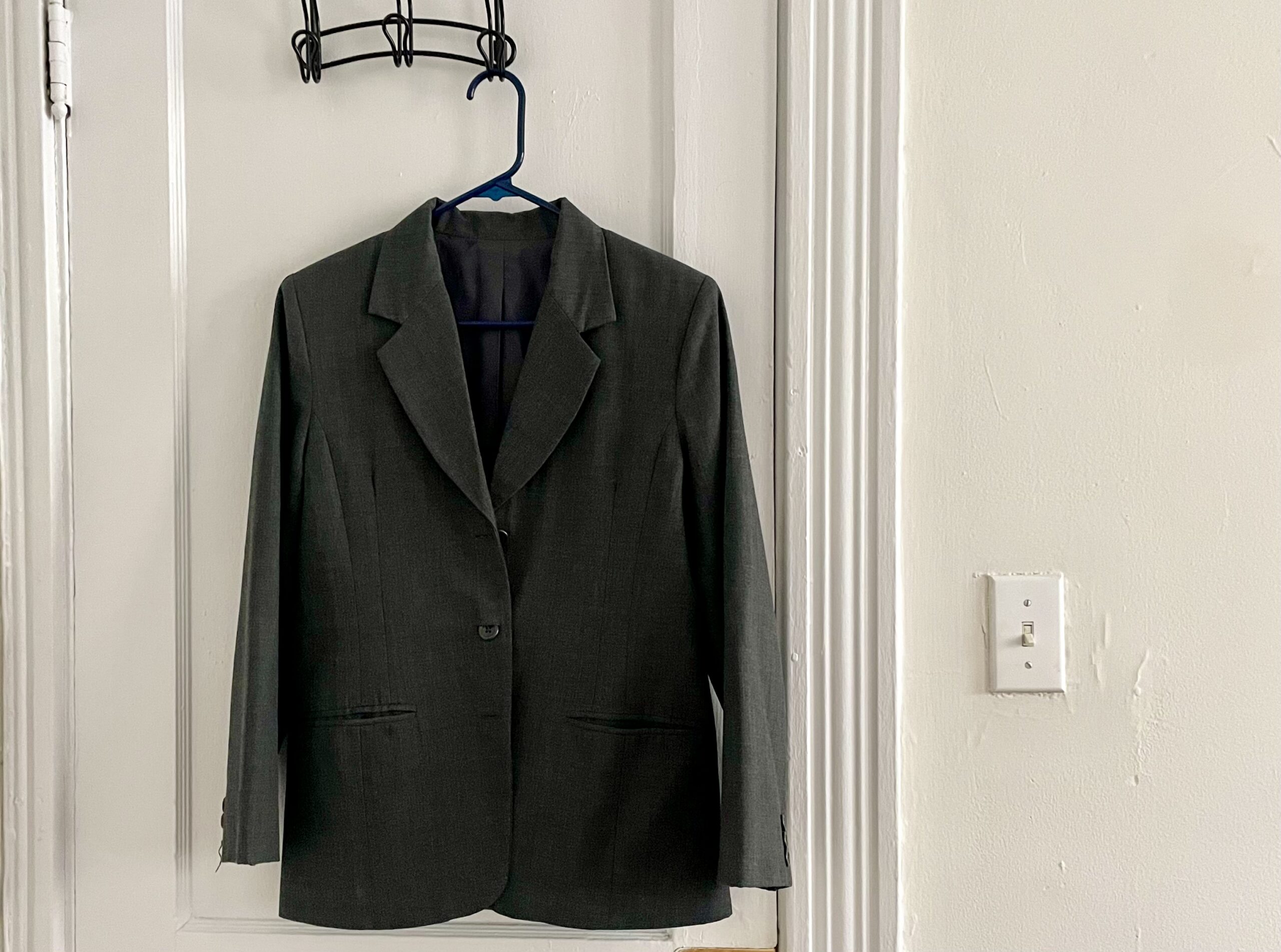
It was the thick of summer in Hyderabad, India. An uncomfortably large bead of sweat dropped down my back and I attempted to shake it away, to no avail. In the sweltering heat of the city, the oversized grey blazer I borrowed from my mother was constricting me.
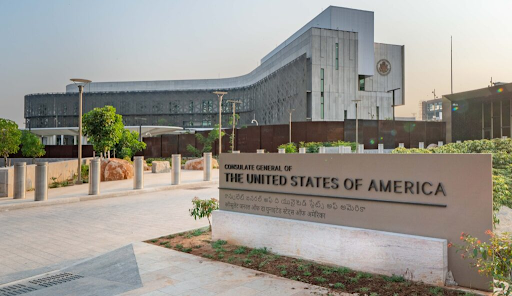
My F1 student interview was scheduled in the neighboring state, and I had done my level best to dress for the occasion — a face full of makeup, formal, presentable enough to be accepted to an international university. I fidgeted as I held my passport in one hand and a folder containing all the proof that I had the financial capability to enter the U.S. in the other. As I trudged through the long line, hoping to be welcomed by the air conditioning inside the U.S. consulate, I reminisced on all the events that led up to this moment.
I had, somehow, singlehandedly secured my position at a graduate program in four of the five universities I applied to. I did not scatter my stones across the world. Even in this questionable economy for international students, I narrowed my focus to the country I had imagined myself in for years. I calculated this perfectly.
Undergraduate degree? Check.
Relevant work experience? Check.
A lead position at my ex-company? Check.
Intent to further my education? Check.
I managed to convince a board of admissions at Boston University of my capabilities. My only remaining challenge was to convince an immigration official of the same. I took a deep breath as I placed my belongings in the security conveyor belt, taking one step closer to the inevitable interview. My fingers trembled as I recounted the horror stories I heard from friends — rejected within minutes, or worse, seconds. I snatched my documents from the security check, petrified that someone else would be privy to my family’s financial details, all while dreading the exchange that awaited me.
I revised the answers in my head. My father is a freelance IT consultant. My mother is currently unemployed. My brother is a financial analyst based out of Illinois. I formulated a script that played over and over, all while secretly regretting my choice of clothing. I shook the urge to itch my back.
Okay, the paranoia isn’t helping. I turned my attention to the large line in front of me.
A woman with dyed-blonde hair looked back at me. Her hair was hastily pulled together with a weak hair-tie in a messy pony. She wore a tank top and shorts. Her fingers drummed against her bare thigh and her feet shuffled in small movements. She told me she was here for a B1-B2 (business and leisure) interview. She scratched her head, laughed, and told me she hoped she got it. I chuckled nervously with her. It was almost comical how she stood as the antithesis of how I wanted to present myself at this interview. I was the portrait of a rigid, uptight graduate candidate and she was the care-free tourist.
As we walked in, I was ushered into another line. My bad habit of overhearing conversations was beneficial at this moment. I realized the people in front of me were all grappling with the same fear: They were all students, praying they had their shot, too. Simultaneous feelings of empathy and anxiety ran through me. It was statistically impossible for us to all get what we wanted, but, God, did I want them to come out successful.
One said she was there for her undergraduate degree. The man interviewing her asked if she took out a loan. Unfortunately, she fumbled — she said no, but her documents said otherwise. The officer pointed out her fault and she tripped over her words as she tried to explain that she was nervous. I didn’t hear any response other than clicks that sounded like stamps on paper. Looking at her beaming smile, I could tell: She got her visa.
The guy in front of me had a more difficult interview. He had years of experience and was preparing to pursue an MBA at an Ivy League university. He explained he had worked for 10 years for a reputable company and had saved enough money to fund his degree. I heard a pregnant silence that was followed by the most intimidating sentence I could’ve anticipated.
“So you’re telling me you can pay a $100,000 degree with all the Indian rupees you earned?”
He fell like a deck of cards. He immediately flipped his stance and said he would have family support in the sponsorship of his degree. The officer slowly nodded. I heard the click again. It was my turn.
I stepped forward and presented my passport before the official had the chance to ask for it. I winced on the inside—you’re not supposed to give a document unless they mention it. It was too late to retract, so I kept going. He nodded, also gesturing to the stack of papers in my other hand.
“I20?”
I handed it over. He scanned it, and asked me what other schools accepted me. I listed them, ensuring I got the names right. He made a face, and immediately, I thought I had lost it.
“Boston University? Over USC? Why?”
I almost made the same face back to him — he was clearly from the West Coast or had a bias in favor of it. My voice quivered as my rehearsed answer escaped my mouth.
“Boston University’s courses align with my academic goals,” I answered. He nodded again, and I counted it as a win. His eyes scanned the rest of my documents.
“How much does your father earn per year?”
I panicked. How was I supposed to know exactly what that was? Wasn’t it written? Wasn’t it explicit on the document I had presented? I scrambled to give an answer.
“I unfortunately don’t have the number on the top of my–”
“You’re telling me you don’t know how much your father earns?”
The blazer felt tighter than before. My palms were clammy. My vision blurred a bit. I started to come to terms with the fact that I wouldn’t make it. I would have to walk back to my father sitting in my hotel room with my head hung low and dignity nonexistent.
So I improvised.
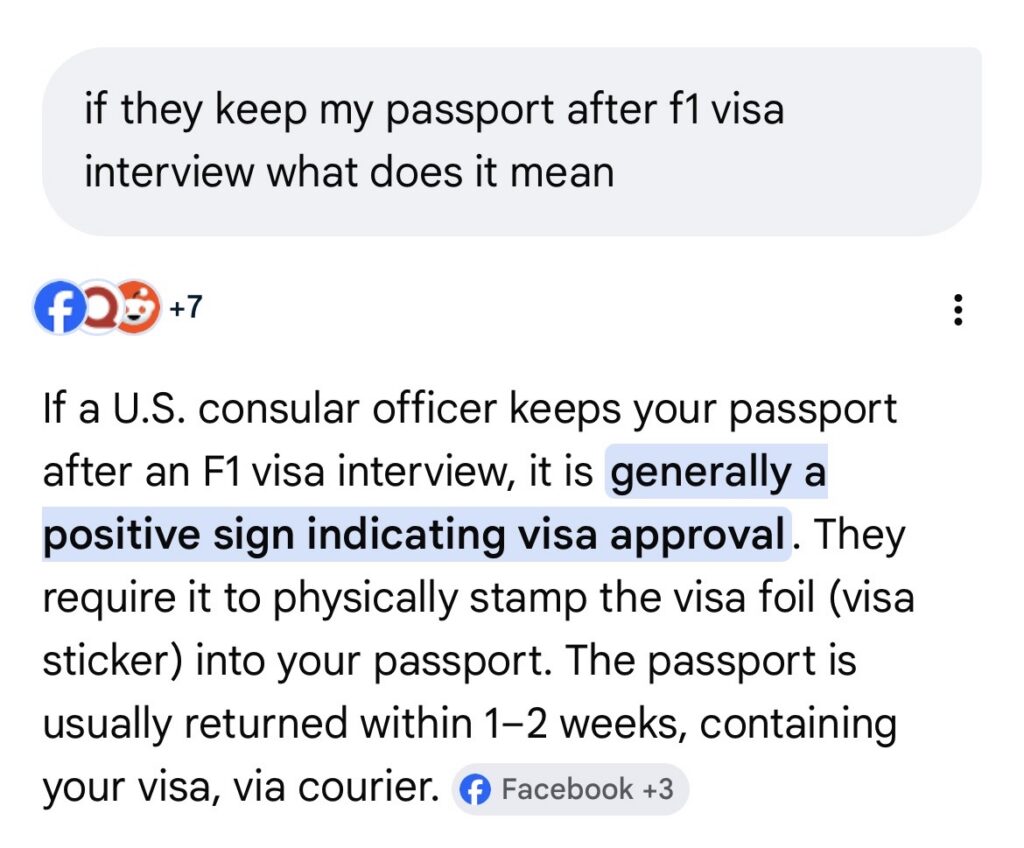
I made up a number that was equivalent to the total he saw on the bank statement I had presented. I had a vague memory of seeing the number 20 minutes before, but didn’t know if I got it right. I took my basic knowledge of mathematics and turned it to my advantage, unsure of the outcome. I chewed the inside of my mouth, praying that my calculation would suffice. He nodded, with no other expression on his face. Needless to say, I was very, very confused. This time, I didn’t just hear the familiar click of the stamp – I saw it. He placed my passport in a tray behind him. Was he holding it hostage?
“Congratulations. Here are your documents.” He slid my papers through the small glass opening.
“Thank you,” I said, collecting the papers and quickly putting them back in the folder it came from. I scurried out of the line, flushed and flabbergasted. He took my passport and he said congrats — does that mean I got it? I ran outside to get my phone from the locker and quickly Googled it.
I was in.
I was in!
I skipped back to my hotel, blazer and all. I didn’t care less about the heat.
Aditi Vyas is a content writer with more than five years of agency experience who loves expressing herself verbally. She is pursuing her Master of Science in media science and is excited to make an impact in the healthcare industry using her storytelling skills.
Leave a Reply