
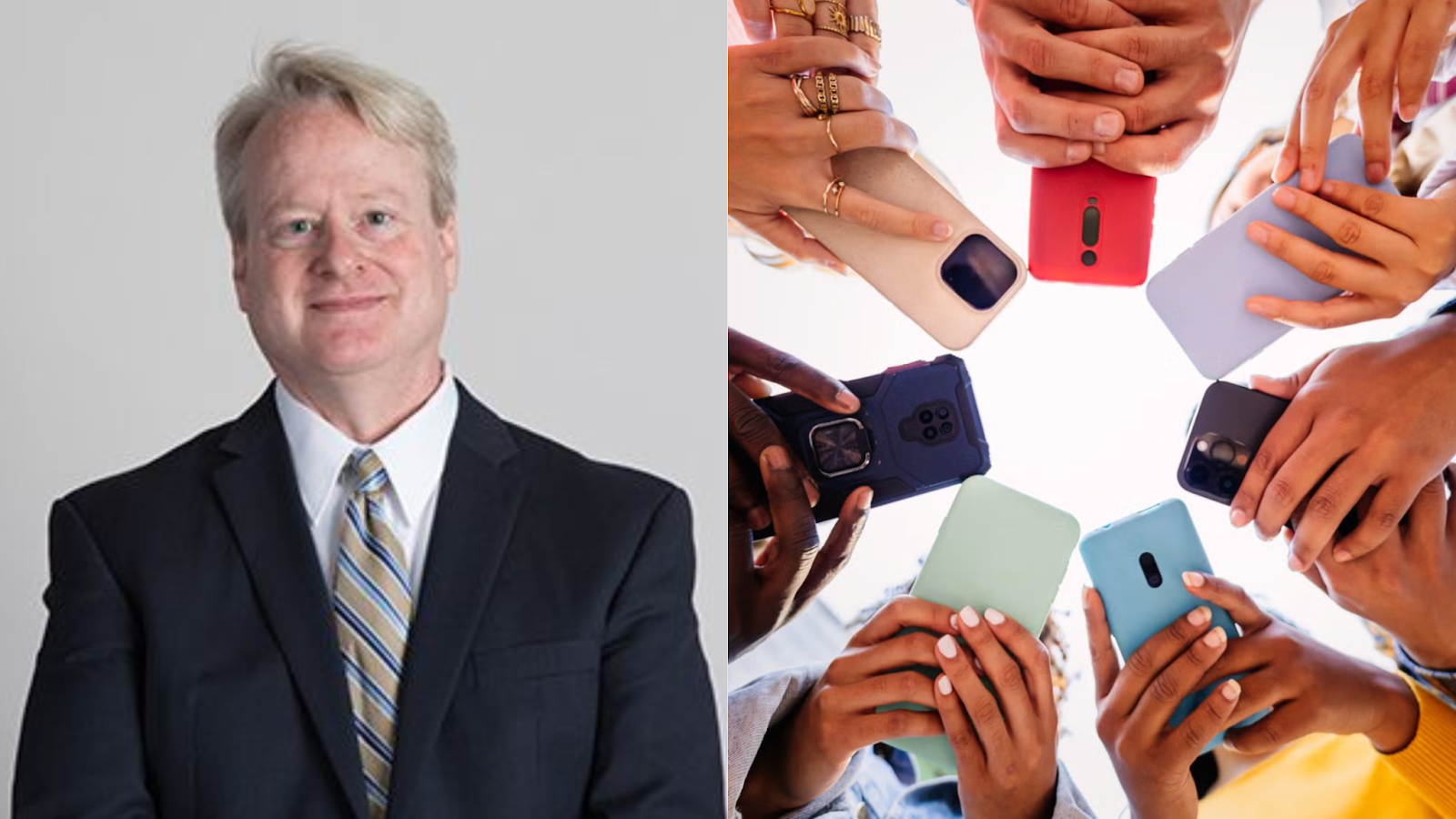
The founder of The COMmunicator (the site you are on right now) is a walking contradiction. Dr. Eddie Downes is a PR professional and professor who does not own a smartphone. This highly accomplished speaker and scholar will admit if he doesn’t know the answer to your question, but he will attempt to answer anyway – and leave you ruminating over his wisdom.
With just under 30 years at BU, Downes has seen this institution from the inside out. As a professor, faculty advisor, and member of the faculty-in-residence program, he helped build what we know as “COM.”
In those three decades, he has spoken in 12 countries and worked on Capitol Hill. Now, he’s writing a book about press secretaries of Capitol Hill, a recurring topic of interest for the scholar since his dissertation in 1997.
But lately, Downes has been fixated on another topic. On Feb. 26, in COM209, he hosted a lecture titled, “What’s Going on with that Device Attached to your Hip: The Downfalls of Device Dependency.”
The COMmunicator sat down with Downes to learn more about media dependency and its effect on communication, both as a cognitive skill and a professional field.
This interview has been condensed and edited for clarity.

What made you start researching media dependency effects? What were you seeing in your surroundings that led you here?
I [came across] a reading, 20 years ago, and the essence of it was: What’s happened to the present? What’s happened to being present with one another?
The article was by a brilliant guy who wasn’t an academic, but his premise was that we’re losing something essential because we have these devices between us. That stuck with me so much. He would say, for example, “I’m with this person, but they’re with somebody else…” It’s a humanistic thing that brought me into it.
I went to a college called St. Bonaventure University… and their whole motto was, “We hold the door for one another.” The college’s premise is that we look at the whole person and we ask ourselves, “How can we find something in that person that is unique and special?” [However] the phone made us all the same, and it took away the whole person because you’re just your phone.”
What did you expect to find going into the research, and did anything surprise you?
A lot of things, to be frank with you, were confirmed. My research began to show that we have dopamine rushes, which make us physically addicted. The research also said [humans] are intermittently reinforced. So I knew that intermittently, physically, and emotionally or psychologically, we were addicted.
I would go to an academic conference, present this research, and I didn’t get pushback. I would ask: “How many of you feel overloaded with information?” and everybody would say yes. Most recently, I’ve been asking: “Do you want to be available all the time?” and people say no. It’s really been a confirmation process more than anything else.
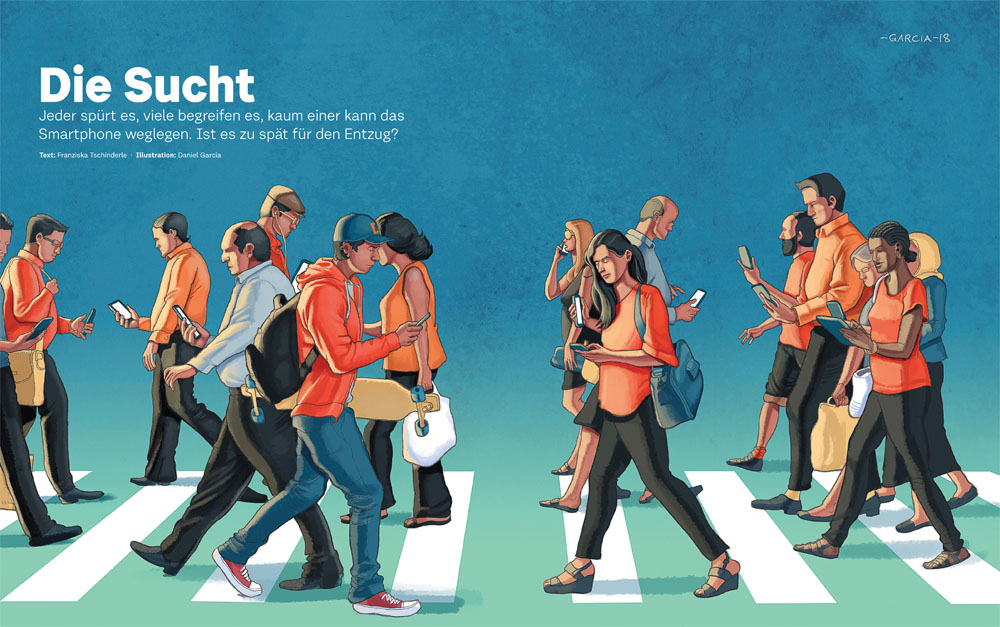
For PR professionals, being on-call is practically a job requirement, as is being prepared for a crisis and keeping up with trends. How do we go about finding balance?
In our field, yes, we have to be available. If you’re making $2 million a year, yes, that comes with the territory. I think you can still limit it somewhat, but it’s very difficult in PR specifically.
On the other hand, I’m not sure being available all the time is really helpful. Do we have to be subservient to that? I don’t know. But I would say, in our field, yes.
I knew that intermittently, physically, and emotionally or psychologically, we were addicted.
You mentioned we have no control group. There is no population untouched by devices to compare against. Does that make you skeptical of the research?
Of course. We don’t know the long-term effects, and we don’t have a control group to understand what’s going on. There are religious communities or smaller populations that you could compare. But they don’t represent the population to a T. Television came out around 1950, and by 1960, people were watching eight or more hours a day, and we had no idea that was going to happen.
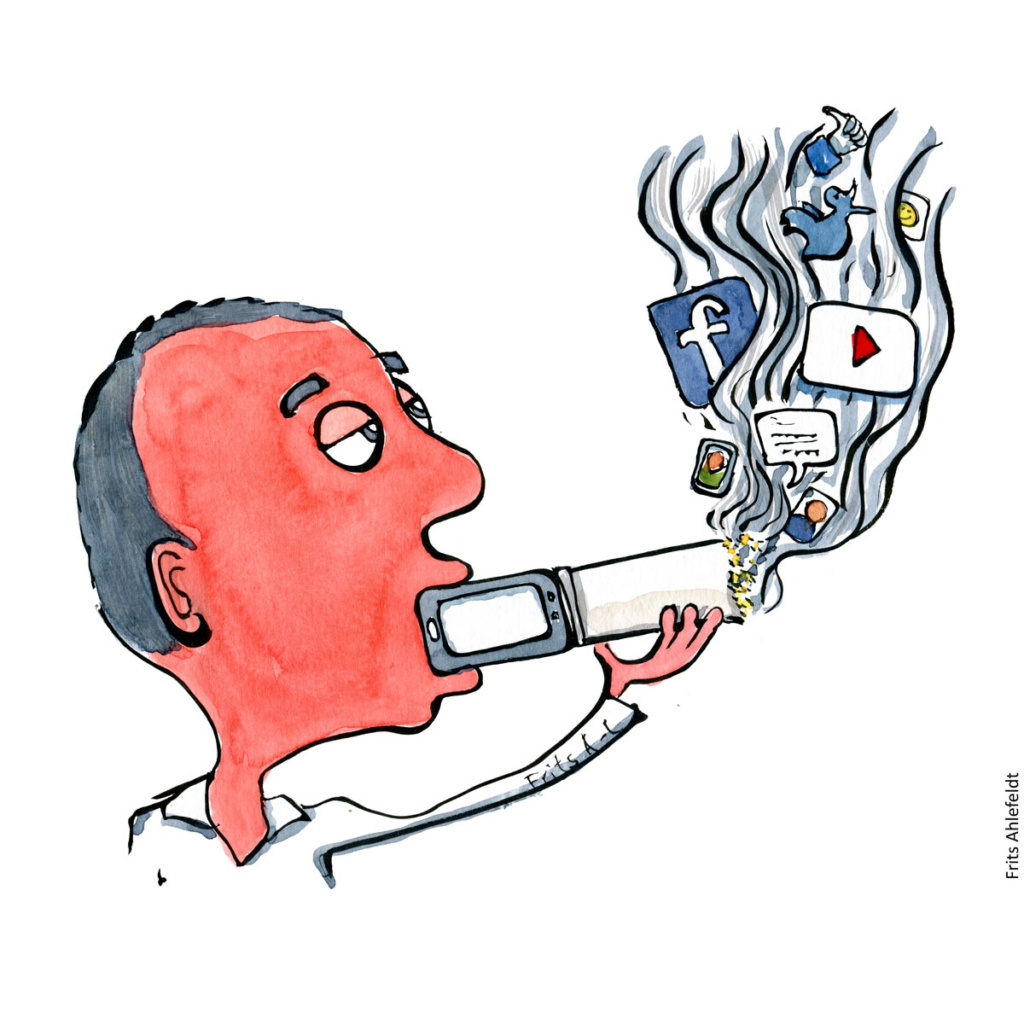
You said awareness precedes behavioral change. But a lot of people are already aware they are on their phones too much and still cannot stop. What awareness is missing?
I don’t know. I mean, I can point out a trend, but I can’t point out why it is. I guess that’s the science-y part, right? You can limit your apps. There are some platforms you can use [to] limit your time. But what’s going to take the person away from doing this? I don’t know.
I just have to admit that I don’t know all the answers. If [this] were a research paper, I would say that future studies should look into this.
Lastly, PR is supposed to be built on curiosity: asking questions, digging for information, understanding audiences. Do you think dependency is working against that?
In terms of PR, it’s not about information [alone], but what kind of information you’re accessing. There’s so much out there. What do I need to better serve the client? Does that mean I have to watch MS-NOW, or does that mean I have to focus on the audience? Focus on the consumer. Not the media, not the activist. It’s focus. If we don’t focus, we lose the whole track.
Sara Desroches is a pop culture and entertainment enthusiast, currently pursuing her master’s in public relations. She is keen to contribute her technical knowledge of media to conversations about literature, film, and TV, and social media.


Leave a Reply