
In our media-saturated world, podcasts are rising in popularity as an attractive and powerful communication tool that serves a dual purpose: entertainment and education. A good podcast lets a listener to relax, while also enhancing professional skills and effectively improving communication and critical thinking. I have come to understand this value as a student of communication and media studies.
The podcast forms a special learning experience because it integrates voices, stories, and real-life examples in a form that we can access anywhere, at any time. Unlike written materials, a podcast lets us develop active listening skills, value tone, and internalize information through human voices rather than abstract symbols.
Following the COVID-19 epidemic, the use of podcasts as educational resources grew, in part because listeners were isolated and because audio content provided something text could not: a human voice. Podcasts broke through barriers of doom scrolling and social isolation, providing accessible, hands-free learning that was personal and engaging.
Studies suggest podcast-based learning can improve listening and speaking abilities, stimulate critical thinking, and foster lifelong learning by providing deeper ideas through immersive audio content.
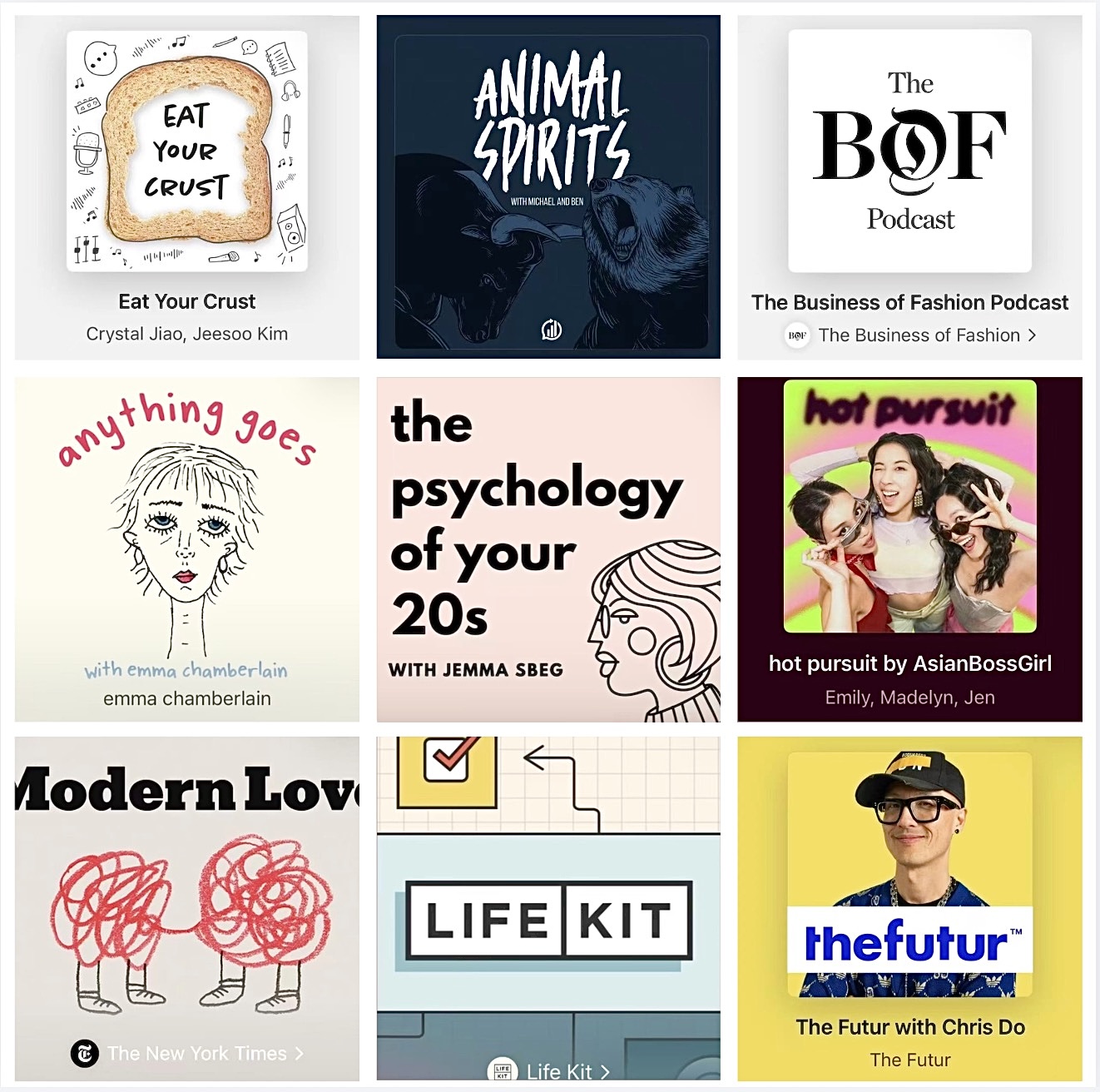
Below, I reflect on two podcasts that have shaped my knowledge: Eat Your Crust and The Futur Podcast.
Eat Your Crust is a conversation hosted by two inspirational women, Crystal Jiao and Jeesoo Kim. They chat about ordinary topics such as technology and culture, personal growth, and relationships, yet they also have a knack for engaging audiences through authenticity and relatability. The informal structure of their conversations has taught me that tone, timing, and personal interaction play impactful roles in making a ordinary conversation extraordinary. Especially as an ESL learner, this is valuable in both professional and interpersonal contexts.
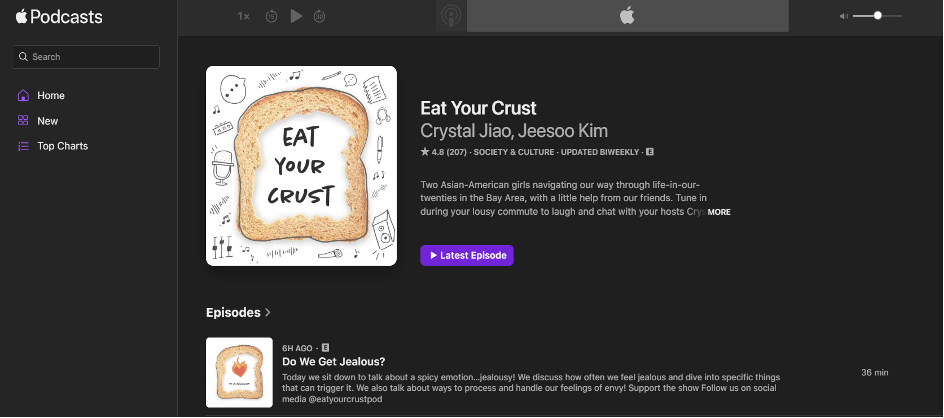
The podcast is regularly filled with guests who provide alternative viewpoints. The hosts do not merely pass on information but create a bond with these guests, and this leaves us more involved and interested. From the lens of a COM student, this is specifically connected to the methods of persuasive communication that are often covered in media studies: the effectiveness of the communication increases when speakers empathize, engage with each other, and use the vocabulary that appeals to the experiences of the audience.
The Futur Podcast by Chris Do is another podcast that contributes to my perspectives on communication. Chris speaks more technically about communication branding, creativity, marketing, and business design, and he brings in experts who provide real-world information on how communication strategies apply in the workplace.
This podcast has broadened my notions of strategic communication, going beyond everyday conversations and encompassing marketing language, brand positioning, and storytelling. It is also helpful for learning about real-life applications of communication theory, like how content creators can use words to appeal to the audiences or how leaders can build trust and credibility through their language.

The Futur Podcast has also taught me that communication skills are intertwined with career success, particularly in creative industries. For example, when speakers discuss negotiation strategies, persuasive messaging, or content creation, they demonstrate how word choice, organization of ideas, and delivery style all influence how their ideas are received. In my practice, I regularly listen to podcasts, and I already see improvements in my professional skills, especially in presenting and interviewing. I now understand how to listen, think, and respond in a more thoughtful and analytical manner, and this approach has made me more confident when making a speech and participating in group discussions.
Podcasts are not only entertainment, they are effective and impactful learning mechanisms that integrate narrative, conversation, and instructions into real-world communication. Now just hit play. Your next lesson is one episode away…
Ellyn is a laid-back storyteller who loves to share her perspectives when inspiration comes. She is pursuing her bachelor’s degree in media science at Boston University, and she will be continuing to narrate more eye-catching stories related to the fashion industry in her career path toward graduation and after.

Leave a Reply