
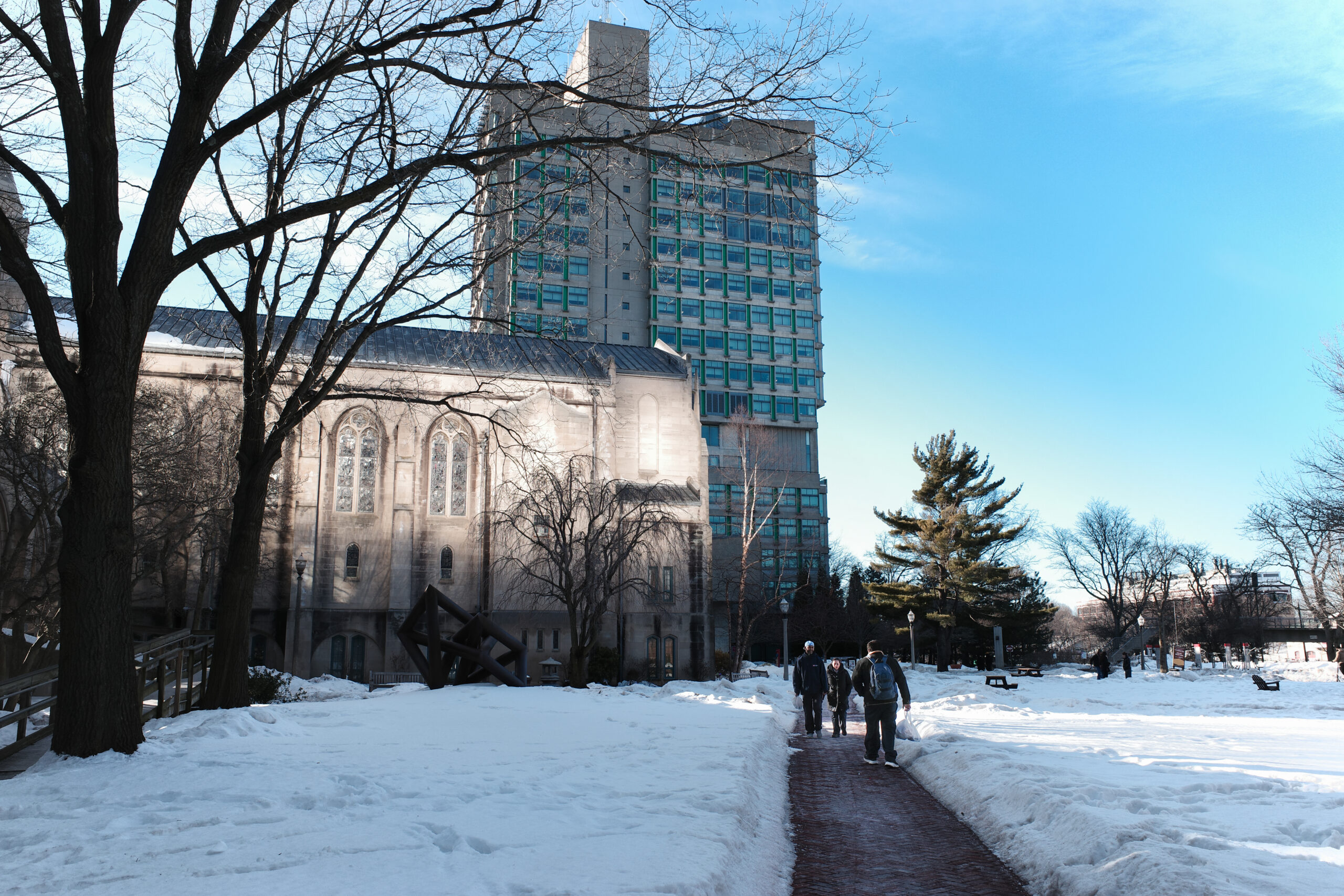
Two weeks after a blizzard (the first one – not that second one) shut Boston University down, the snow had started to retreat to the edges of the street, and piles quietly started to shrink along the grass and around tree trunks on Commonwealth Avenue sidewalks. Our campus was starting to look almost normal again. But when I tried to take pictures of that moment, I realized I didn’t know what emotion I was capturing.
It was time for a small experiment: one paragraph, two sets of photos, same location, similar time of day.
First, I wrote a neutral paragraph about the environment. I chose not to push any particular mood. The scene could read as calm, or rushed, or simply ordinary. That ambiguity was the point:
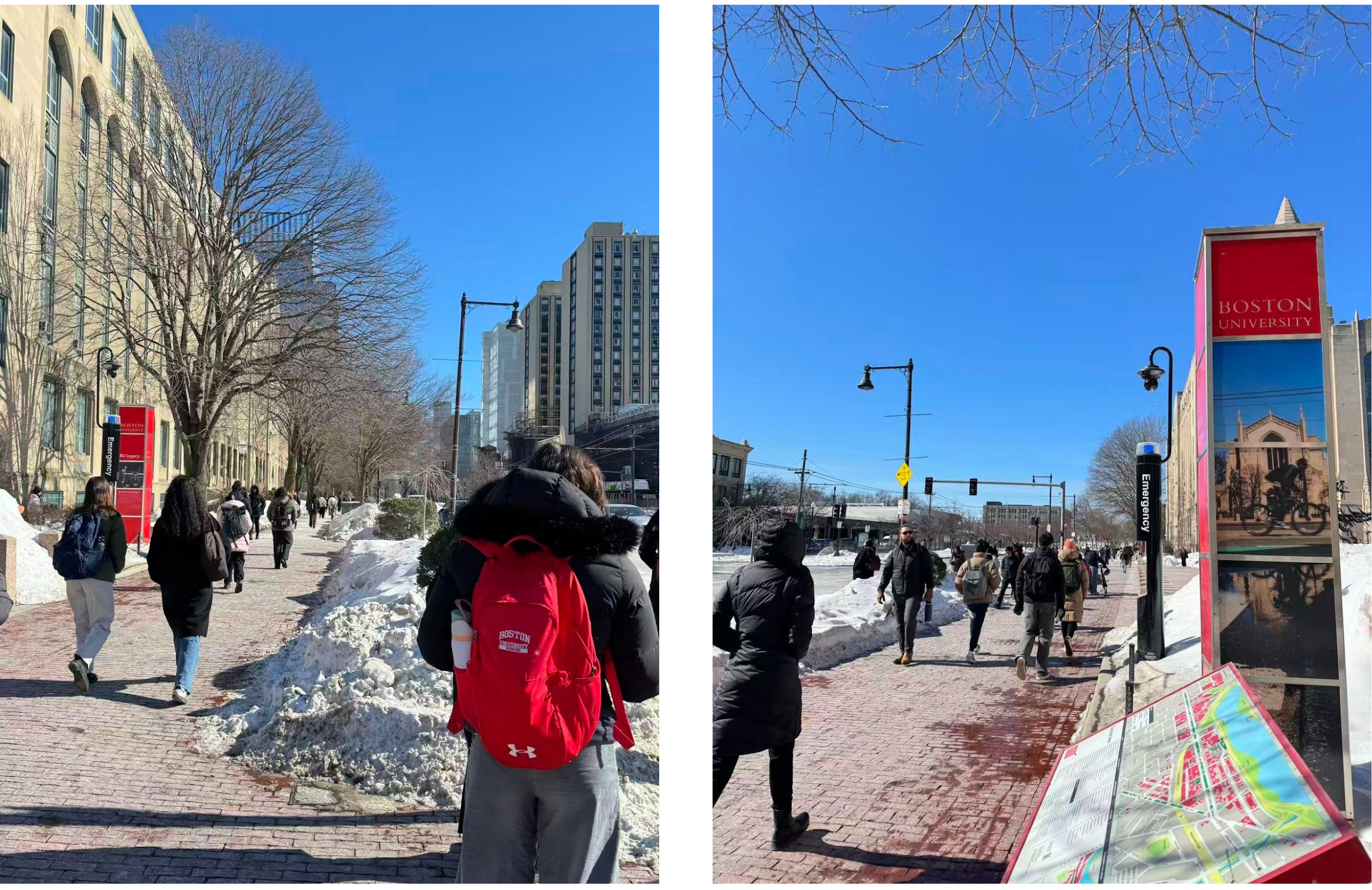
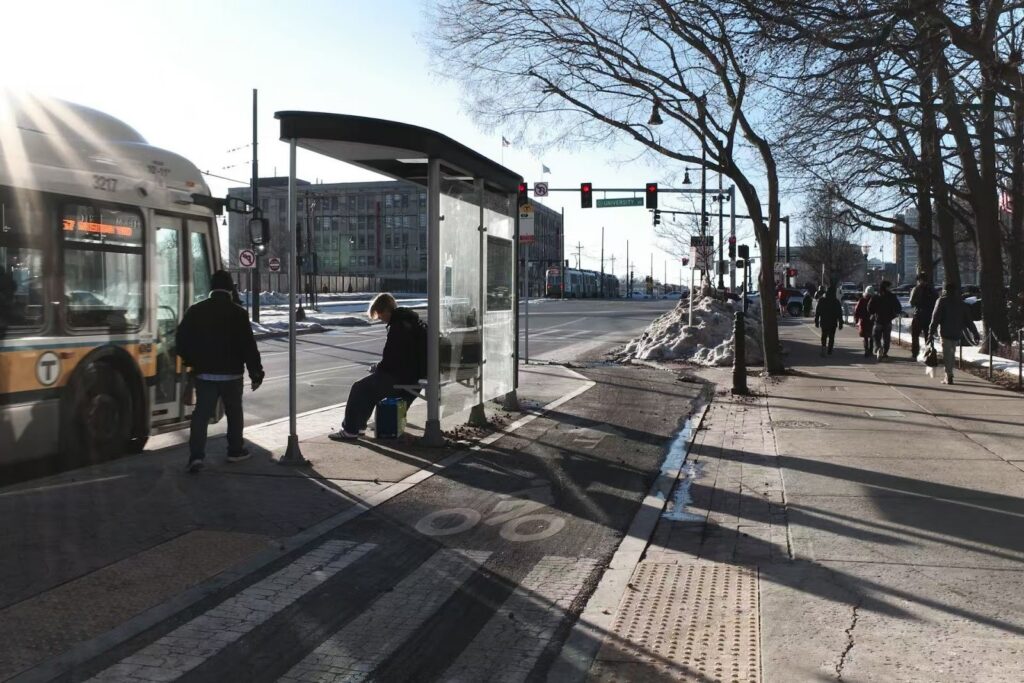
“Two weeks after the blizzard cancelled classes, campus doesn’t look “shut down” anymore. The sidewalks along Commonwealth Avenue are mostly clear, and the snow is no longer a problem for walking. But it hasn’t disappeared. It stays where the city doesn’t need it gone: along the grass, around tree trunks, and in small piles by the edges. After another light snow over the weekend, those patches look bright again in the sun. Students rush quickly as usual, earbuds blocking out the world as they cross at the lights and pass by each other, barely noticing the weather. Sunlight still reflects off the white parts, and for a second, it can feel softer than it looks in photos.”
Then, I shot the first two images along Commonwealth Avenue with my phone.
Next, I reached out to Mingyang Wang, a student photographer in his last year in the BU Film and TV program. I asked him to shoot the same scene without seeing my version first. Afterward, I interviewed him about his choices. The goal was not to prove that professional equipment makes a difference. I wanted to find out whether the real gap was something else entirely: intention.
Distance and Subject: Who Is the Story About?
My photos were taken from a comfortable distance. I stood back, kept the sidewalk and snow in the frame, and let people walk through naturally. The paragraph alongside my images feels stable and factual. The visuals confirm what the words already say, without pushing the reader anywhere in particular.
Wang’s photos pulled closer, or shifted the angle entirely. In one shot, a student’s posture and the snow behind them create visual tension that the words alone do not. In another shot, a student’s use of earbuds suddenly seems less like ordinary behavior and more like deliberate isolation from the world.
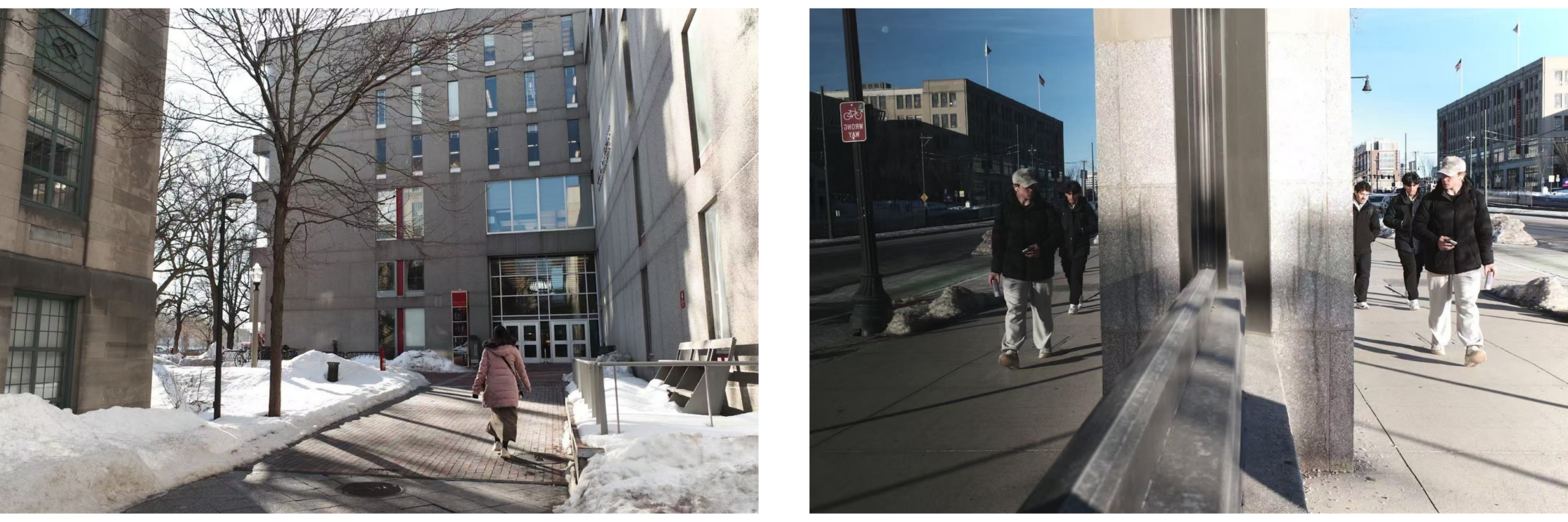
gestures into something heavier. (Photos/Mingyang Wang)
How a Student Photographer Thinks
Wang, who works primarily with a fixed-lens compact camera, said his first instinct after reading my paragraph was to find the relationship between the processed snow and the students moving through it. His goal wasn’t to illustrate the text, but to make that tension visible on its own terms.
Wang talked about three visual anchors that he was looking for. The contrast between light and shadow, the presence of structural elements (like scaffolding or architectural lines), and the accumulation of snow. He planned to shoot from a medium distance to avoid disturbing people. He also wanted to employ reflections in puddles and glass to give greater meaning to his photographs.
And then he waited.
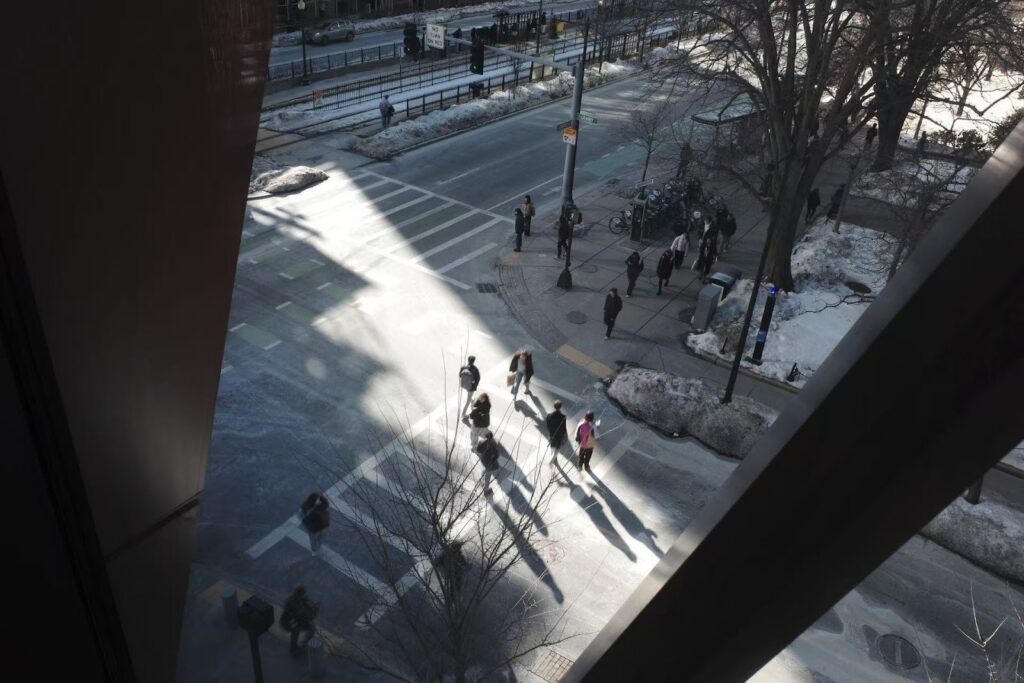
“I choose 30 to 60 minutes before sunset,” he said. “The shadows have angles.”
When he selects his final photos, he looks at not only the aesthetic quality but also how complete the information is and how well it can set the mood for the story.
“The photo and text should be complementary,” he added, “but the photo can go beyond what the words say.”
His process makes one thing clear: The gap between his photos and mine was not completely about the techniques and theory. It was about arriving with a question and having the patience to wait for the scene itself to answer it.

Leave a Reply