
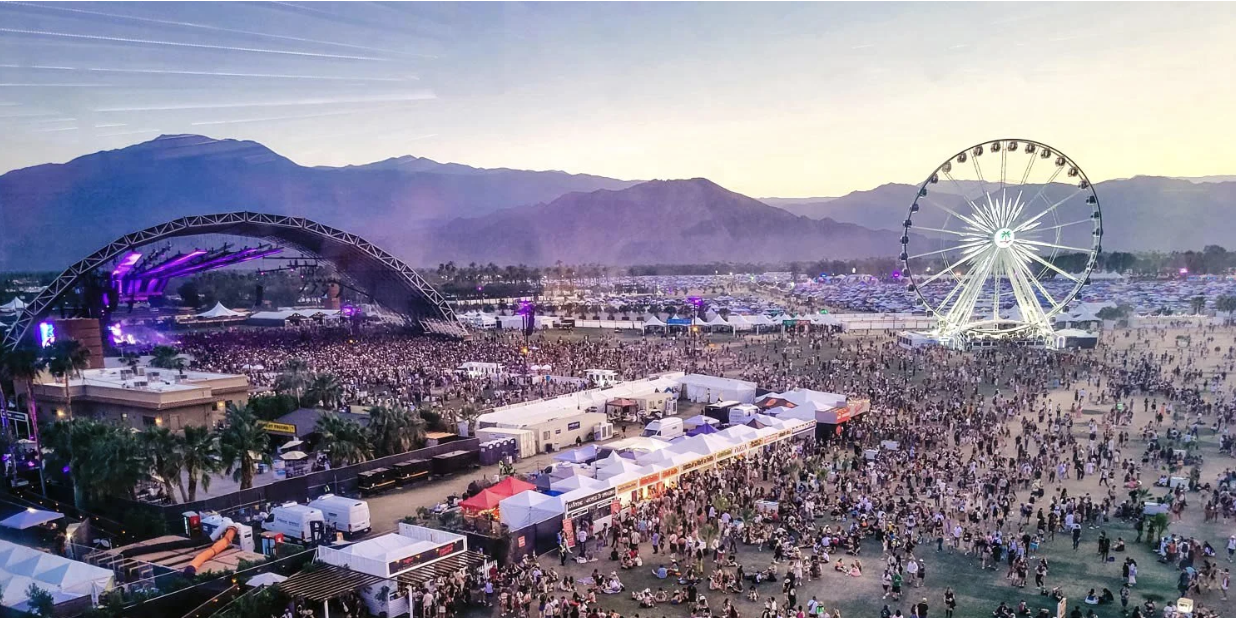
There is a version of Coachella that exists in the cultural imagination: dusty polo fields, flower crowns, that one Beyoncé performance everyone still talks about. Then, there is the version that actually happened in April in Indio, California, which was, by most measures, a three-day brand convention with very good sound design.
By the time both weekends wrapped on April 19, the reviews were in. And the conversation about who “won” Coachella 2026 has almost nothing to do with who was on the main stage.
Bieberchella Was a Rhode Campaign in Disguise
Out of all the acts and events across the polo fields this year, the “Rhode play” was the most constructed – and the least obvious about it.
Justin Bieber’s headline performance on Saturday night was already the most eagerly awaited moment of the festival. Anticipation for Rhode began even before the gates opened, with billboards for Hailey Bieber’s brand lining the drive to the desert, serving as an early touchpoint for anyone making the trip. By the time people arrived, Rhode was already living in their heads. That is ambient brand placement that no media buyer can reliably recreate. You cannot purchase a vibe. Rhode found a way to borrow one.
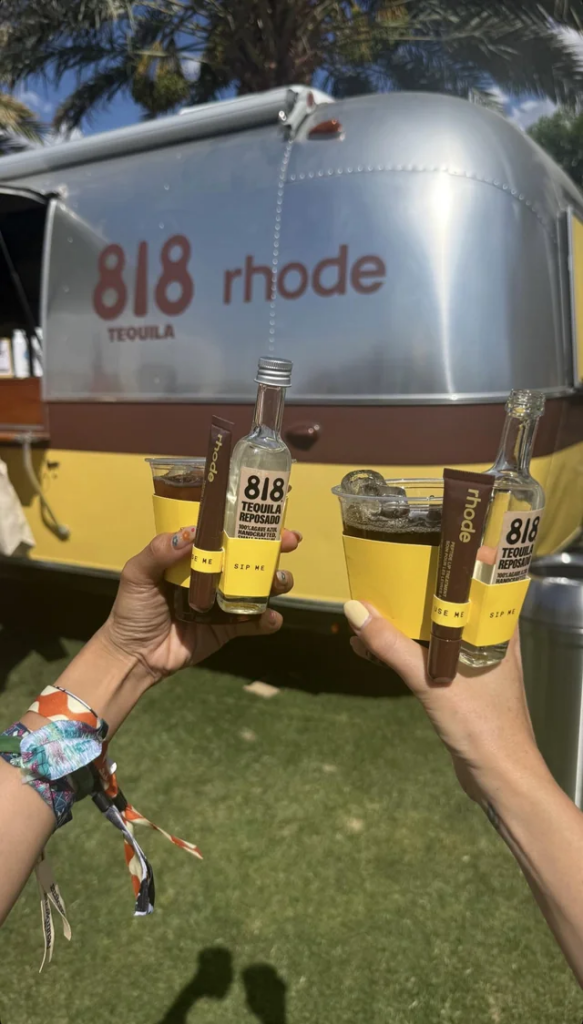
Once the weekend started, Rhode ran multiple activations, mostly surrounding the new Rhode x The Biebers collection of eye patches, acne patches, and a Caramelized Banana lip peptide treatment. The pop-up, Rhode World, featured a dart game, touch-up rooms, and themed cocktails, all synchronized to the new product launches and Justin’s headlining slot. Then there was the 818 Tequila food truck serving caramelized banana carajillos with a peptide lip treatment physically attached to the cup. The product was on the drink. You held it in your hand for an hour.
It all worked because it did not feel like a campaign. It felt like a couple bringing their respective careers to the same weekend. The cohesion between the collection, the pop-up, and the headlining performance created what one PR observer called a “powerful cultural moment, with strategic alignment across announcements, experiential marketing, and talent.” That is a polite way of saying Rhode ran a masterclass and made it look like a date night.
Sabrina Carpenter Kept a Promise and Built a Universe Around It
Two years ago, Sabrina Carpenter played a supporting slot at Coachella. On her way off stage, she told the crowd she would see them back there when she returned as a headliner. She said it like it was a fact.
On Friday night, she delivered on that promise. The callback landed so hard precisely because it was real and documented and people remembered. The narrative wrote itself before she played a single note. That kind of earned storytelling is basically impossible to manufacture from scratch, and she had been sitting on it for two years.
The show itself was called “Sabrinawood.” A towering sign, dancing poodles, vintage cars, multiple costume changes, and a Barry Manilow cover, all building toward a Hollywood Hills fantasy that managed to feel both enormous and personal. Susan Sarandon showed up in a car to deliver a seven-minute dramatic monologue as an older version of Carpenter. Variety called it bizarre, and fans called it iconic. For the closing number, she rose from a water fountain attached to a Cadillac, driving away with one final wave.
Off-site, Carpenter partnered with Airbnb to run “Sabrina’s Pit Stop,” a themed fan experience with photo-ops, slushies, and limited-edition merch. Her team erected a light-up billboard on Interstate 10 on the drive in. She built a world and then invited you to live in it for three days. The performance was the center of gravity. Everything else orbited it.

Starbucks Made Scarcity Out of a Frappuccino
This one felt genuinely clever, even though it didn’t need to be. Starbucks made its Coachella debut as the official coffee, tea, and Refreshers sponsor. The obvious play was to set up a booth, hand out iced lattes, and collect brand impressions. They did operate a public Starbucks coffeehouse on the festival grounds with complimentary cold drinks, which matters more than you might imagine when you factor in what hydration costs in that desert heat. Free cold brew is a real offer, and people took it.
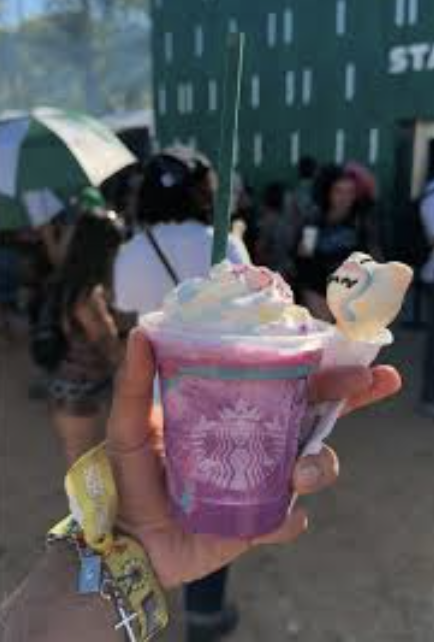
But the Unicorn Frappuccino was the actual move. The drink that caused genuine nationwide chaos when it launched in 2017 came back exclusively at Coachella, for just a few hours each day, and nowhere else on earth. No app. No local store. To get one, you needed to spend at least $2,000 on the trip, and even then it was not guaranteed. Taking a product that is nine years old and turning it into something people pay $2,000 to access is not an afterthought, but a deliberate architecture of desire.
Off the grounds, the invite-only Desert Sirens house, a play on the Starbucks siren logo, offered a private retreat with a fully stocked kitchen, customized apparel, and ready-to-drink beverages for a curated guest list. On the festival grounds: public generosity. Off the festival grounds: exclusive access for the right people. Two tiers, one brand, and a first Coachella appearance that people actually talked about.
Dove Turned a Complaint Into a Campaign
During Coachella 2025, a TikTok creator with an artist pass posted that some famous influencers at the festival smelled bad and begged deodorant companies to become sponsors. The video reached 23 million views and 3.2 million likes.
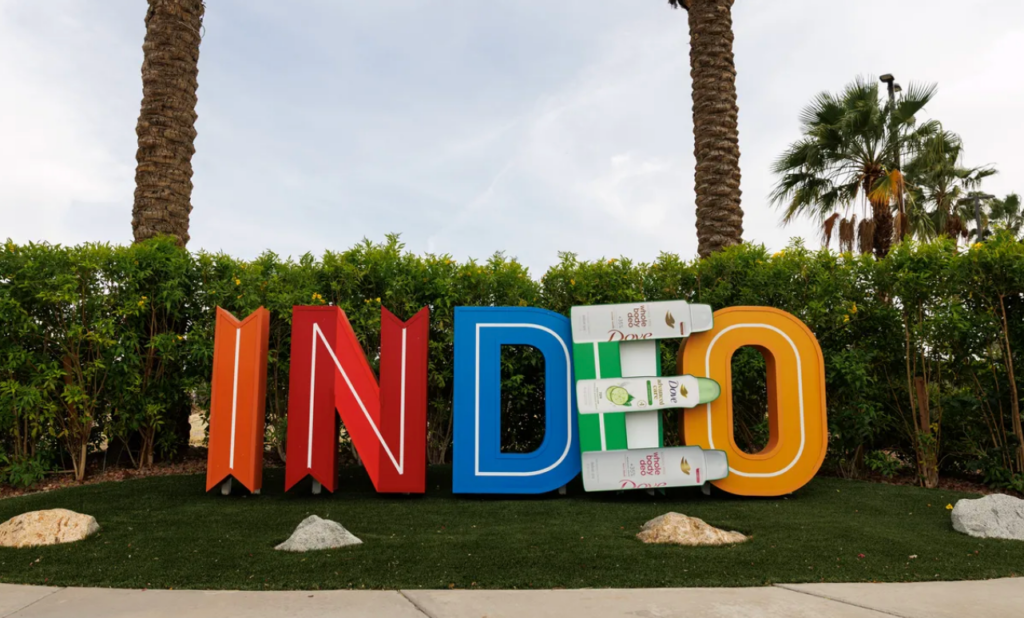
Dove saw it. And instead of drafting a polished non-response or quietly filing it away, they said yes. For 2026, Dove became the official deodorant sponsor of Indio, Coachella’s host city. When festivalgoers landed at Palm Springs International Airport – where most attendees begin their Coachella experience after traveling in from all over – they were met with giant Dove spray bottles and product samples.
The whole origin story is the campaign. You cannot pay for that setup. Someone complained publicly, a brand listened publicly, and the follow-through was visible, funny, and exactly right. Most brands have a process for responding to viral moments that takes long enough to kill the moment entirely. Dove’s did not.
Barbie Built a Room and Filled It With Self-Awareness
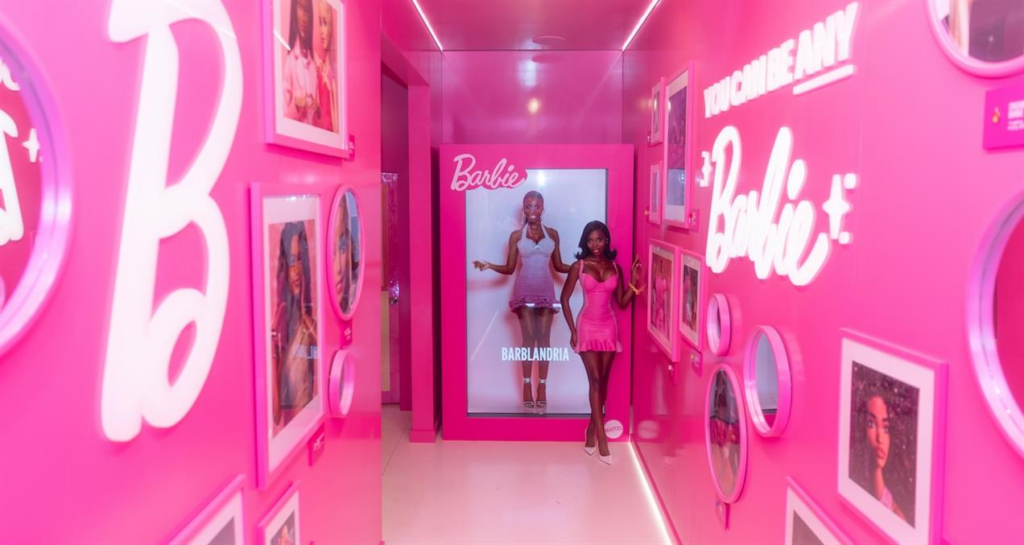
The Barbie pop-up featured a bright pink exterior that was impossible to miss. Inside, framed photos of Barbie dolls lined the walls, each with ironic labels, including “Everything Is Fine Barbie” and “Nepo Baby Ken.”
The charm bar gave people something to actually make, which is how you get people to stay and post rather than glance and move on. The “You Can Be Any Barbie” message held up because the brand committed to the bit. It is not easy for a toy company to walk into a music festival and read the room correctly. Barbie managed it, mostly by not pretending to be something it wasn’t and leaning hard into the version of itself that the internet already loves.
What This Actually Says About Where Marketing Is Going
Every one of these activations shares a quality that is harder to achieve than it looks: They fit where they were. Rhode felt personal because Hailey and Justin Bieber are actual people with an actual marriage and an actual fan base that was already invested. Sabrinawood felt earned because the promise behind it was two years old and documented. Dove felt funny because the complaint it was responding to was real. Starbucks felt worth talking about because the Unicorn Frappuccino exclusivity was a genuine constraint, not a manufactured one.
Coachella hit a commercial turning point around 2016, when making everything Instagrammable became a top priority for events and the brands around them. A decade later, the most sophisticated brands have figured out that Instagrammable is not enough. The crowd in Indio is young, online, and very good at detecting the gap between a brand that belongs in a space and a brand that paid to be there. The activations that landed this weekend were the ones that understood the difference.
The desert does not forgive bad PR. It just makes it more visible.
Manya Mehta is a public relations student with a passion for writing. She is in her senior year and loves PR writing, crafting communication narratives, and storytelling. She has also written and published a poetry book, “when flowers wilt,” and holds a keen interest in journalism and reporting writing.
Leave a Reply