
By Timothy Kim
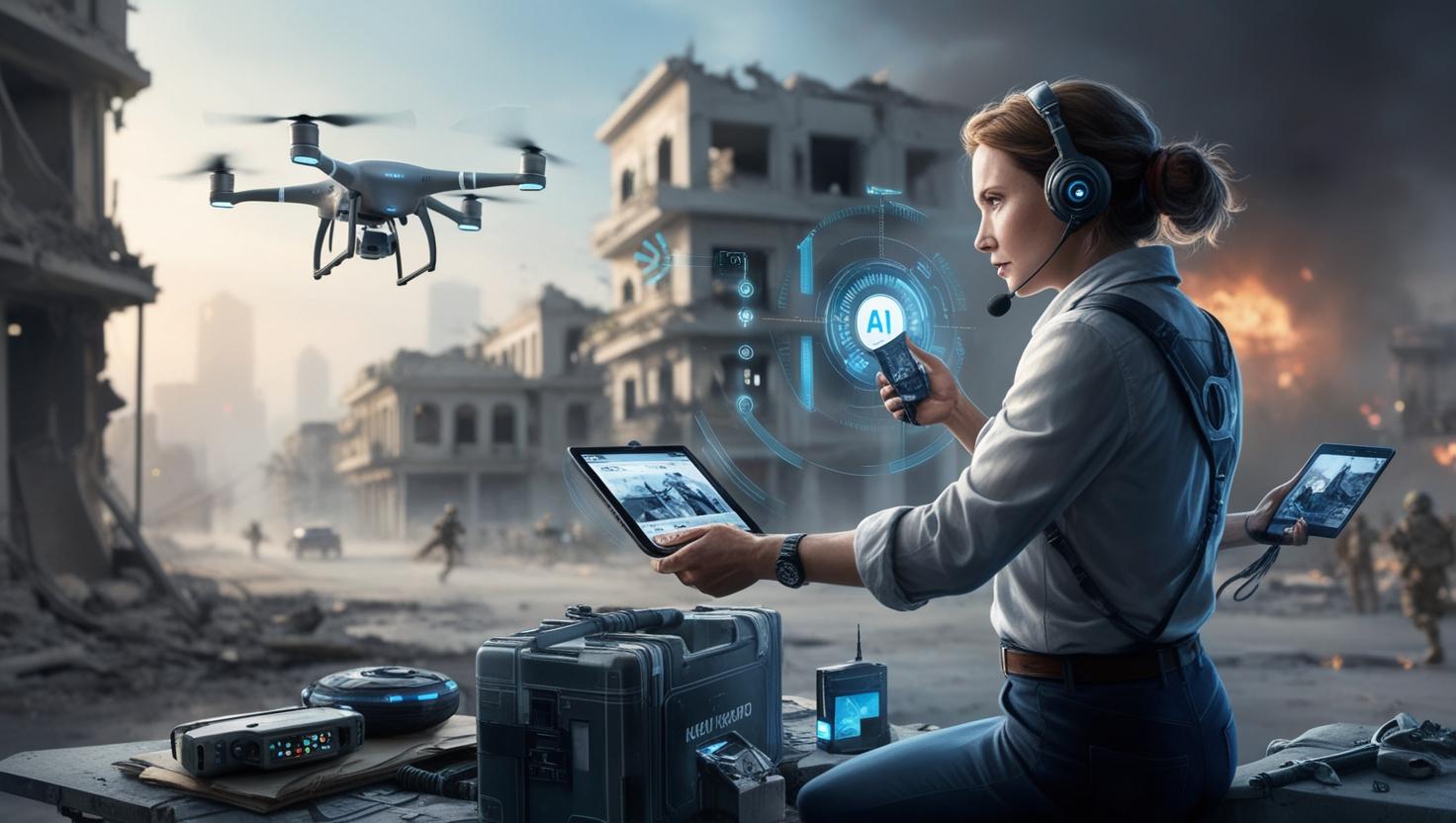
As worldwide conflicts dominate headlines, journalists continue to grapple with the challenges of covering crises accurately and responsibly. On Feb. 18, Boston University hosted a virtual COMtalk event titled “Seeking Truth: Reporting on Conflict and Crisis,” in which a panel of three seasoned journalists discussed the evolving landscape of global conflict reporting, the impact of artificial intelligence (AI), and the future of human reporting.
The panel included Greg Marinovich, Investigative Photojournalist and Master Lecturer, Boston University College of Communication; Emily Feng, Correspondent, NPR; Tinku Ray, Executive Editor, The World at GBH AND PRX; moderated by Cikũ Theuri, Senior Editor, Here & Now, WBUR.
The discussion started by addressing what panelists characterized as the dominance of Western perspectives in global conflict reporting. While major news organizations have the reach and resources to dispatch correspondents to conflict zones, the panelists noted that local journalists’ voices are often overlooked. “The facts might be there, but the tone of the presentation is key,” said Feng. She elaborated on how delivery shapes the audience’s perceptions of conflicts and how she believes much of the news that’s delivered today is dominated by a Western-centric lens.
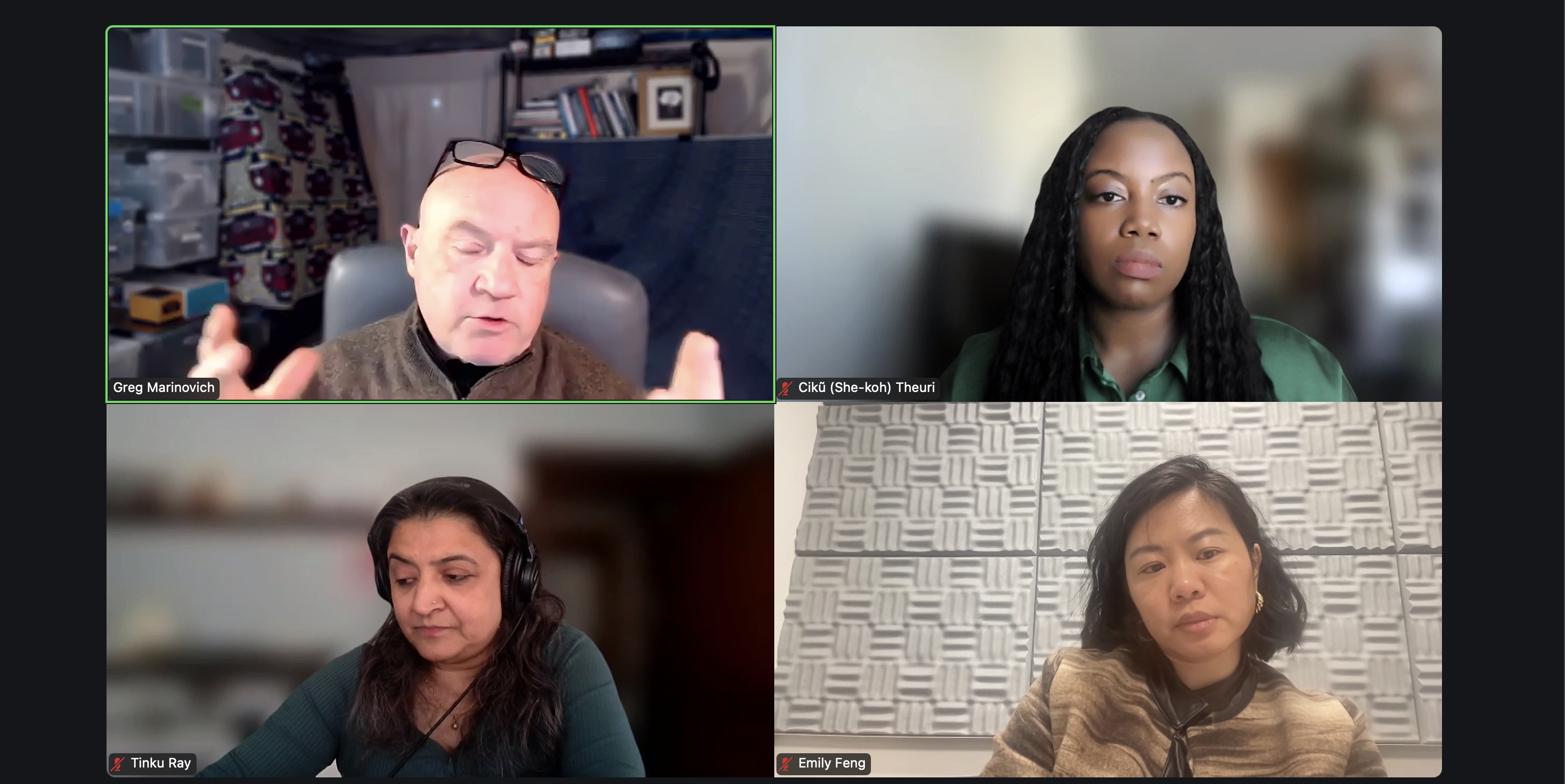
The conversation then turned to AI’s growing role in journalism as students asked questions. One student attending the event asked for the panelists’ opinions of AI-assisted tools in streamlining transcription and data analysis. Ray voiced deep skepticism about its reliability, recounting an instance where AI-generated summaries of a detailed report contained glaring factual inaccuracies. “It looked polished, but if it’s 60% wrong, that’s a major problem,” she said.
Marinovich was even more adamant. “You can’t be a real journalist without being there, walking the streets, talking to people,” he said. Marinovich continued to say that though AI can analyze data and detect patterns, it lacks the human instinct and ethical decision-making critical in high-stakes reporting. The panelists agreed that while AI may assist in journalism’s logistical aspects, it cannot replace human judgment, especially when reporting on sensitive topics such as war and crisis.
You can’t be a real journalist without being there, walking the streets, talking to people.
Concerns over AI-generated misinformation also loomed large. Deepfake technology and algorithm-driven news filtering have made it increasingly difficult to discern fact from fiction. “Something awful is going to happen very soon with AI that will force us to rethink how we use it,” Ray said. The panelists paused in silence momentarily, some nodding their heads and some with pondering faces.
Despite their reservations, the panelists admitted that AI is now an inescapable force in news consumption. With more readers relying on algorithm-curated news, journalists must differentiate themselves by providing in-depth analyses, real-time fact-checking, and on-the-ground storytelling that AI cannot replicate, they said.
Finally, the discussion shifted to the future of conflict reporting. Panelists offered advice to aspiring journalists, emphasizing the importance of adaptability and commitment to the truth. “Stay skeptical, not just of AI, but of everything,” Feng said. “Your job isn’t just to report facts—it’s to report the truth.”
Your job isn’t just to report facts—it’s to report the truth.
Sarah Park, a Boston University student who attended the COMtalk event, said the discussion helped her see AI through a new lens. She said that originally AI seemed like an unstoppable force that, through its continual evolution, could outperform humans in many of their professions. However, even with its evolution on the horizon, she is confident that there will always be a need for human sensitivity and intuition especially in the pursuit of connecting with other people.
Luke Kim and Andy Xu, two Boston University students who attended the COMtalk event, said the panel discussion resonated with them. As avid news readers they said that they were both challenged to look for articles coming from less mainstream western sources. They also said that in the future they would make more of an effort to check multiple sources for news information.
The webinar underscored both the challenges and opportunities in modern journalism. The panelists emphasized that even as AI reshapes the industry, the world still needs human storytellers willing to uncover the truth.
What’s your take on AI in journalism and conflict and crisis reporting? Share your opinions in the comments section below.


Leave a Reply