
By Xiuran Hao, Jiani Peng, and Xin Liu
Since Donald Trump’s return to office on Jan. 20, policies and social structures across the United States have been impacted, particularly in the areas of the military, education, trade, and the economy.
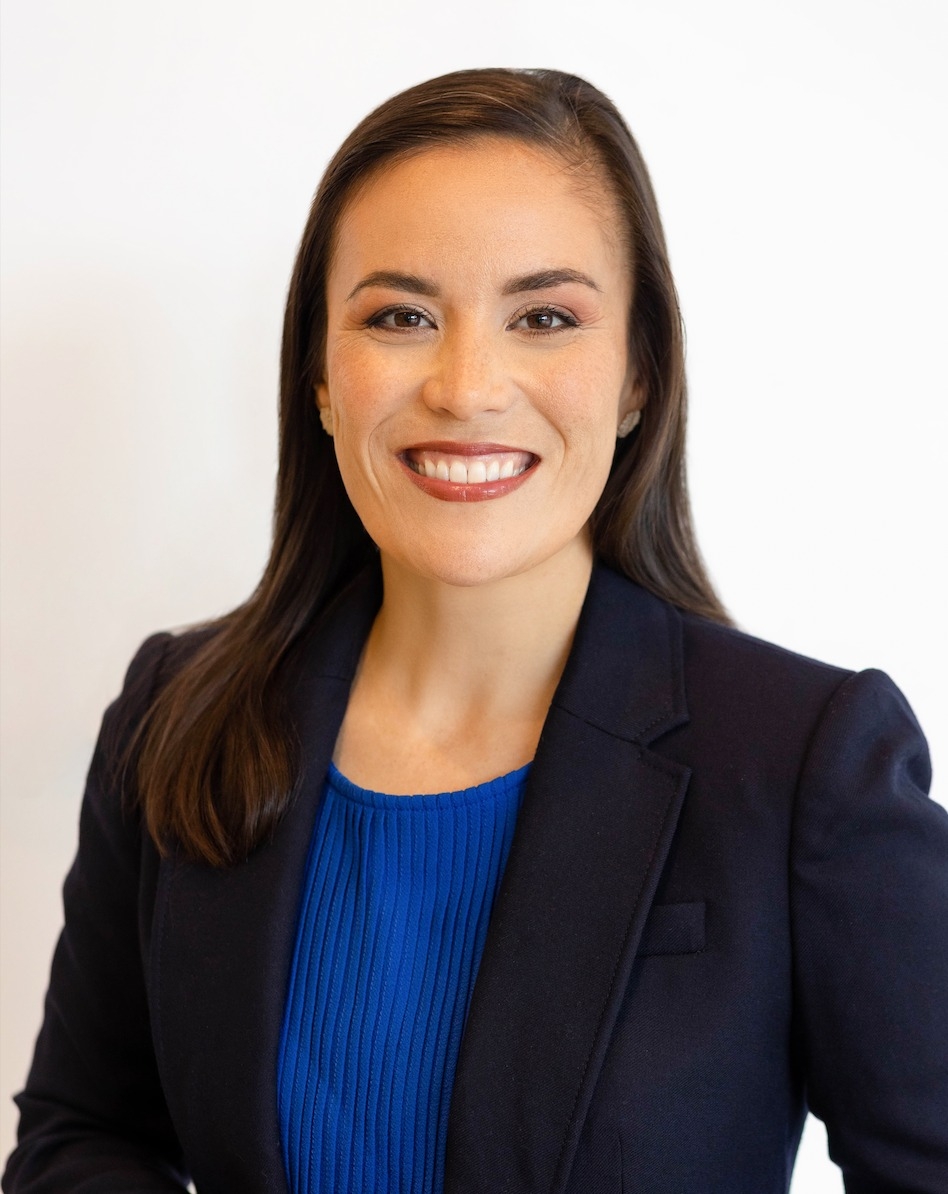
Gina Ortiz Jones, a BU alumnus who graduated in 2003 with a B.A. in East Asian Studies, served as Under Secretary of the U.S. Air Force during the Biden administration. She was responsible for organizing, training, and equipping the U.S. Air and Space Forces, as well as ensuring the well-being of approximately 700,000 active duty, National Guard, Reserve, and civilian personnel worldwide. She is currently running for mayor of San Antonio, Texas.
The COMmunicator’s Xiuran Hao, Jiani Peng, and Xin Liu discussed multiple aspects of the administration’s influence with Jones, including the role of local government in the transition of power, the balance between local and federal policies, the border economy, education and immigration, and the local impact of new trade policies.
Q: What are some of San Antonio’s important values that you think the local administration should uphold during this transition?
A: We’re very proud of the fact that a lot of people in our community serve in the Army or in the Air Force or in the Navy. Around 11% of our community is veterans, and 5% are on active duty. You don’t see that really in other big cities. When we think about the oath that all military people take to protect and serve the Constitution, that is a value that is important in our community.
They [Trump Administration] have said, “Hey, we want to freeze hiring across the government.” Well, one of the agencies that would be affected right away is the Department of Veteran Affairs (VA). They’re in charge of all the veteran hospitals in the country. They’re also responsible for all the programs that help veterans go to school or help veterans buy a house. In particular, I get my own care through the VA. When they talk about freezing hiring, that is going to make it harder to get an appointment.
If you’re not going to be seen by somebody at the VA hospital, they’re going to send you to a private doctor. Now you’re potentially taking up a spot that would have gone to a non-military person.
If you’re not going to be seen by somebody at the VA hospital, they’re going to send you to a private doctor. Now you’re potentially taking up a spot that would have gone to a non-military person. That act of saying, “We’re not hiring anybody” makes it harder for veterans to get appointments. That means it strains the local community and their medical resources, on top of the high price of things. Those are the types of things that I think, in our community in particular, we feel strongly about given our makeup.
Q: What would be a proper balance between cooperating with the new federal administration and supporting San Antonio’s core values?
A: I think it’s specific to our country. We have a constitution that outlines the checks and balances in our country. We have three branches of government designed to make it so that no one part of the government has too much power.
What we’re seeing with this administration is that they are really testing the limits of those checks and balances. They’re disregarding traditional norms that we have all understood to be in the best interest of our country. For example, when you have access to very sensitive information, the simple step of vetting the people who have access to that information largely hasn’t happened in the way that we all would expect and hope it would. People who have been nominated to lead these organizations; it’s not clear that they have gone through the appropriate security checks. Those are important because when you have such power, those checks are there so that nobody can blackmail you.
That’s why those things are important. But we haven’t seen that from the very top to even some of the lower level folks – the regular everyday people that are really closest to the data. And so, as somebody that worked in the intelligence community for the vast majority of my career, it’s very concerning to see so many people that are not trained in how to handle this data have not been vetted.
On top of that, other actors would also like access to that information for their own bad purposes. Let’s look at Iran. Let’s look at the People’s Republic of China. Let’s look at Russia. All of these countries are gleefully watching as these actions take place that make us less secure.
Q: Can you recognize any Trump administration policies that would influence cities like San Antonio in particular due to its proximity to the border?
A: There are two things that really concern me in our community of 1.5 million people. Over half of the kids in grades three through eight are not reading at the level that they should be reading at and math skills are not where they should be.
When the Trump administration talks about doing away with the Department of Education, for me, that’s very concerning because every school that I went to is a Title one school. A high percentage of those folks need some kind of financial assistance. It’s traditionally those kids that benefit the most from the oversight that a Department of Education provides to ensure they’re getting a minimum level of education. That really is important in Texas, because our public education system is funded by property taxes. If you live in an area where people make a lot of money, your school system is going to be really good. If you live in an area where you don’t make a lot of money, your school system is probably not going to be that good.
If you live in an area where people make a lot of money, your school system is going to be really good. If you live in an area where you don’t make a lot of money, your school system is probably not going to be that good.
That’s on top of the fact that we don’t really do a good job of meeting the needs of our kids who have special needs. I would hope that, when the Department of Education looks at their plan, they think about the consequences of doing away with those things. Not just tomorrow, not next year, but really over the next 15-25 years. It’s really easy to tear something down, but it’s much harder to build it back up. When you think about public education in our country, and what is the most important thing, we need smart, healthy kids. Our public education system is really important to the long-term economic strength of our country.
Q: How do you think the trade policy implemented by the Trump administration on neighboring countries, such as Mexico, may influence the local economy in cities like San Antonio?
A: We are only about three hours from Mexico so there are a lot of cultural ties. The economic ties are very, very strong. As of 2016, we were the 21st largest manufacturing exporter region in the country.
Part of that is the close relationship that we have when it comes to automotive production with Mexico. Here in San Antonio, we’ve got a huge Toyota plant and other big manufacturing plants. Some of that really relies on the supplies and logistical relationships that we have with our partners down south. The cultural ties are also so important. San Antonio is a community that is largely Hispanic. Those traditions are hard to separate from the conversation on these trade policies that really don’t serve anybody.
These tariffs on food or on other items impact our ability to make things and what we sell, on top of our ability to, frankly, have groceries that people can afford. Mexico is a key partner for that. As folks know, a tariff is really a tax on us. That means we just pay more for that thing that we wanted to buy from that other country. I studied economics when I was at Boston University and you learn very early on that trade has always been one of the ways in which you strengthen relationships between countries. Because then you get to know each other’s items more, which traditionally leads to more travel between the countries and then overall deeper relationships.
I studied economics when I was at Boston University and you learn very early on that trade has always been one of the ways in which you strengthen relationships between countries.
Obviously, we want to make sure that we are thinking of trade in a way that doesn’t shortchange American workers. But there are some real opportunities when we think about trade and where we can really leverage our strengths as well as the strengths of another country to make sure that we’re both benefiting.
Q: Is there anything we haven’t covered that you would like to talk about, regarding your insights on the Trump administration?
A: I know [student loans] pertain to a lot of young people. The previous administration was trying to wipe away as much of that as they could, understanding that when somebody graduates from college and they’ve got graduate school and they’ve got all this debt around their neck, that really shapes how they think about their opportunities moving forward.
Do they stay in a job that they really don’t like longer just because it’s helping them pay their student loans? Do they have to defer? Some people actually defer going to grad school because they already have such significant student loan debt from their undergraduate years.
People are waiting longer to buy a home. All the things that people traditionally would do maybe in their late 20s are now deferring to their 30s, or mid-30s not because they want to, but because they have to. A large part of that is the debt that people incur early on just to get an education.
All the things that people traditionally would do maybe in their late 20s are now deferring to their 30s, or mid-30s not because they want to, but because they have to.
The Biden administration recognized that. They worked very hard to erase as much of that as they could. Unfortunately, this Trump administration sees that differently, in part because there are corporate interests that make a lot of money off of the interest of those student loans. These elections have consequences and, who leads certainly shapes everything downstream.
Click here to learn more about Gina Ortiz Jones.


Leave a Reply