
By Aicha Kenani, Elise Yuhan, Jacob Tynes, Patty Huang, Stephanie Ahn and Thao Dang Hoang
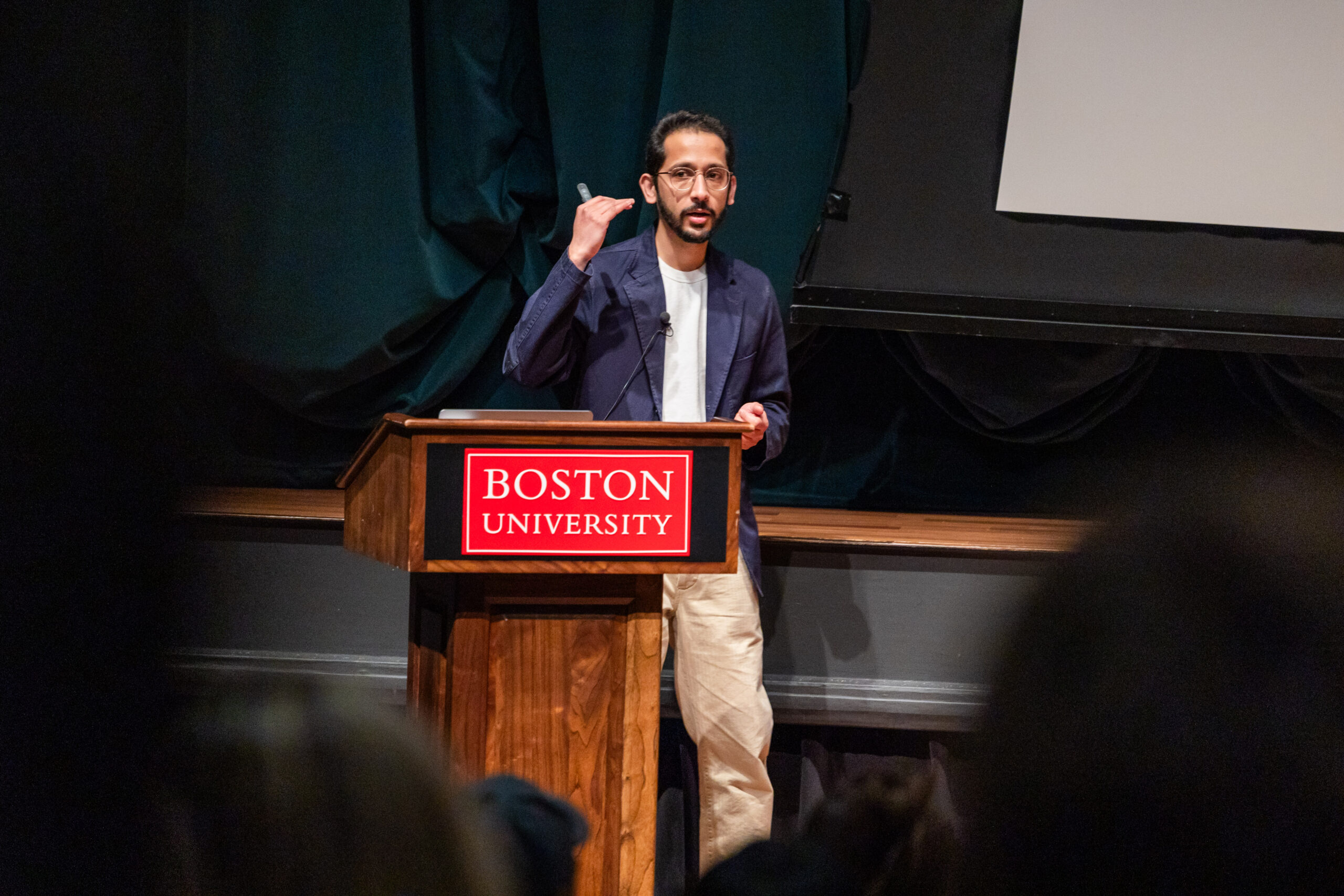
As Artificial Intelligence (AI) continues to evolve, many are wondering if it will replace human creativity or set a higher standard for work, especially in writing-related fields of work. On March 25, award-winning copywriter and Boston University (BU) alumnus Nihal Atawane tackled this very issue during his plenary lecture as the College of Communication’s 2025 Writer in Residence at Boston University’s Tsai Performance Center.
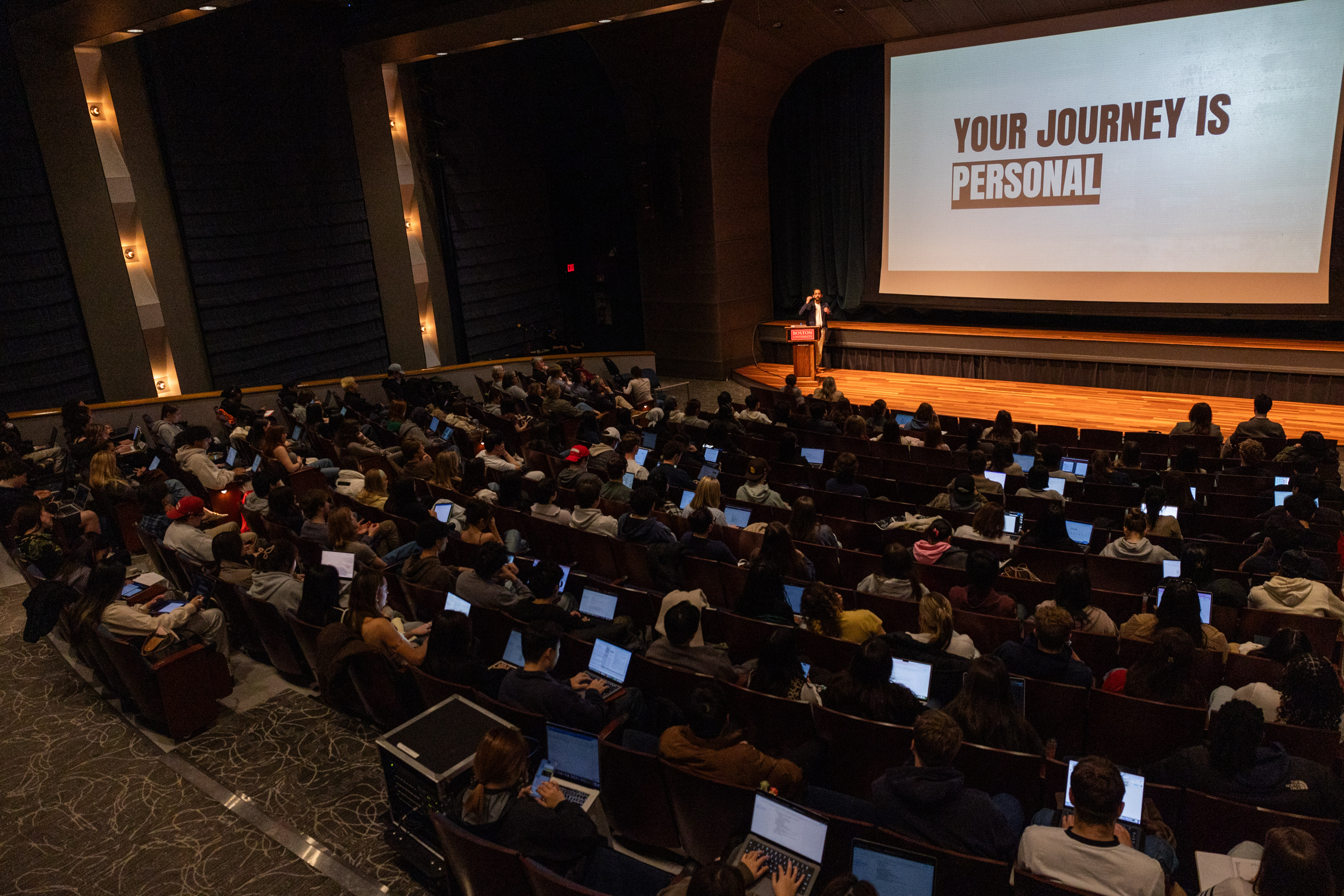
Atawane, who graduated with a master’s degree in advertising in 2019, has worked for more than 300 brands, including Bank of America, McDonald’s, and MTV, across three countries and multiple languages. He is currently a senior copywriter at FCB Chicago.
He explored the role of originality in the digital age and emphasized the irreplaceable value of human storytelling. Atawane’s lecture delved into the complexities of AI’s impact on creativity. He emphasized the point that AI is generative, biased, limited by the data it is being fed, and incapable of replicating human emotional depth.
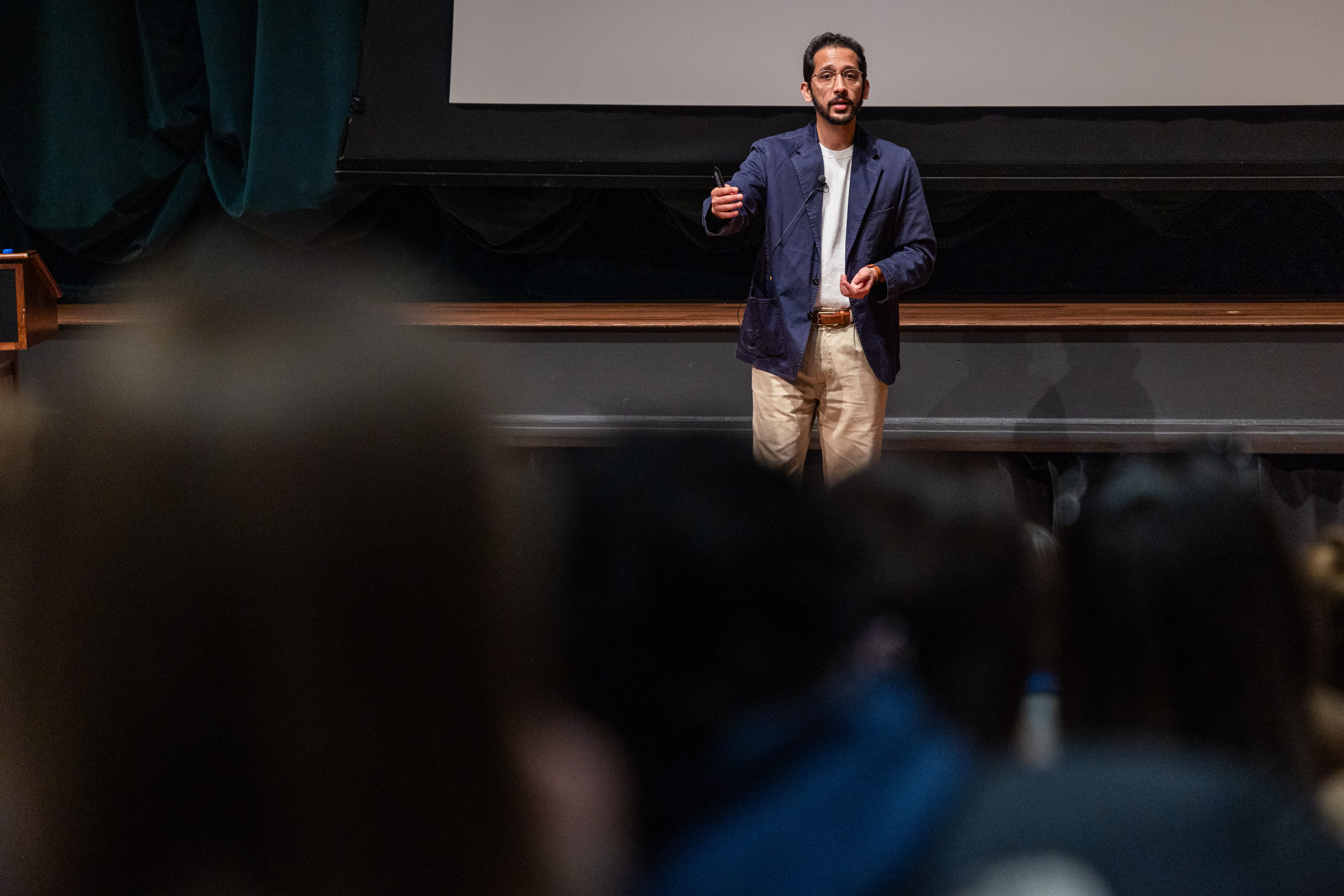
While AI is good for research, brainstorming, and entertainment, “it lacks the depth of humanity that storytelling requires,” he said, urging writers to use and trust their personal experiences as the foundation for their work.
“AI is good at sounding average. It can write fast and make things that are not terrible, but it can’t bring emotion or originality,” Atawane said.
“AI is good at sounding average. It can write fast and make things that are not terrible, but it can’t bring emotion or originality.”
He argued that originality, rather than quality, will become the measure of success in a world where AI-generated content is abundant. The bar for what qualifies as good writing will be set higher, making it more challenging for writers to stand out.
“The bar is higher now. Terrible writing isn’t even on the table anymore. So, we need to be better—not just better, but weirder, funnier, and more human,” he said.
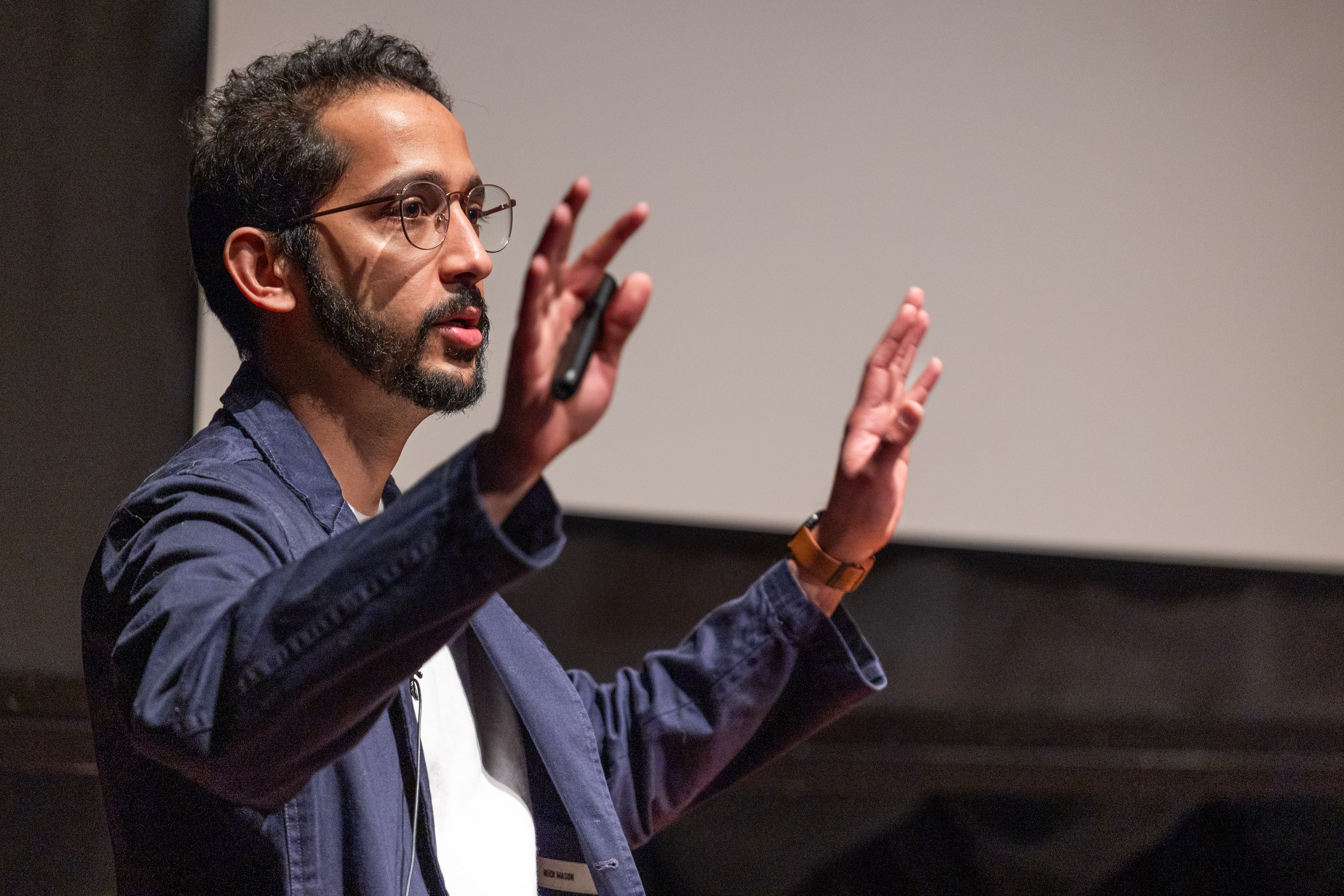
The core message of Atawane’s lecture is clear – while AI can assist in the creative process it will never replicate the individuality of human experience. “Your story is one in 8.2 billion,” Atawane said. “Why would you ever let AI tell your story when you have the chance to do it yourself?”
“We can’t outsmart AI, but we can absolutely out-stupid it.”
Atawane made the case that one thing humans have over AI is the ability to be “stupid” and he meant that in a good way.
“We can’t outsmart AI, but we can absolutely out-stupid it,” he said. “And I mean stupid in the most human, beautiful way possible.” He brought up funny headlines from The Onion and Reductress, and Kmart’s viral “Ship My Pants” commercial as examples of how humor and absurdity connect people in ways AI just can’t.
Atawane compared AI to a stick of butter – it is an ingredient that writers can use to kickstart ideas, but on its own it’s nothing special.
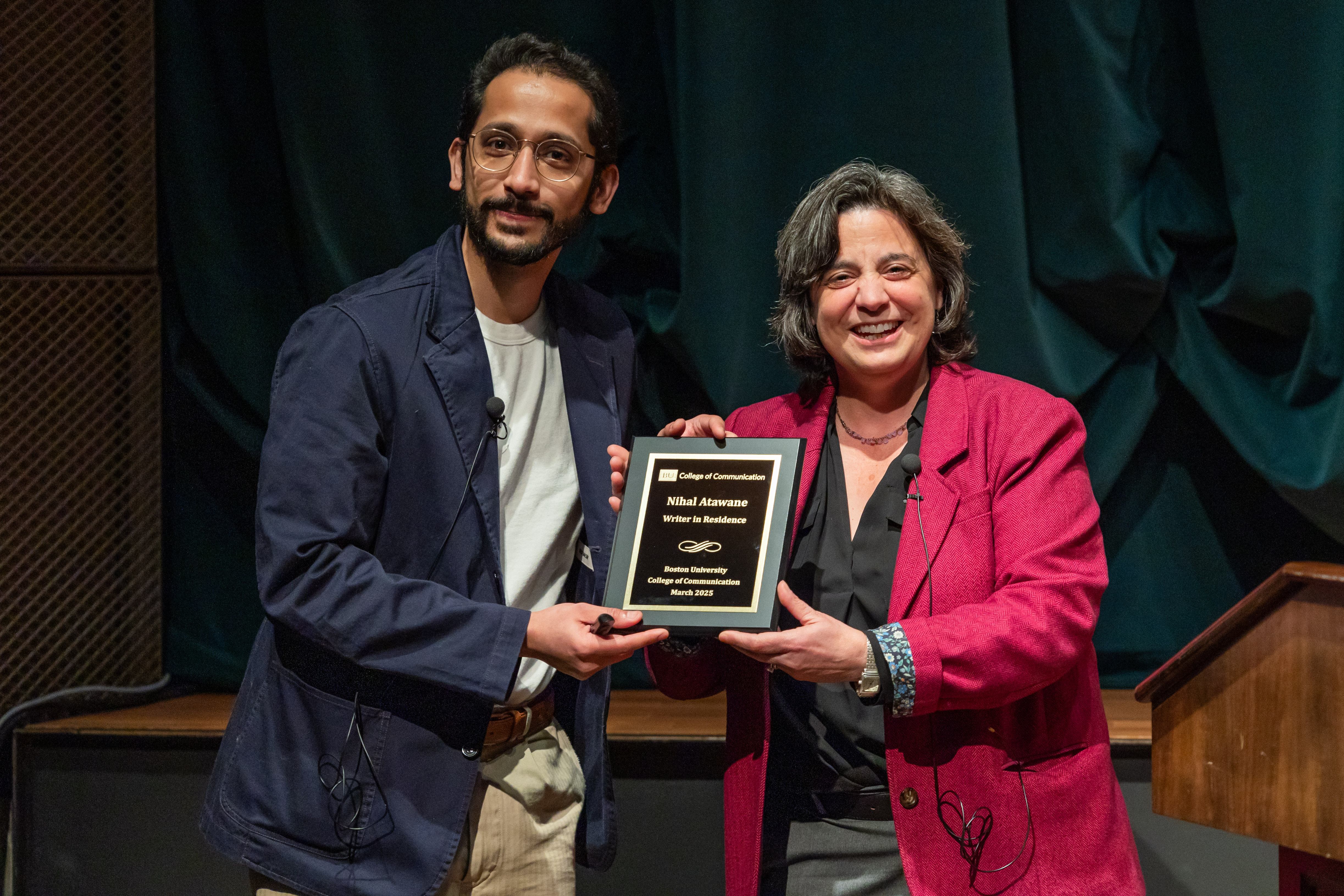
Atawane concluded the lecture by reminding the audience that the future of writing lies in embracing what makes us human. He added that AI will never be able to evoke the same emotions or tell stories in the same depth a writer drawing from their personal experiences.
He encouraged writers to “write like nobody’s reading,” focusing on creating for the sake of expression, not external validation. In a world where AI can generate endless content, the human touch remains irreplaceable.
Click here to read more about Nihal Atawane and the Writer in Residence program.



Leave a Reply