
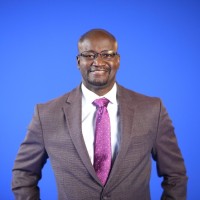
Meet Sherrod Blakely, a seasoned journalist and esteemed educator in the realm of sports media. Since 2020, Blakely has been a prominent figure at BU, where he imparts his knowledge on sports, storytelling, news reporting, and the intersectionality of race, gender, and social justice. With over 30 years of experience in journalism, his journey has taken him through the corridors of newspapers, digital publications, and NBC, where he covered the illustrious Boston Celtics.
Beyond his professional endeavors, Blakely is a passionate advocate for diversity and inclusion in sports journalism. He chairs the National Association of Black Journalists sports task force and the Associated Press Sports Editors Diversity Committee. His commitment to amplifying underrepresented voices extends to his affiliations with the National Association of Hispanic Journalists and the Asian American Journalists Association.
Join me as I delve into Sherrod Blakely’s career, uncovering the profound insights and experiences that define his work in Journalism.
Q: My first question is what sparked your interest in journalism in general?
A: It was just one teacher that really changed everything. When I was in high school, I hated writing and English. It was the worst class. I had an English teacher, Anthony Peritore, who gave us an assignment once a week to write about something we were planning to do that weekend. I decided to write about a football game, the Miami Dolphins playing the Pittsburgh Steelers. I got an A, thinking I fooled him. After class, Mr. Peritore said I should think about a career in sports writing, which I didn’t even know was a job. That opened my mind away from being groomed as a chemical engineer. Journalism became real. It led to me winning a full scholarship to study journalism at Syracuse University. That started 30 plus years of doing this all over the country. It all started with that one English teacher who saw something in my writing that I hadn’t seen.
Q: So do you think you immediately develop a strong love for writing about sports specifically, or did it still take a lot of time for you?
A: It took some time. Once that one assignment was done with, then I had to do all that other stuff that you have to do in English class, and that was boring. I wanted to get back to doing that type of writing. But the one thing he told me was that don’t just read for content, read for structure. And that’s why, for me, when I’m grading, I’m really big on structure. If you’re able to structure your sentences, because if you can have the framework and its proper framework, we can work on the inner workings of your writing. But yeah it did not immediately lead to me having a love for writing. However, as I embraced the structure of writing, that’s what I fell in love with. That’s the part about what I do that makes me comfortable writing about basketball or blacksmithing contests, which I’ve actually done before.
Q: How would you describe your transition from Syracuse into your career? Was it like a smooth transition? Did it take a while for you to really get going?
A: Relative to other people, my transition was really smooth. I was fortunate to receive a job offer before my senior year, which was amazing. I started interning at the local newspaper when I was a freshman and continued every summer, working in various departments like sports, features, news, police reporting, and editing. This experience gave me insight into different aspects of the industry and reinforced my desire to focus on sports. I encourage students to try things that push them out of their comfort zone because it helps them adapt or realize what’s not for them. My transition wasn’t hard because I already had a job offer going into my senior year, so I was mainly focused on graduating.
Q: What are some barriers that you had to break through in the beginning of your career or even through college?
A: Yeah, I think the biggest thing, particularly for young people, is being confident in what you’re doing. The one thing that I talk to my students about all the time, because it was something that I wish someone would have talked to me about when I was a student, is just understanding that you have value in every space, and understanding that your goal really should be to find places and spaces that understand and appreciate your value. It’s easier said than done, and it’s not always going to be perfect, but that’s the goal. Sometimes you have to wait for that to happen because it’s not always going to happen when you want it to.
Q: Was there something in your career or life that you were the most proud of?
A: I would say just going to Syracuse on a full academic scholarship. That was probably the biggest kind of moment for me. And it really I mean, it stems really from years before that. It started when my dad died when I was in the eighth grade, and my mom sat me and my older sister down and said that she could not afford to send us to college.
“So this college thing, you got to figure that out, son. You have to get a scholarship.”
So my focus was initially on football and that was looking really good. And at one point, my guidance counselor said that if you raise your grades a little bit you might be in contention to go to an Ivy League school. He said “you can actually get a scholarship academically.” And that was like this was another way I could get to college. And so as I went through that whole journey my focus was just getting to college for free. I had a couple options both ways. But Syracuse came with the academic scholarship first. That’s the one I took. And I have zero regrets about that decision. It worked out exactly how it should have.
Q: Why did you start putting yourself into the podcasting scene?
A: One of the things that I learned early in this business, and for the better or for worse, was that journalists have to embrace evolution. You have to understand that what you did when you started is not what you’re going to be doing tomorrow or tomorrow’s tomorrow from now. So you have to be almost like a you have to be like a point guard where you see things develop before they actually develop. And podcasting was one of those things. Even though I did not officially begin podcasting until like 2020, I’d been doing things in a podcast space well before that. And the reason for that was just because I saw the incredible growth that it had. I saw the ability that you could tell stories and you could amplify conversations and discussions in a way that you couldn’t do before. So podcasting was just a natural transition for me. Early on, news organizations were very weary of the internet when it came into existence as a means of disseminating information. They couldn’t really see how to make money off of digital content. And I thought either I play this newspaper game thing out until it dies and then have to play catch up, or I’ll just take a chance now and just kind of go digital. So I left the Raleigh News and Observer newspaper to go work for a company called MLive.com in Michigan. The company that I went to work with, MLive.com, we just absolutely smashed the Detroit Free Press and the Detroit News in terms of unique views. Then they started realizing the power and potential of this space. The fact that I can write a story from Auger Hill’s Michigan and get feedback from Shanghai within seconds of writing a story. That’s powerful.
Q: And the next question I have is, so what made you interact with the academia space?
Good question. I used to teach high school students so I had a taste of teaching back then. I enjoyed the fact that I had an opportunity to give back to an industry and a profession that has given me so much. Years later, a friend of mine told me about the summer camp for high school kids here at BU. He asked me if I would be interested in teaching? So I did that and I really enjoyed it. And then they said, do you want to teach a class of the grown kids, the college kids? And at the time, I was at NBC. And it worked out perfectly because NBC was like the main job. And this teaching thing was awesome. Eventually, the dean here asked me if I would want to do this full time? And I agreed. Everything worked out the way I thought it would.
I don’t believe my role is to just be a teacher. I believe that my role is to be a game changer. And part of my focus in that regard is coming up with ways to do things that haven’t been done before that need to be done.
Q: Since starting at BU, have you implemented any changes or initiatives that you envisioned when you were first hired?
A: Well, a couple things. First, one course that I teach the role of race, gender, social justice, and the sports meeting. That’s the course that I created. The second thing is we’ve had a sports seminar course where you bring in different people from the sports world. It is as diverse a group of people, as you can possibly imagine, people of color, women. All my speakers have been people of color except for two white males. And so when I hear people say they don’t know if there’s anyone in the sports journalist space that’s of color or a woman. That’s like literally the easiest thing I do is finding people in different spaces because I know they exist and it comes with having done this for a really long time. Also I’m the advisor for a student chapter of the Associated Press Sports Editors. That chapter will be kicking off in the fall. And the cool thing about that is it allows students to better connect with the people who literally make hires in sports, which is sports editors. And the cool part about it being here is that the leadership team is predominantly female. And people don’t often associate women in sports, leadership positions, as readily as they do others. And there’s some other things that are in the works, but those are the things that I can point to specifically now.
Q: What advice do you have specifically for students who want to get into sports journalism?
A: If you are interested in sports journalism, understand the difference between being a sports journalist versus being a journalist who happens to cover sports. If you are a sports journalist, you are positioning yourself to do that and that alone. If you are a journalist who just happens to cover sports, that’s something that you do, but it’s not who you are. I’m a little bit leaning more towards those who want to be journalists but just happen to cover sports. I’ve found that when you allow yourself the freedom to be open-minded to other things, it’s amazing how much better you become as a sports journalist. You have a much greater bandwidth of executing and exhibiting your skills and strengths in spaces where people don’t necessarily expect you to be. I am as comfortable in the courtroom as I am on a basketball court.
Q: What about advice to COM students in general?
A: First of all, embrace the moment. There is no better time to be in school than now. Because the world outside of here isn’t pretty. It’s grimy. It’s not to your benefit right now. I’m optimistic that young people are going to change this industry. You are going to be that game changer that the journalism space needs to grow. Because rather than being out in a world competing for a scarce number of jobs, you’re in college now trying to figure out how do we create more jobs and more opportunities and innovate the industry in a way that allows for greater influx of talent to get into journalism, and to thrive. I spend a lot of time working with students on ways that they can be the best version of who they are. What you have to understand when you are a COM student is just because you want to be a writer doesn’t mean you should not learn how to do other things. Being able to deliver content in a multitude of ways, whether it’s written form in front of the camera, behind the camera, or animation. Add as many tools to your toolbox now.
Leave a Reply