
By Gabrielle Tuvim
On Nov. 1 at 2 p.m. four-time Pulitzer Prize winning-photographer Carol Guzy will join COM lecturer Greg Marinovich for a discussion of Guzy’s recent COM Lawn exhibit and achievements in photojournalism. Last year, Guzy received the Hugo Shong Lifetime Achievement Award, and will publicly accept the award on Nov. 1.
Until Nov. 6, Guzy’s photography from her assignment in Ukraine in 2022. will be displayed on the COM lawn. The photography exhibit, titled “Don’t Look Away,” features scenes from Ukraine shortly after the Russian invasion. Some of the photos depict grief, destruction, prayer, and children living in the warzone.
Guzy’s distinguished career spans over 40 years, starting with her internship and staff position with The Miami Herald, after graduating from The Art Institute of Fort Lauderdale in 1980. While at The Miami Herald, Guzy reported on the Mudslide aftermath in Amero, Colombia, for which she received her first Pulitzer Prize in 1986. Then, in 1988, Guzy was hired at The Washington Post, which sent her all over the world. During her time with The Washington Post, Guzy won a Pulitzer in 1995 for coverage of a U.S. military intervention in Haiti, in 2000 for Kosovo refugee coverage, and most recently in 2011 for her coverage of the devastation of the Haiti earthquake, all featured on Guzy’s website.
“Don’t Look Away” is the first public exhibition of Guzy’s photos from Ukraine.
In a Q&A on Oct. 13 with Carol Guzy was interviewed Lena Sheehan, administrator of the BU Department of Journalism, using questions from Instructor Stephanie Schorow’s CM331 M1 & F1 (Writing for Communication) classes.
“I think any story that goes on for a long time, there’s compassion fatigue. The world community sort of turns away and they get overdosed on the coverage. But it’s still a reality for everyone in Ukraine,” Guzy said. This is one of the main reasons Guzy wants to continue to shine the light on the war. Her goal is to raise awareness of the ongoing war, while sharing the impact on the lives of those still living in these warzones.
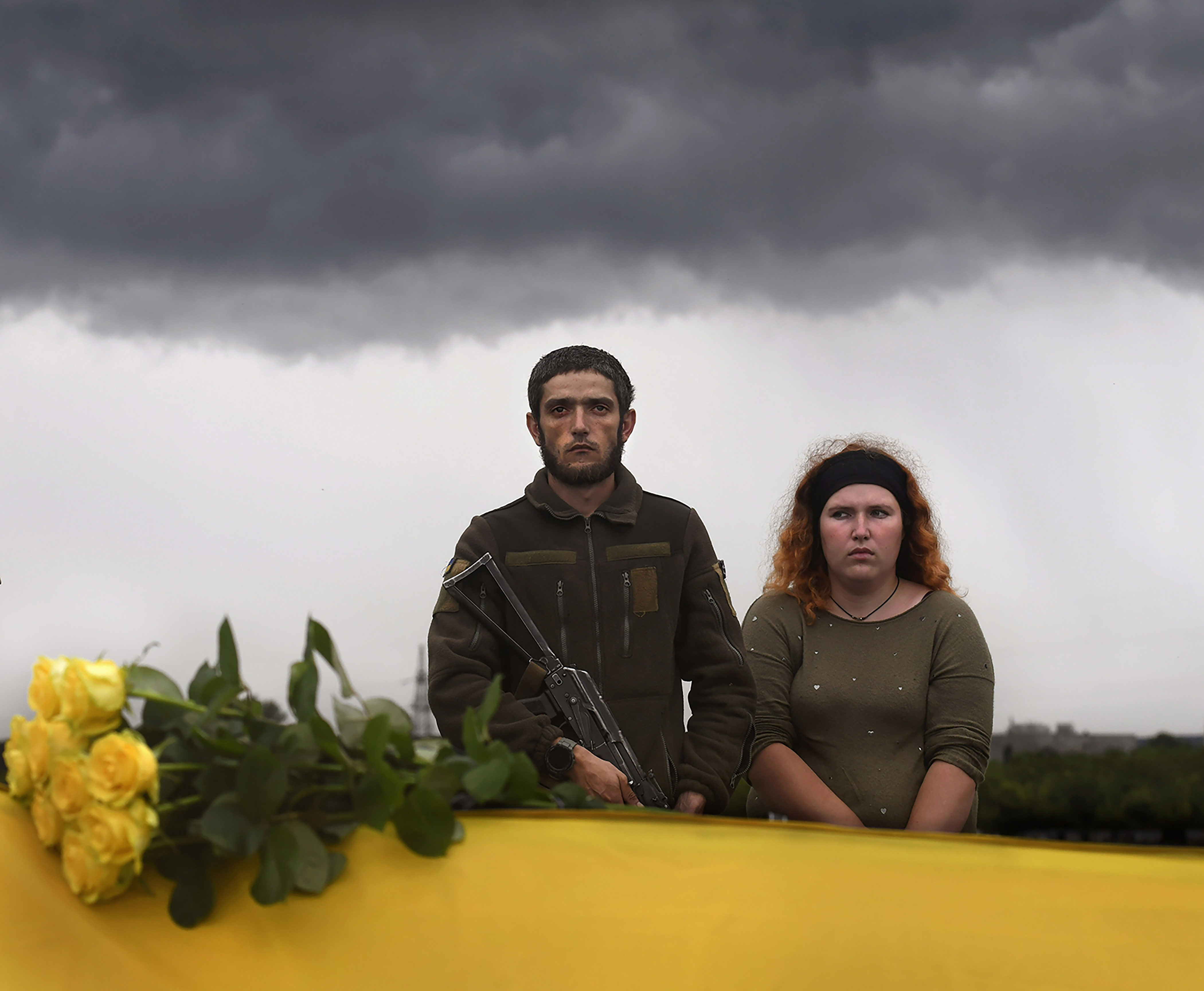
One photograph in particular features two young boys, Sasha and Sasha, playing outside and pretending to be war officials. It’s clear that the war has infiltrated every aspect of life. Guzy made sure to not only depict destruction and devastation, but also how life has prevailed in the ongoing war zone.
“People also get burned out on viewing bodies and destruction. And it’s overwhelming, I think, for most humans. So they turn away. So I think some of the stories I’ve done are to try to maybe infuse a little bit of hope,” she said.
Her project “Still Life” features her photos from Ukraine that show household and schoolhouse items from the aftermath of bombings. Some of the items featured include kitchen counters, clocks, bookshelves, bedrooms; all frozen in time and covered in ash. This subsection of her coverage was particularly important, and she said, “it’s something we can all identify with, kitchens that we cook in and bedrooms where we dream.”
“It’s our challenge as journalists to raise awareness, keep shining the light on this horrific situation that’s Ukraine,” Guzy said.
When working in high-risk areas, Guzy said, “There’s a lot of things I can do with a camera in my hand that I wouldn’t be able to do without it because I do believe it’s a mission and what we’re doing is really important.” She also said, “[People in Ukraine] understand the power of a free press. They’re fighting for democracy and freedom for one thing. So they get it, why this needs to be documented for history to combat propaganda. And it’s one big war crime. I mean, literally, all the photojournalists there are documenting war crimes.”
Guzy’s visual storytelling career is crucial to her. “It’s my oxygen. I can’t breathe without storytelling,” she said.
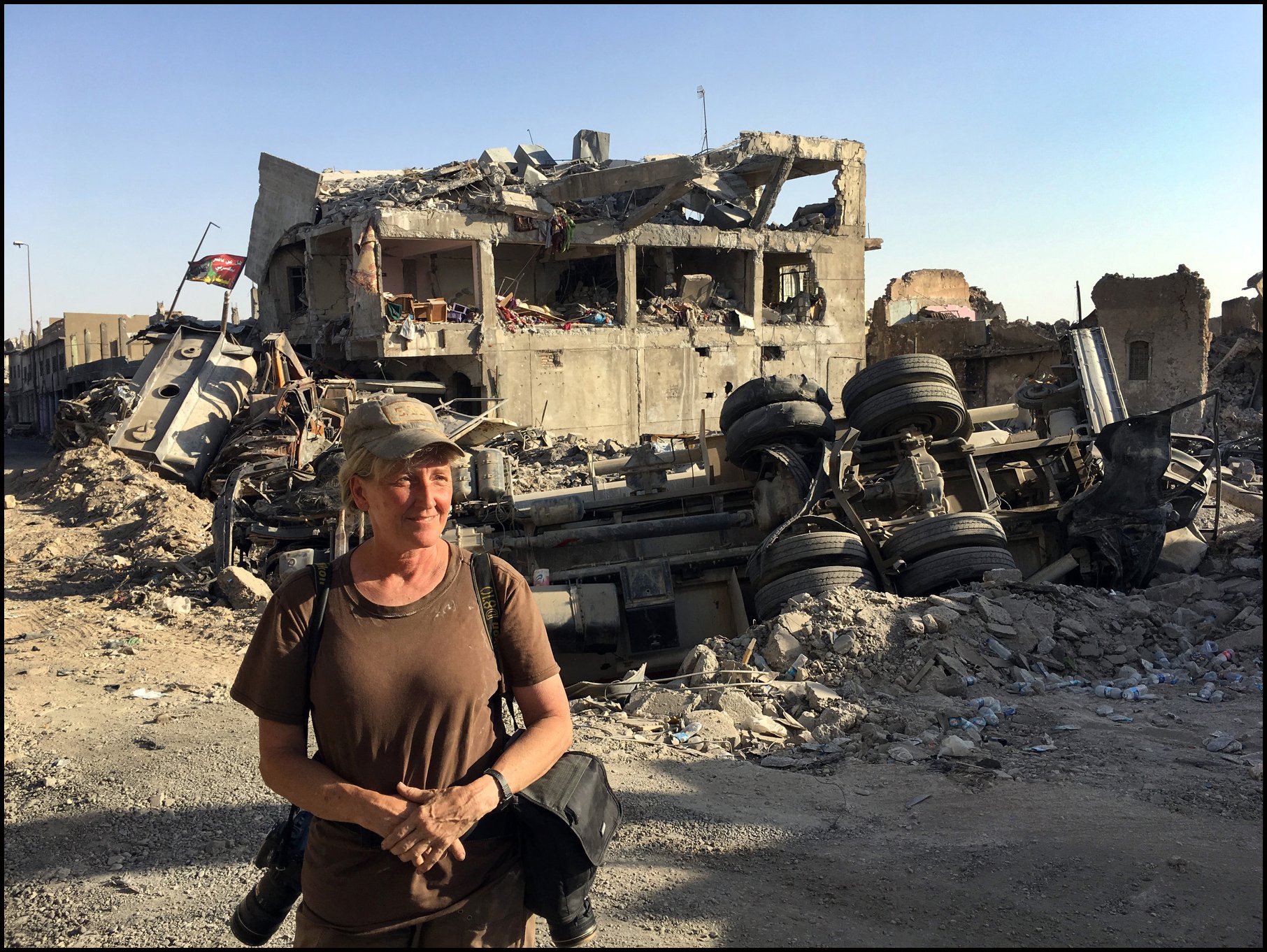
Sheehan adds, “If you look at her images, you’ll see why we chose to pick this particular story. It’s something that she is proud of, and it’s her most recent work. It’s timely because of what’s happening in Europe right now and we think the students will be interested. It’s important to keep highlighting what’s going on [in Ukraine] and her work captures that very well.”
Guzy’s exhibit remains on display on the COM Lawn until Nov. 6, 2023.
Carol Guzy’s conversation with COM lecturer and Pulitzer Prize-winning investigative photojournalist Greg Marinovich will take place in the Colloquium Room at the Rajen Kilachand Center for Integrated Life Sciences and Engineering at 2 p.m. on Wednesday, Nov. 1, 2023.
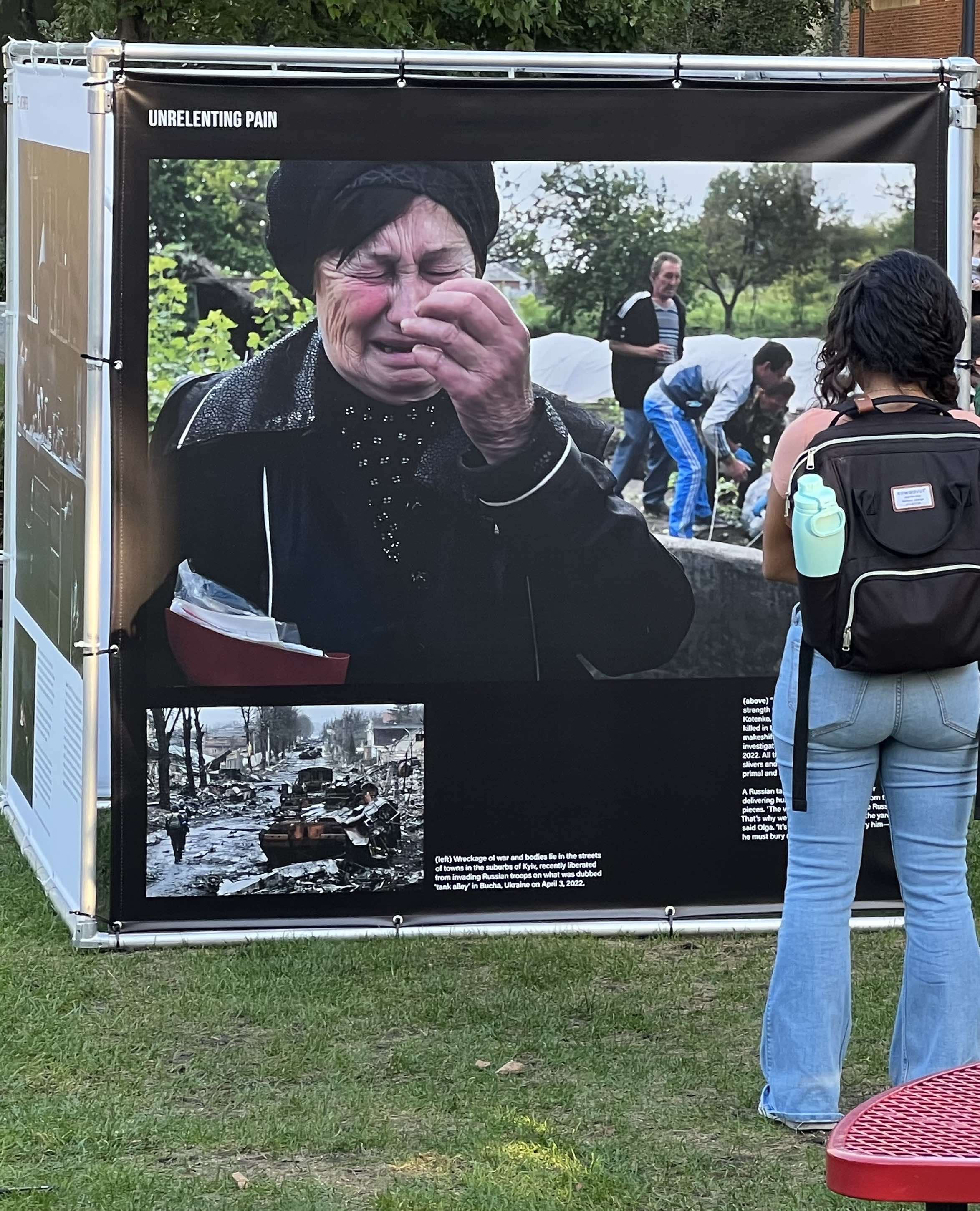
Guzy’s exhibit on the COM Lawn.


Leave a Reply